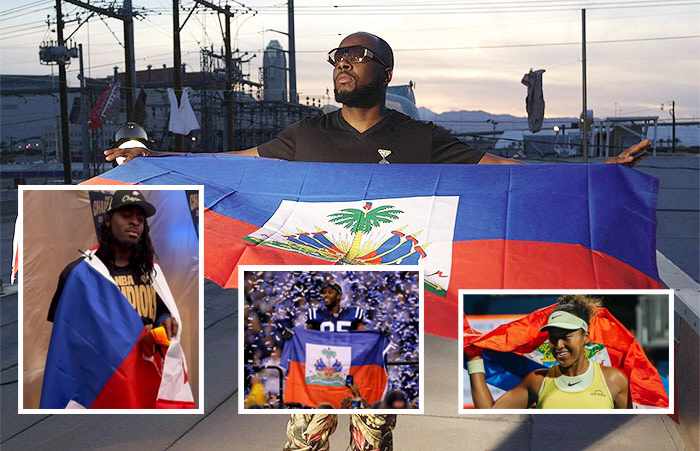
Long before Haitian flags were waved courtside after NBA championships or draped across the shoulders of rising stars at international competitions, one name stood at the intersection of music, identity, and cultural pride: Wyclef Jean — of The Fugees. His rise to fame in the 1990s wasn’t just a win for hip-hop, it was a watershed moment for the Haitian diaspora in America.
This is why Wyclef Jean’s boldness mattered so much. In the 1990s, being Haitian in American schools — especially in cities like Miami — could be a source of deep pain and humiliation. One of the most heartbreaking examples was the case of a Haitian high school student in Miami who took his own life after classmates discovered he was Haitian. He had been relentlessly bullied and mocked, simply because of his heritage. His story shocked the community and served as a painful reminder of the identity-based discrimination that many Haitian youth faced. Wyclef’s public celebration of his roots stood in stark contrast to that reality, offering young Haitians a new model: one of confidence, pride, and cultural dignity. His actions became a turning point — helping to transform shame into pride, and giving Haitian youth the courage to be seen, to be heard, and to be proud.

It’s difficult to overstate the cultural impact of that defiant pride. Before Wyclef, many young Haitian Americans kept their heritage quiet. After him, a generation found the courage to embrace their roots out loud. His influence cracked open the door for public Haitian identity in America — and since then, that door has blown wide open.
We see the ripple effect today in athletes and public figures who do not hesitate to represent Haïti on the biggest platforms. Just last Sunday, Luguentz Dort, the Canadian-born son of Haitian immigrants, hoisted the Haitian flag with pride after becoming an NBA champion. The moment was powerful, especially for young Haitians watching, because it mirrored so many others that have come before — and all of them can trace that lineage back to Wyclef’s example.
Naomi Osaka, tennis champion and global icon, has also publicly embraced her Haitian roots, often using her platform to spotlight Haitian causes and history. In the NFL, Haitian-American players such as Pierre Garçon, Jason Pierre-Paul, and Matt Elam have all celebrated their heritage, sometimes with Haitian flags on the field or references in interviews.

In truth, there are too many now to count — a reflection of how deep Haitian pride now runs in American culture. But there is only one first, and it’s important that we give credit where it is due. Wyclef Jean did not have the support of a visible Haitian American network when he stepped into the spotlight. He was the network. He paved the way.
So when we see young Haitians today wearing their flag like a badge of honor, we should remember who first made that possible.
Put respect on the name of Wyclef Jean of The Fugees — the first true cultural ambassador of the Haitian diaspora in the United States, and a man who turned shame into swagger, silence into pride, and heritage into power.