By Le Floridien Staff
In a controversial decision that has stirred unease across immigrant communities and civil rights circles, the Trump administration has announced the termination of Temporary Protected Status (TPS) for Haitian nationals, effective September 2, 2025. The Department of Homeland Security (DHS) claims the conditions in Haiti have improved enough to justify the repatriation of thousands of TPS holders who have lived in the United States for years.
Yet that claim stands in stark contradiction to guidance from the U.S. State Department, which currently lists Haiti under a Level 4 “Do Not Travel” advisory—the highest possible threat level—due to escalating gang violence, kidnapping, and the near-collapse of public institutions. U.S. citizens already in Haiti have been urged to leave the country immediately, as American diplomatic personnel scale down their presence amid growing security concerns.
The DHS insists its decision was made following a comprehensive, interagency review. But the question remains: Where did they get the idea that Haiti is safe?
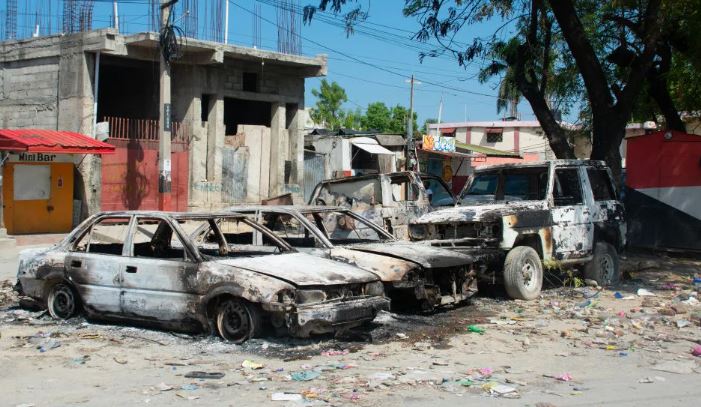
On the ground, the reality tells a very different story. Armed gangs control up to 90% of Port-au-Prince, with an expanding footprint in other regions. More than 1.3 million Haitians have been displaced internally by violence. Infrastructure is crumbling, hospitals have closed or been attacked, and public services are virtually non-existent. The Haitian state, as it once existed, is barely functional.
Even if TPS holders wanted to comply with deportation orders, there is currently no practical way for them to return. Since multiple aircraft were fired upon near Port-au-Prince in late 2024, U.S. airlines have suspended all commercial flights to Haiti. Major carriers such as American Airlines, JetBlue, and Spirit have pulled out indefinitely. Overland travel through the Dominican Republic is also extremely risky and, in many cases, blocked by border restrictions or gang activity.
This raises a logistical paradox: how can the U.S. government expect deportees to return to a country they physically cannot reach safely—a country that it simultaneously warns its own citizens not to set foot in?
The absurdity is undeniable. The Trump administration is attempting to deport Haitians to a nation where no American should travel, and where the U.S. Embassy itself is reducing operations. This is not just a contradiction—it’s a policy failure that lacks coherence and humanity.
Supporters of the TPS program argue that Haiti is not only unsafe but also ill-equipped to receive an influx of returnees. The nation faces a humanitarian crisis worsened by political instability, food insecurity, fuel shortages, and a total breakdown in law enforcement. Deporting people into such conditions is not only impractical—it could be deadly.
This decision appears to fit into a broader political agenda that prioritizes immigration enforcement over basic humanitarian considerations. While the DHS claims Haiti has recovered from the 2010 earthquake and environmental emergencies, today’s reality—marked by civil strife, anarchy, and displacement—makes clear that the risk to human life has only deepened.
If the safety of human beings truly matters, then the decision to end TPS for Haiti must be urgently reconsidered. At the very least, U.S. policy must stop contradicting itself—telling Haitians to go back while telling Americans to stay out.
The lives of real people hang in the balance.