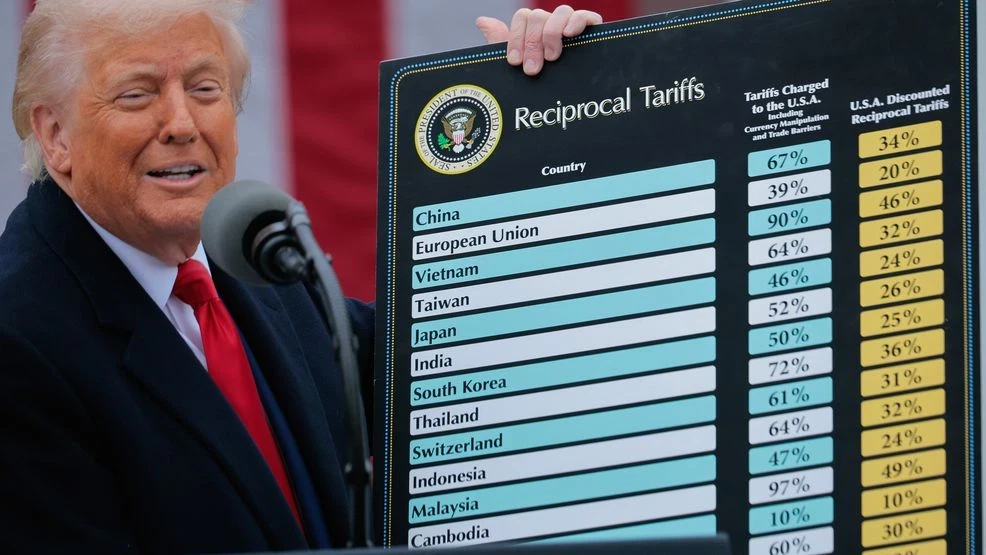
(By Le Floridien) – President Donald Trump has revived a proposal that has stirred widespread attention: sending $2,000 “tariff dividend” checks to most Americans, financed by revenue from his import tariffs. The idea, according to Trump, is to give a direct financial boost to low- and middle-income households while using part of the proceeds to reduce the national debt. “A dividend of at least $2,000 per person (except for high earners!) will be distributed to everyone,” Trump declared on his social media platform.
However, behind this promise lies a series of unanswered questions. No legislative text has been released outlining how, when, or to whom these payments would be made. Treasury Secretary Scott Bessent has even downplayed the proposal, suggesting that the “dividend” might take the form of targeted tax cuts instead of direct checks.
As for who might benefit, the administration has hinted that the program would focus on low- and middle-income Americans, explicitly excluding the wealthy. Yet, the income thresholds, eligibility categories, and even whether children or dependents would qualify remain unclear. Analysts estimate that sending $2,000 to roughly 150 million Americans earning under $100,000 a year could cost around $300 billion, while the current tariff revenue amounts to only about $90 billion.
Legally, one of the biggest obstacles is the ongoing Supreme Court review of Trump’s use of emergency powers to impose tariffs under the International Emergency Economic Powers Act (IEEPA). Should the Court rule against him, the funds that would finance the “tariff dividend” might instead need to be repaid to importers, effectively dismantling the financial foundation of the plan.
From an economic standpoint, critics argue that distributing $2,000 checks nationwide could fuel inflation by boosting consumer demand. Unlike the pandemic-era stimulus checks, this proposed payment would rely on tariff revenue, which is volatile and unpredictable. Moreover, without congressional approval, the administration may face legal and logistical barriers to disbursing such large-scale payments.
In short, while the idea of $2,000 checks for millions of Americans appeals to the public’s desire for financial relief and national pride, the plan remains highly uncertain. It depends on legal validation, congressional cooperation, and stable tariff revenue, three conditions that are far from guaranteed. For now, Trump’s “tariff dividend” is a political promise more than a policy reality, one that continues to generate both hope and skepticism across the United States.