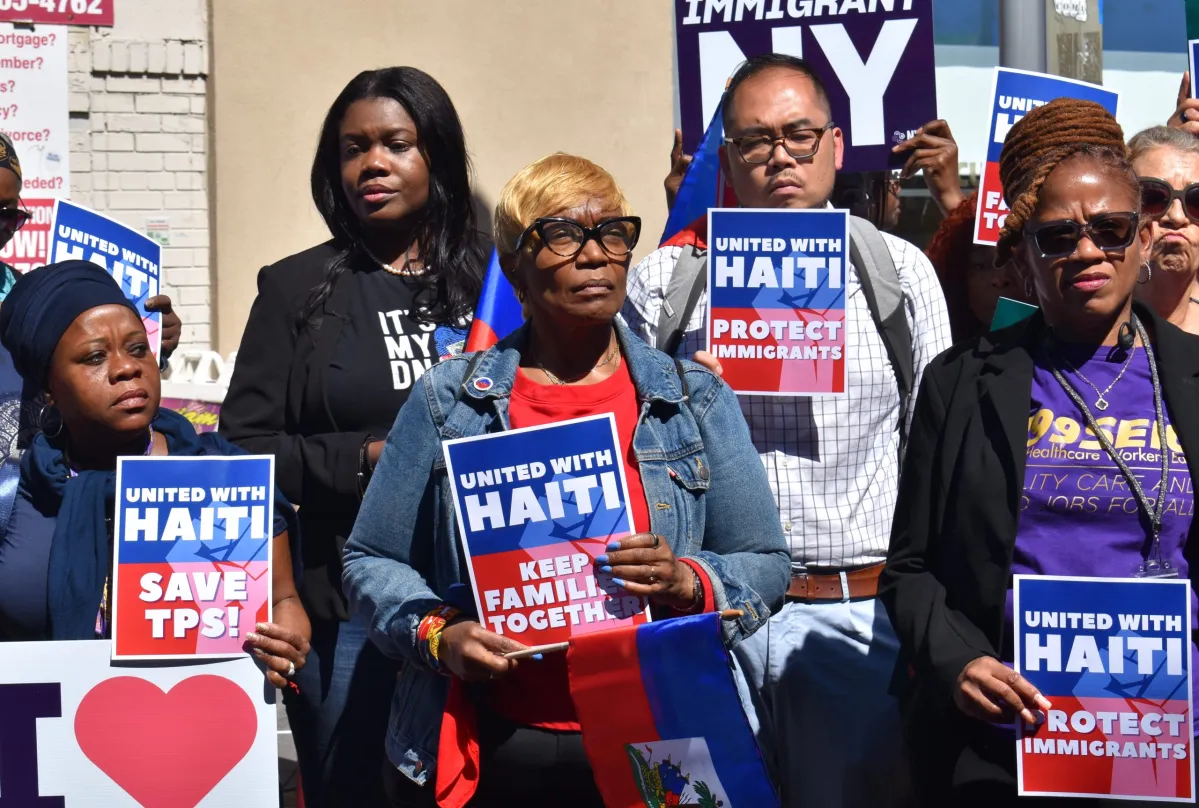
The Trump administration has moved to end Temporary Protected Status (TPS) for more than 350,000 Haitian immigrants living legally in the United States, effective February 2026, arguing that Haiti no longer faces conditions requiring protection. Critics, however, warn the decision ignores Haiti’s ongoing political instability, gang violence, and humanitarian crisis, placing families at risk of deportation and threatening to break apart U.S.-born children from their parents.
By Le Floridien staff_________
The Trump administration’s decision to end Temporary Protected Status (TPS) for Haitians marks a turning point with far-reaching consequences for hundreds of thousands of people in the United States and for Haiti itself. The Department of Homeland Security (DHS) has announced that TPS for Haiti will terminate on February 3, 2026, at 11:59 p.m., after which Haitian TPS holders will no longer have lawful protection from deportation or automatic work authorization in the U.S. This reverses extensions granted under the Biden administration and follows years of political and legal battles over the program.
TPS for Haiti was first created after the devastating January 2010 earthquake, which killed hundreds of thousands of people and destroyed large parts of the country’s infrastructure. It was meant as a temporary humanitarian measure, allowing Haitians already in the U.S. to remain and work legally because their country was considered too dangerous and unstable for return. Over time, successive administrations extended and, at one point, re-designated Haiti for TPS as the country was hit by cholera, hurricanes, political unrest, and a deepening security.
The current move affects an estimated 340,000–353,000 Haitians living in the United States under TPS protection. Many of them have lived here for more than a decade, built families, purchased homes, and become deeply integrated into local economies in places like South Florida, New York, New Jersey, and Massachusetts. Only a relatively small share have been able to obtain permanent residency through other channels, meaning that once TPS ends, the majority will revert to some form of undocumented status unless Congress or the courts intervene.
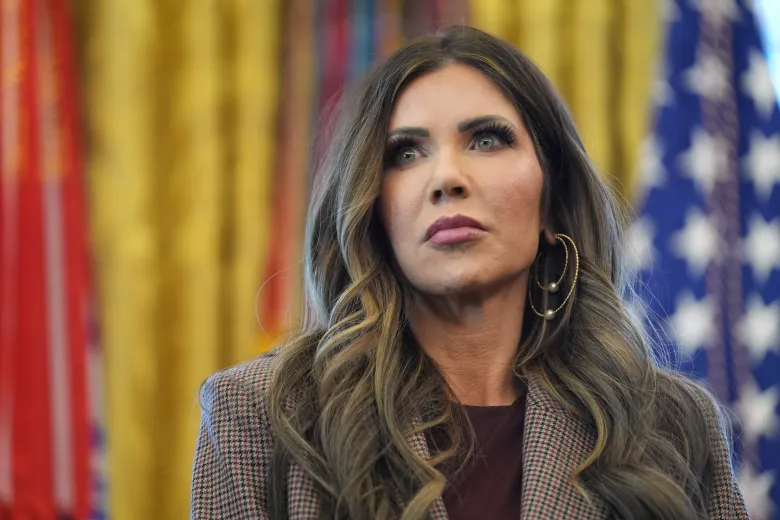
DHS Secretary Kristi Noem has argued that Haiti “no longer meets” the statutory standard for TPS and that the country does not face the kind of “extraordinary and temporary conditions” that legally justify the designation. She has also framed the decision as a matter of U.S. “national interest,” aligning it with a broader effort by the Trump administration to reduce both legal and humanitarian forms of migration. Critics, however, point out that Haiti is currently suffering one of the worst crises in its modern history: armed gangs control large swaths of the capital, state institutions are weak or non-functional, and more than a million people have been displaced by violence and instability within the past year alone.
For Haitian TPS holders, the end of the program creates a cascade of personal risks. Many live in “mixed-status” families that include U.S.-born children and relatives with permanent residency or citizenship. Once TPS expires, parents could face deportation while their children remain U.S. citizens, forcing impossible choices between family separation and taking American children into a country they barely know and that international organizations describe as extremely unsafe. Employers in key sectors—especially health care, home care, hospitality, construction, and transportation—may lose experienced workers, disrupting local labor markets in cities with high Haitian populations.
The decision also has serious implications for Haiti’s already-fragile economy. Haitian TPS holders in the U.S. send significant remittances back home; these flows are a lifeline for many families and represent a substantial portion of Haiti’s GDP. Ending TPS will not only threaten the income of families in the United States but could also sharply reduce the money circulating in Haitian communities, further weakening a society already strained by poverty, food insecurity, and the collapse of basic public services.
Advocates and legal organizations are likely to challenge the decision in court, as they did during Trump’s first term, when earlier attempts to terminate TPS for Haitians and several other nationalities were blocked or delayed by federal judges. Litigation could postpone the effective end date or even force DHS to revisit its determination, depending on how courts assess the evidence about conditions in Haiti and the administration’s compliance with statutory and procedural requirements. At the same time, members of Congress who represent districts with large Haitian populations may push for legislative solutions, including bills to provide a path to permanent residency for long-term TPS holders.
Beyond legal and economic questions, there is a psychological and social toll that is difficult to quantify. Many Haitian TPS holders say they feel “American in everything but papers”: they work, pay taxes, volunteer in churches and community groups, and have their social and emotional lives rooted in U.S. neighborhoods. Being told that their protection will end on a fixed date creates anxiety, depression, and a pervasive sense of uncertainty about the future. Community organizations, churches, and local governments will likely face increased demand for legal counseling, mental-health services, and emergency support as the deadline approaches.
Supporters of the administration’s decision contend that TPS was never meant to be permanent and that, after more than a decade, it is time either for Congress to create a permanent solution or for beneficiaries to return if they lack another legal status. Critics respond that the law does not impose a time limit on TPS and that the question is not how long Haiti has been designated, but whether conditions on the ground remain unsafe—which, they argue, is indisputable in the current context. This debate highlights a broader tension in U.S. immigration policy between humanitarian commitments and restrictive approaches that prioritize deterrence and enforcement.
For the Haitian community in the United States, the announced end of TPS is therefore more than an abstract policy change. It is a direct threat to the stability of families, the health of neighborhoods, and the economic ties that connect the diaspora to a country in crisis. Whether through court challenges, congressional action, or a future policy reversal, the coming months and years will determine whether hundreds of thousands of people who have lived legally in the United States for years will be allowed to remain in the only place many now consider home—or be forced back to a homeland that is, for the moment, profoundly unprepared to receive them.