Par Le Floridien ________________
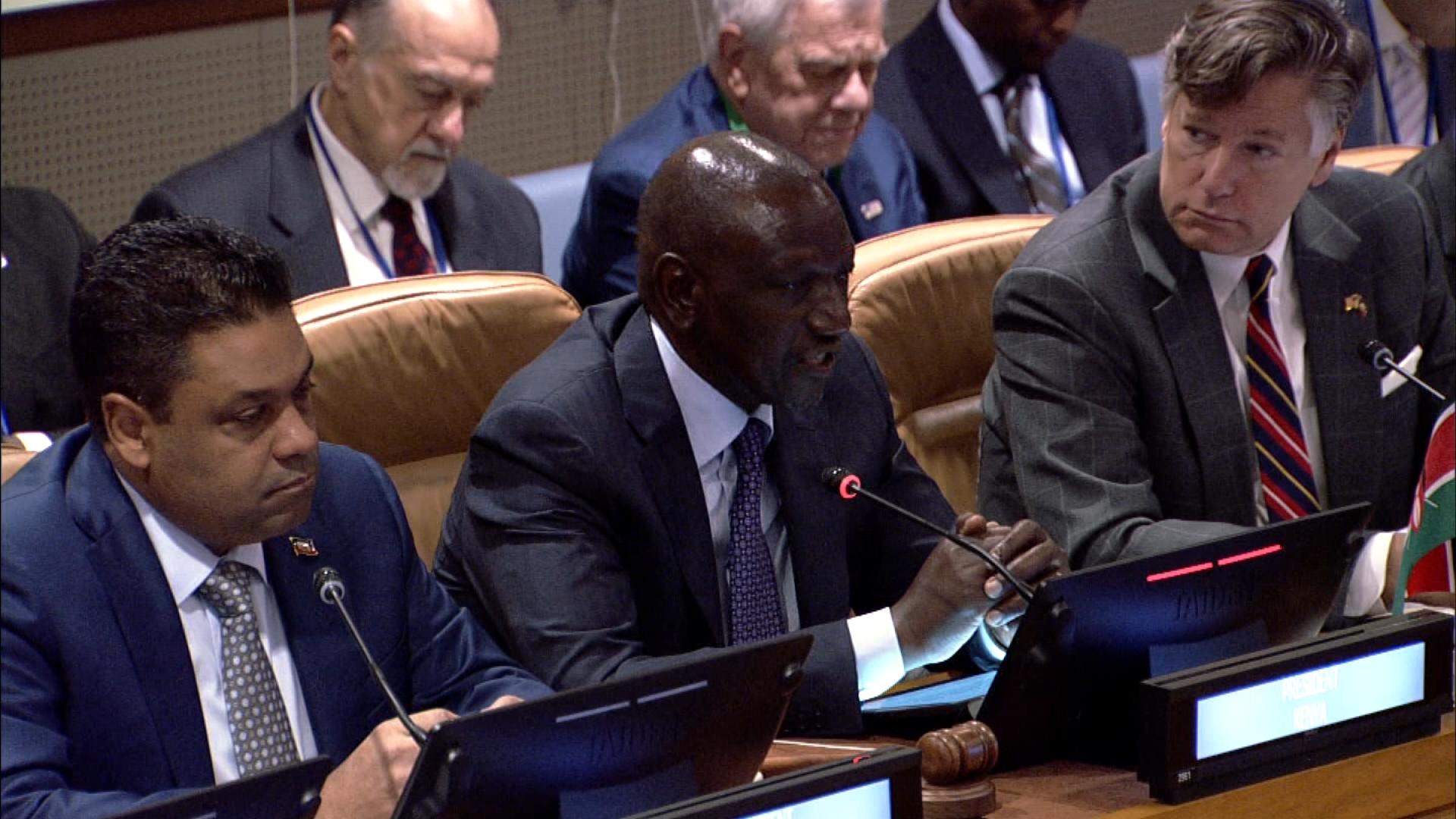
NEW YORK, September 22, 2025 — As gang violence tightens its grip on Haiti, the United States and Kenya are pressing for a decisive international response anchored in a new Gang Suppression Force (GSF) and a United Nations Support Office for Haiti (UNSOH). During United Nations General Assembly High-Level Week, U.S. Deputy Secretary of State Christopher Landau and Kenyan President William Ruto convened partners to confront what they called an urgent security crisis that is stalling the nation’s path back to elected governance.
The discussion produced a clear signal of intent: transition the current Multinational Security Support (MSS) mission into a scaled-up GSF and stand up UNSOH to provide the backbone—logistics, planning, and coordination—needed to sustain it. Backed by all 32 Member States of the Organization of American States, the new mandate envisions 5,500 personnel to push back heavily armed gangs, re-open critical corridors, and create the security conditions required for credible elections.
Landau praised Kenya’s “brave leadership” and the contributions of other MSS partners whose deployments, he said, laid the groundwork for a more robust next phase. “The time for decisive, coordinated action is now,” he said, framing the proposed shift as both a tactical necessity and a political commitment to the Haitian people. Ruto underscored that momentum with a blunt assessment: “The situation in Haiti can be solved. It is not Mission Impossible.”
Both Washington and Nairobi stressed that external support must reinforce—never replace—Haitian leadership. The United States called on all UN member states to contribute personnel, funding, and specialized capabilities to the GSF, while emphasizing that the country’s long-term recovery will depend on Haitian institutions regaining legitimacy and capacity. “Solutions must be Haitian-led and internationally supported,” Landau said. “Haiti must write its own future.”
For Haitians living under siege—from neighborhoods carved up by rival groups to families displaced by extortion and kidnappings—the stakes are immediate. International officials argue that a professionally supported GSF paired with UNSOH could help restore basic security, allowing schools to reopen, commerce to resume, and communities to reconnect with the state. But they also acknowledge that security gains will be fragile unless paired with governance, justice, and economic measures that outlast any single mission.
The United States closed the meeting with a pledge of solidarity: it stands with the Haitian people and with partners prepared to act. Whether the GSF can deploy at scale and speed will determine if this week’s commitments become a turning point—or another missed chance—amid the chaos of Haiti’s gang-driven violence.