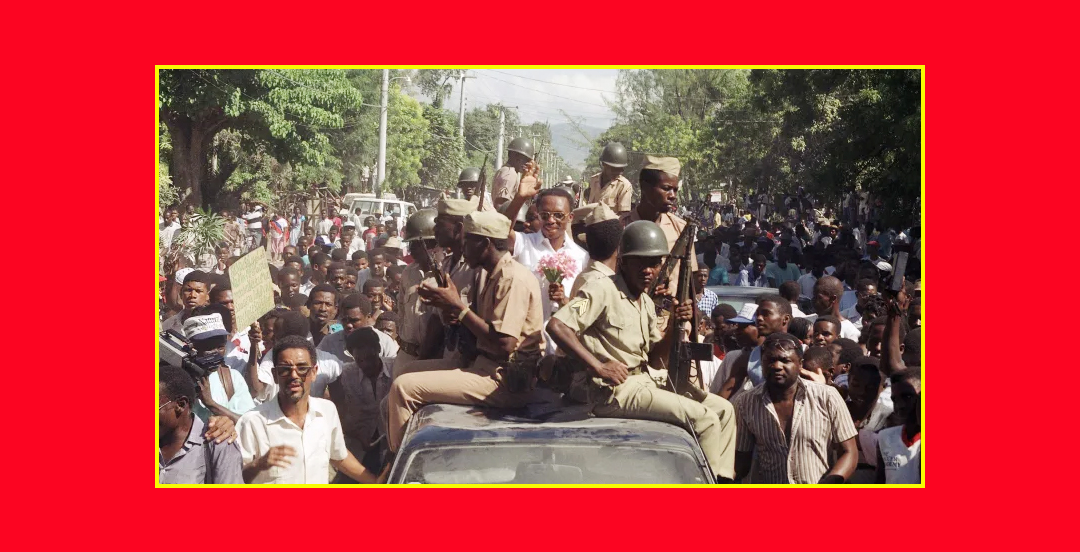
Thirty-five years after Haiti’s first free and fair presidential election on December 16, 1990, the country continues to wrestle with the meaning of that historic moment. The landslide victory of Jean-Bertrand Aristide revealed the Haitian people’s deep commitment to democratic choice and their desire for a decisive break from authoritarian rule. Yet the swift collapse of that democratic experiment exposed the fragility of Haiti’s institutions and the absence of safeguards capable of protecting the popular will. This anniversary invites a sober reassessment: December 16, 1990 was both a democratic breakthrough and a warning—proof that elections can open the door to democracy, but cannot sustain it without strong institutions, political consensus, and the rule of law.
By Le Floridien
On December 16, 1990, Haiti crossed a historic threshold. For the first time in its modern history, the country held a presidential election widely regarded as genuinely free and fair. Millions of Haitians—many voting freely for the first time in their lives—went to the polls and overwhelmingly chose Jean-Bertrand Aristide, a young Catholic priest who had emerged as the moral voice of the poor and the symbol of a long-suppressed popular will.
Thirty-five years later, that moment remains both luminous and troubling. Luminous for what it revealed about the Haitian people’s democratic aspirations; troubling for what followed. The anniversary invites a necessary and uncomfortable question: did December 16, 1990 mark the birth of Haitian democracy—or did it expose, from the outset, how fragile that democracy truly was?
A Break with Haiti’s Authoritarian Past
To grasp the significance of the 1990 election, one must understand what came before it. Haiti had endured decades of dictatorship, followed by chaotic and often violent transitions after the fall of the Duvalier regime in 1986. Elections were typically orchestrated, contested, or aborted. Political power was imposed, not chosen.
The 1990 vote shattered that pattern. Turnout was massive, enthusiasm palpable. Aristide won in a landslide, capturing roughly two-thirds of the vote in the first round—an unmistakable mandate. For many Haitians, particularly the poor and excluded majority, the election was not merely about selecting a president; it was about reclaiming dignity and ownership of the state.
In that sense, December 16 was undeniably good for Haiti. It demonstrated that Haitians wanted democracy and could exercise it peacefully and decisively when given the opportunity.
Aristide in 1990: The Right Man for the Moment?
Aristide’s rise defied traditional political logic. He was not a seasoned administrator, party boss, or military figure. His legitimacy came from moral authority, grassroots support, and an uncompromising denunciation of injustice. In a country scarred by corruption and repression, those qualities carried enormous weight.
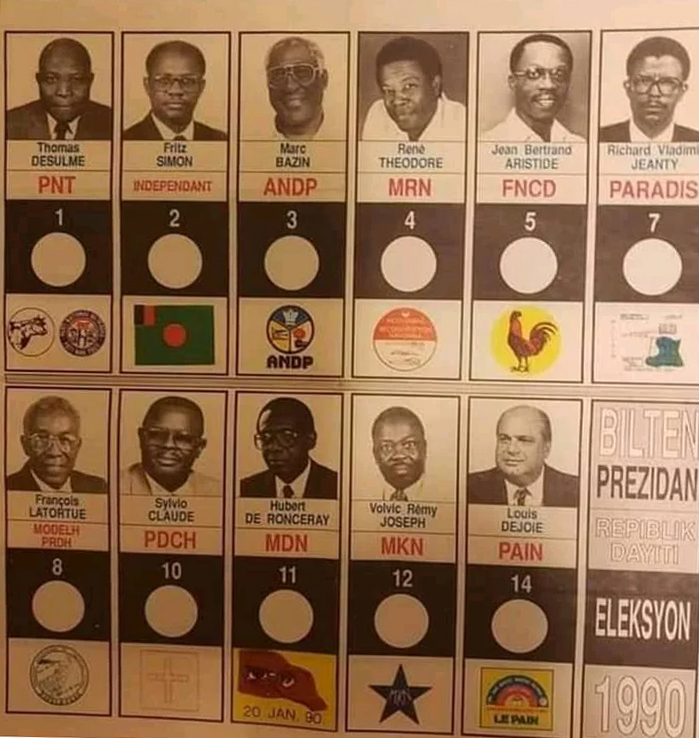
As a choice, Aristide was credible precisely because he represented rupture. He embodied the hope that Haiti could be governed differently—more honestly, more inclusively, more humanely. For an electorate desperate for change, experience within a discredited system mattered less than perceived integrity.
Yet governing Haiti requires more than legitimacy. The presidency is an executive role in a state with weak institutions, hostile elites, and a politicized security apparatus. Aristide entered office with limited experience navigating those realities, no strong party machinery, and little control over forces determined to preserve the old order.
In retrospect, the question is not whether Aristide was a legitimate democratic choice—he clearly was—but whether any outsider, however principled, could realistically govern a state that had never been structurally democratized.
Democracy Without Protection
The answer came swiftly. Less than eight months after his inauguration, Aristide was overthrown in a military coup. Haiti’s first free election was followed by one of its most brutal political reversals.
The coup did not negate the value of the 1990 vote, but it exposed its vulnerability. Haiti had achieved democratic legitimacy without democratic consolidation. There were no strong institutions capable of defending the electoral outcome, no shared commitment among elites to respect the popular will, and no neutral security forces to protect constitutional order.
December 16 revealed both the power of the ballot—and its limits.
Thirty-Five Years of Unfinished Democracy
Since 1990, Haiti’s democratic journey has been marked by cycles of hope and collapse. There have been elections, transitions, and moments of popular mobilization. Yet stability and institutional continuity have remained elusive. Electoral processes have repeatedly been disputed, delayed, or abandoned. Power has too often shifted through crisis rather than consensus.
Today, thirty-five years later, Haiti finds itself in one of the deepest political breakdowns in its history. National elections have not been held for years. Governing authority rests in transitional arrangements rather than electoral legitimacy. Violence and insecurity have hollowed out the basic conditions required for democratic participation.
Measured against the promise of December 16, 1990, the gap is stark.
What the Anniversary Ultimately Tells Us
The legacy of Haiti’s first free election is not failure—but warning.
It proves that Haitians are not indifferent to democracy; they have embraced it when given the chance. But it also demonstrates that elections alone cannot sustain democratic life. Without functioning institutions, security, rule of law, and a shared commitment to constitutional norms, democratic victories can be reversed almost as quickly as they are achieved.
December 16, 1990 remains one of the proudest days in Haiti’s political history. It showed what was possible. Thirty-five years later, it also reminds us of what remains undone: the hard work of building a state capable of protecting the will of its people.
Whether that day becomes a foundation for renewal or a symbol of lost opportunity depends not on memory alone, but on Haiti’s ability—still unrealized—to transform popular sovereignty into durable democratic governance.