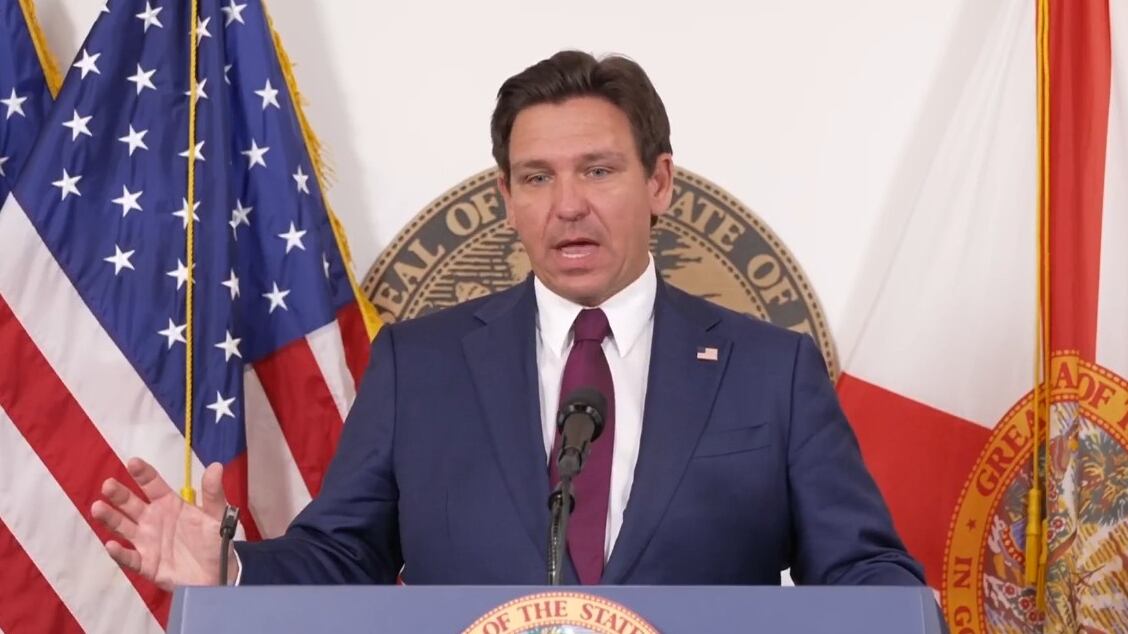
TALLAHASSEE, FL (Le Floridien) — Florida Governor Ron DeSantis has ignited debate over the future of international hiring in higher education after directing the state’s Board of Governors to phase out the use of H-1B visas at public universities. The decision, announced Tuesday (October 28), could reshape faculty recruitment across the state and affect hundreds of foreign workers legally employed in Florida’s academic system.
DeSantis accused public institutions of misusing the federal visa program to “import” foreign workers instead of offering jobs to American citizens. “Florida will not tolerate H-1B abuse,” the governor declared, arguing that state universities should rely on their own graduates to fill teaching, coaching, and administrative roles. He criticized universities for using the visa to hire staff in positions like assistant athletic coaches and media relations specialists, calling them “nonessential” to academic excellence.
The order comes amid a growing national debate over the H-1B program, which allows U.S. employers to hire foreign professionals in specialized fields ranging from engineering to education. While designed to fill gaps in high-skill industries, the program has faced political backlash from both parties — with critics claiming it depresses wages and displaces American workers, and supporters insisting it helps the U.S. remain globally competitive.
Data from U.S. Citizenship and Immigration Services (USCIS) show that Florida’s public universities collectively hold hundreds of active H-1B visas: 156 at the University of Florida, 68 at the University of South Florida, and 67 at Florida State University. Though the state ranks far below others like California, New York, and Texas in total visa usage, the new directive represents one of the most aggressive state-level moves to restrict the program in academia.
Supporters of DeSantis’s decision hailed it as a stand for American labor. James Fishback, CEO of investment firm Azoria, praised the governor on X, calling the move “a victory for American workers.” Others, however, warned that the decision could backfire. Academic leaders and immigration advocates argue that universities depend on international scholars for research innovation, STEM teaching, and critical projects that bolster Florida’s global reputation.
Immigration law experts note that the policy could take years to implement, since most H-1B holders are contracted for up to six years. The uncertainty, however, could discourage international talent from applying to Florida’s universities — potentially affecting their ability to compete with institutions in other states.
While Governor DeSantis frames the move as a defense of American opportunity, critics view it as another front in his administration’s tightening stance on immigration. As the order moves toward implementation, questions remain about how it will affect foreign faculty, researchers, and university programs that rely on global expertise.
What’s certain is that Florida’s higher education system — and the thousands of workers it employs — is now at the center of a national fight over who gets to shape the future of America’s workforce.