
Overview
- Nearly a year into the UN-backed Gang Suppression Force’s mandate, gang violence was still spreading and Haitians had seen little improvement in security.
- After four Salvadoran aviation technicians went missing in an ambush, President Nayib Bukele moved quickly. Within ten days, about 2,000 Salvadoran soldiers were on the ground in Haiti.
- In the weeks that followed, Haitian authorities confirmed the death of one gang leader, while the leader of 400 Mawozo reportedly asked the UN to mediate.
- Why did it take the UN-backed force so long to build up its ranks, and what has the money spent in Haiti’s name delivered for the Haitian people?
(Le Floridien) — A year after the UN Security Council authorized the Gang Suppression Force, about 1,500 personnel were in Haiti. That was the figure U.S. Ambassador to the UN Mike Waltz gave on September 29, 2026, when the Council renewed the mandate. The force was at less than 30 percent of its intended strength, and the UN acknowledged that gang violence was still spreading into new areas.
On October 18, four Salvadoran aviation technicians serving with the UN-backed force went missing after a gang ambush in Croix-des-Bouquets. The attack showed how exposed even personnel assigned to the international mission were in territory where armed groups could strike.
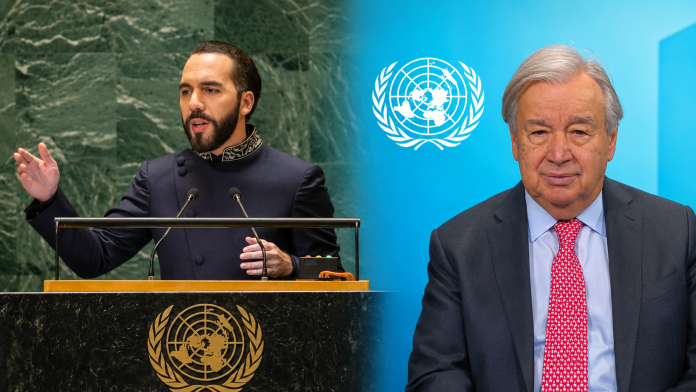
Then came Bukele’s reinforcements. By October 28, ten days after the ambush, Reuters reported that about 2,000 Salvadoran soldiers were already in Haiti. That was roughly 500 more than the figure publicly cited for the entire UN-backed force at its September renewal. By November 10, The Associated Press reported that at least 2,500 Salvadoran personnel were operating in Haiti. The difference in speed was visible. While the multinational force struggled to fill its ranks, El Salvador had moved thousands of people into the country within days.
The public response began to change, too. Reuters reported demonstrations in support of Bukele in parts of Haiti on November 6. For Haitians who had waited years for a security response they could see, the reinforcements gave some reason to hope that life might begin to return to normal.
The first two weeks put gang leaders under pressure
By November 1, less than two weeks after El Salvador launched its rescue operation, the leader of 400 Mawozo had written to the UN seeking mediation, according to Haitian reporting. Haitian police, backed by the Gang Suppression Force, also mobilized armored vehicles for operations around Santo 17, Carrefour Chada and Pont-Badara. On November 6, Haitian authorities confirmed the death of gang leader Mathias Saintil. These developments give Haitians concrete events to judge, including the work of Haitian police and the international personnel who supported them.
In Croix-des-Bouquets, the test is whether roads that armed groups have made dangerous can stay open to ordinary traffic. This week, according to a source in Port-au-Prince whom Le Floridien considers credible, a convoy of about a dozen armored vehicles drove from Port-au-Prince into Carrefour. The source described the crossing as a first. Can a tap-tap driver, a nurse or a parent make the same trip safely once the armored vehicles leave? Ayibopost and The New Humanitarian reported intensified fighting in Croix-des-Bouquets and spoke with residents who feared for their safety. The people living along those roads are the ones who can say whether conditions have improved.
Does the UN really want to help Haitians?
The UN and the governments behind the force can answer that question in public. How much was pledged? How much was actually paid? Who received the contracts for logistics and support? Which roads stayed open, and how many families were able to go home? The UN General Assembly recorded $97.7 million in unpaid assessments for its Haiti support office as of April 30, 2026. That is money owed. Haitians also deserve an accounting of the money that was received, where it went and what it bought.
When a crisis keeps generating budgets, contracts and renewals, Haitians are entitled to ask who benefits from the spending and who is accountable for the results. Bukele’s speed puts that question in sharper focus. What interest do the UN and its member governments have in bringing Haiti’s crisis to an end, and what can they show Haitian families for the money already spent?