Le Floridien | August 4, 2025 __________
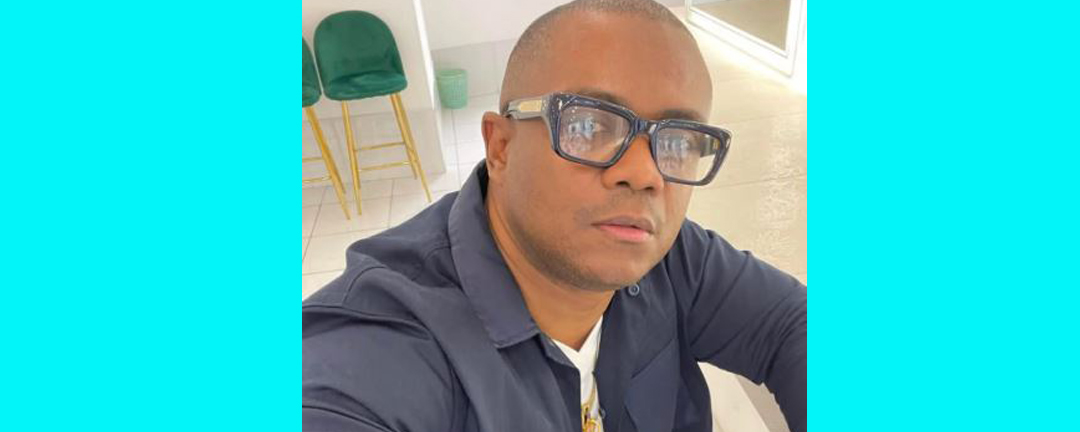
As Haiti spirals deeper into violence and lawlessness, some Haitian-Americans have stepped forward, determined to help their homeland break free from the grip of gangs. But for those willing to act, the mission is proving not only difficult — it’s becoming deadly. The troubling disappearance of Miot Patrice Jacquet, a U.S. Navy veteran, highlights the grave risks facing Haitian-Americans who dare to intervene.
Jacquet, a former logistics coordinator in the U.S. Navy, vanished in December while working in Haiti with Studebaker Defense, a private security contractor hired by Haiti’s transitional government. He disappeared along with his cousin, Steeve Duroseau, a Haitian police officer, during a failed operation targeting one of the country’s most wanted gang leaders, Vitel’homme Innocent.
According to a report from The New York Times, Haitian authorities believe corrupt police officers working with gangs were directly involved in the disappearance of both men. The case underscores a grim reality: those tasked with defending the public are, in some cases, actively collaborating with the very criminals who terrorize the population.
Jacquet was part of a small team of U.S. military veterans deployed by Studebaker Defense, which was being paid $150,000 per month to train a special unit of the Haitian National Police and provide logistical support for anti-gang operations. However, less than two months after Studebaker arrived, tragedy struck.
On the day of Duroseau’s disappearance, a cache of AR-15-style rifles left behind by the private team was looted by armed men pretending to be police officers. Three days later, Jacquet was ambushed in his car and kidnapped. Shockingly, one of the gunmen was driving a U.S.-donated Haitian police vehicle. Neither the weapons nor the missing men have been recovered.
Haitian authorities have provided no public updates on the investigation. Jacquet’s family, including his son, has appealed to U.S. lawmakers and law enforcement for help. Yet, the FBI has stated it cannot intervene unless a direct criminal link to the U.S. is established — a bureaucratic wall that leaves the family in anguish and Jacquet’s fate uncertain.
A Warning to the Diaspora
The case of Miot Patrice Jacquet is not just about a failed mission. It reveals a deeper and more dangerous problem: Haitian-Americans who try to help are vulnerable to betrayal by corrupt elements within Haiti’s own police force. These are people who use the uniform of the state but serve the interests of gangs, undermining any serious attempt to restore law and order.
While Haiti continues to lose ground to criminal groups — most recently, three police officers were killed and another went missing in the central region — those who want to make a difference, like Jacquet, face impossible odds. Even local police unions are raising alarms. “The government does not give the police any importance,” said Haiti’s SPNH-17 police union. “If they took this seriously, they would have given the police and military the tools and support to end insecurity.”
A Call for Accountability
Jacquet’s disappearance is a stark reminder that without addressing internal corruption, any external help will be doomed. How can Haiti win its war against gangs when some in the police are working for the enemy? And what message does it send to Haitian-Americans who are willing to put their lives on the line for their country of birth?
If this trend continues, not only will Haiti fall deeper into chaos, but it risks alienating its most valuable resource — the diaspora — whose skills, resources, and commitment are vital to rebuilding the nation.
The Haitian government owes answers to the families of Miot Patrice Jacquet and Steeve Duroseau. The international community must demand transparency and accountability. And the Haitian-American community must raise its voice, ensuring that those who risk everything for Haiti’s future are not abandoned — or betrayed.