By Dessalines Ferdinand __________________
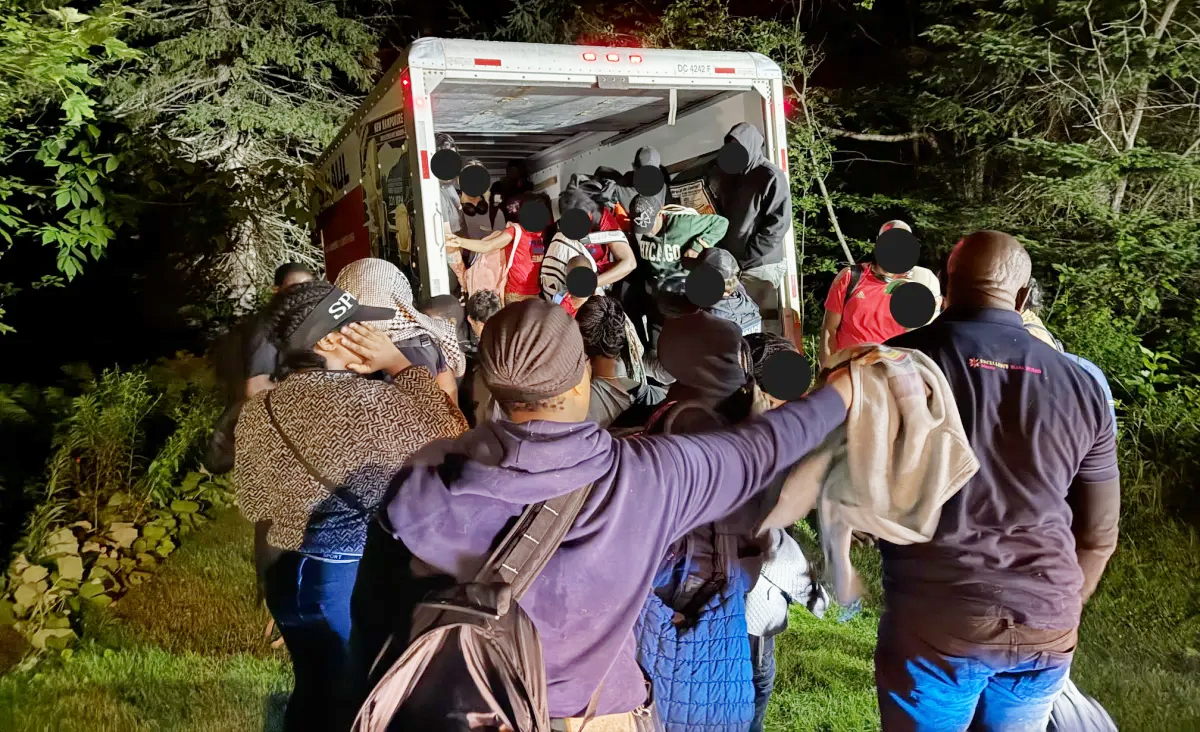
In the early hours of a cold Sunday morning in southern Québec, Canadian authorities intercepted a 16-foot U-Haul truck packed with 44 migrants, most of them from Haiti, including a 4-year-old child and a pregnant woman. Inside the sealed metal box, they could barely breathe. The air was stifling, the space was cramped, and the only light they would see that night came when police opened the rear doors. Relieved to be rescued but painfully aware that their journey had ended in arrest, these asylum-seekers had risked everything to escape a country that has abandoned them.
What led them there was not just the lure of safety in Canada but the collapse of their homeland. Haiti is in the grip of a humanitarian disaster that has deepened with each passing year. The country now faces what some observers call the highest homicide rate in the world. More than 5,600 people were killed in 2024 alone. Gang violence is rampant, displacing 1.3 million people from their homes. The healthcare system has collapsed, food insecurity is severe, and ordinary life has become an exercise in survival. For countless Haitians, the choice is no longer whether to leave, but whether they can survive the journey out.
Those in power in Haiti bear direct responsibility for this mass exodus. Political elites, business magnates, and entrenched figures in government have profited from instability while failing to restore order or provide basic services. Corruption and impunity have hollowed out state institutions, leaving citizens to fend for themselves in a landscape ruled by armed gangs. The wealthy and powerful are shielded from the chaos, living behind walls and guarded gates, while the poor are left with no option but to run. Every overcrowded truck, every leaky boat, and every dangerous trek through forests and rivers is a consequence of that neglect and greed.
The 44 migrants in the U-Haul had already endured hours of hardship before being crammed inside. Canadian police say they walked for about two hours in the forest after crossing from the U.S., wading through waist-high water in the cold. Many were wet, hungry, and exhausted when officers intercepted the vehicle just minutes north of the Vermont border. The smugglers who facilitated this crossing were arrested, but the demand for such dangerous journeys will not end while Haiti remains in free fall.
Canada’s government, like that of the United States, is tightening border controls, focusing on enforcement rather than addressing the root causes driving migration. The newly proposed Strong Borders Act in Canada aims to further restrict refugee crossings. In the U.S., the reversal of Temporary Protected Status for Haitians has left many fearing deportation. These policies may deter some, but they do nothing to change the fact that for many Haitians, staying home means facing hunger, violence, or death.
This latest case in Québec is not an isolated incident but a symptom of a deeper crisis. Until Haiti’s leaders are held accountable for the destruction of their nation, until the corruption, mismanagement, and indifference that have fueled this collapse are confronted, more Haitians will gamble their lives in the hope of finding safety elsewhere. The back of that U-Haul truck was just one chapter in a much larger story, a story written by those in power who have abandoned the people they were meant to serve.
Photo courtesy of the Royal Canadian Mounted Police