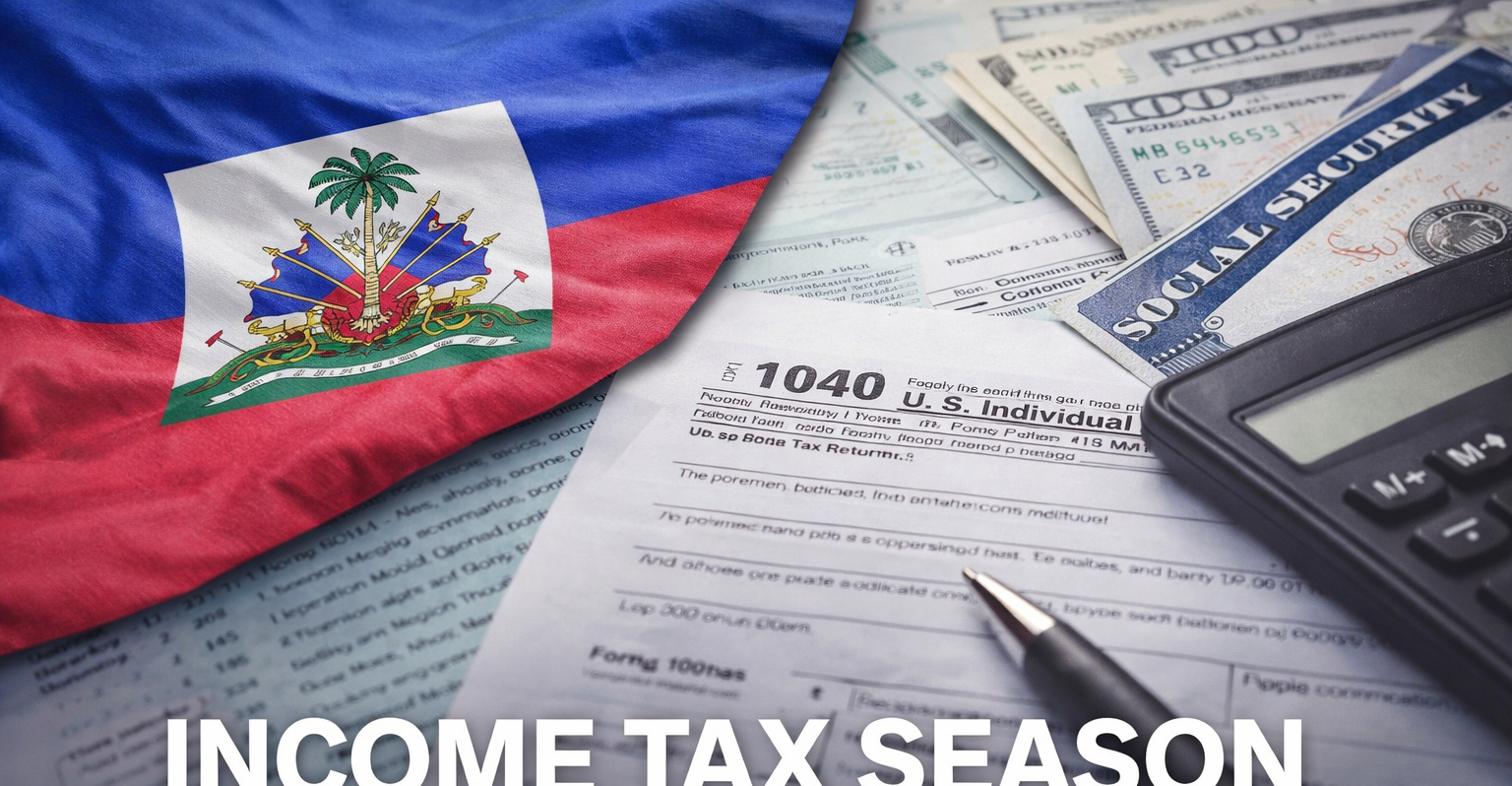
This article explains how income tax season affects the South Florida Haitian community and why understanding tax rules is important. It describes who must file, the difference between W-2 employees and 1099 workers, and how families may qualify for refunds such as the Earned Income Tax Credit and Child Tax Credit. The article also warns about dishonest tax preparers and provides simple tips on choosing reliable help, keeping records, and using free assistance programs. Overall, it encourages readers to view tax season not only as a responsibility, but as an opportunity to improve financial stability.
By Le Floridien
Each year from January through April, millions of Americans prepare and file their income taxes. For many families in the South Florida Haitian community — especially in areas like North Miami, Miami Gardens, Lauderdale Lakes, and West Park — tax season can be stressful, confusing, and sometimes even risky. Understanding how the system works can help families avoid costly mistakes and even receive refunds that make a real difference in their lives.
First, it is important to understand what income tax is. Income tax is the money the federal government (and sometimes the state) collects based on the income you earn from work, self-employment, or certain benefits. Florida does not have a state income tax, which is a major advantage for residents. However, everyone who earns income in the United States generally must file a federal tax return each year with the Internal Revenue Service (IRS).
Many Haitian immigrants work in healthcare, transportation, hospitality, construction, childcare, and small businesses. Some are employees receiving a W-2 form, while others are independent contractors who receive a 1099 form. This distinction is very important. Workers who receive a 1099 are considered self-employed and must pay their own taxes, including Social Security and Medicare taxes. Every year, many people are surprised to learn they owe money because taxes were never withheld from their paychecks.
One of the most important opportunities during tax season is the tax refund. Many low- and moderate-income families qualify for the Earned Income Tax Credit (EITC) and the Child Tax Credit. These credits can return thousands of dollars to families with children. For some households, this refund becomes the largest financial payment they receive all year and helps them pay rent, buy a car, or cover school expenses.
However, tax season also brings danger. Unfortunately, some members of the community fall victim to dishonest tax preparers. Every year in South Florida, complaints arise about preparers who promise “big refunds,” charge extremely high fees, or file incorrect information without the client’s knowledge. In some cases, false dependents or false income are reported to increase refunds. While the preparer disappears, the taxpayer remains responsible if the IRS audits the return. This can lead to penalties, repayment of the refund, and even legal trouble.
Community leaders and professionals strongly recommend choosing a reputable tax preparer. A legitimate preparer should sign the tax return and provide a Preparer Tax Identification Number (PTIN). Never sign a blank return and always request a copy of the filed tax documents. If possible, families can also use IRS-supported free tax preparation programs such as Volunteer Income Tax Assistance (VITA), which serves many low-income residents.
Another important issue affecting the Haitian community is immigration status. Even individuals without a Social Security number may be able to file taxes using an Individual Taxpayer Identification Number (ITIN). Filing taxes can help demonstrate good moral character, establish financial records, and may assist in certain immigration processes.
Tax season should not only be seen as an obligation, but as an opportunity for financial stability. By filing correctly, keeping records, and avoiding fraudulent preparers, South Florida’s Haitian families can protect themselves and benefit from the resources available to them. With better information and preparation, the community can turn tax season from a period of anxiety into a moment of financial empowerment.