Le Floridien Editorial Board
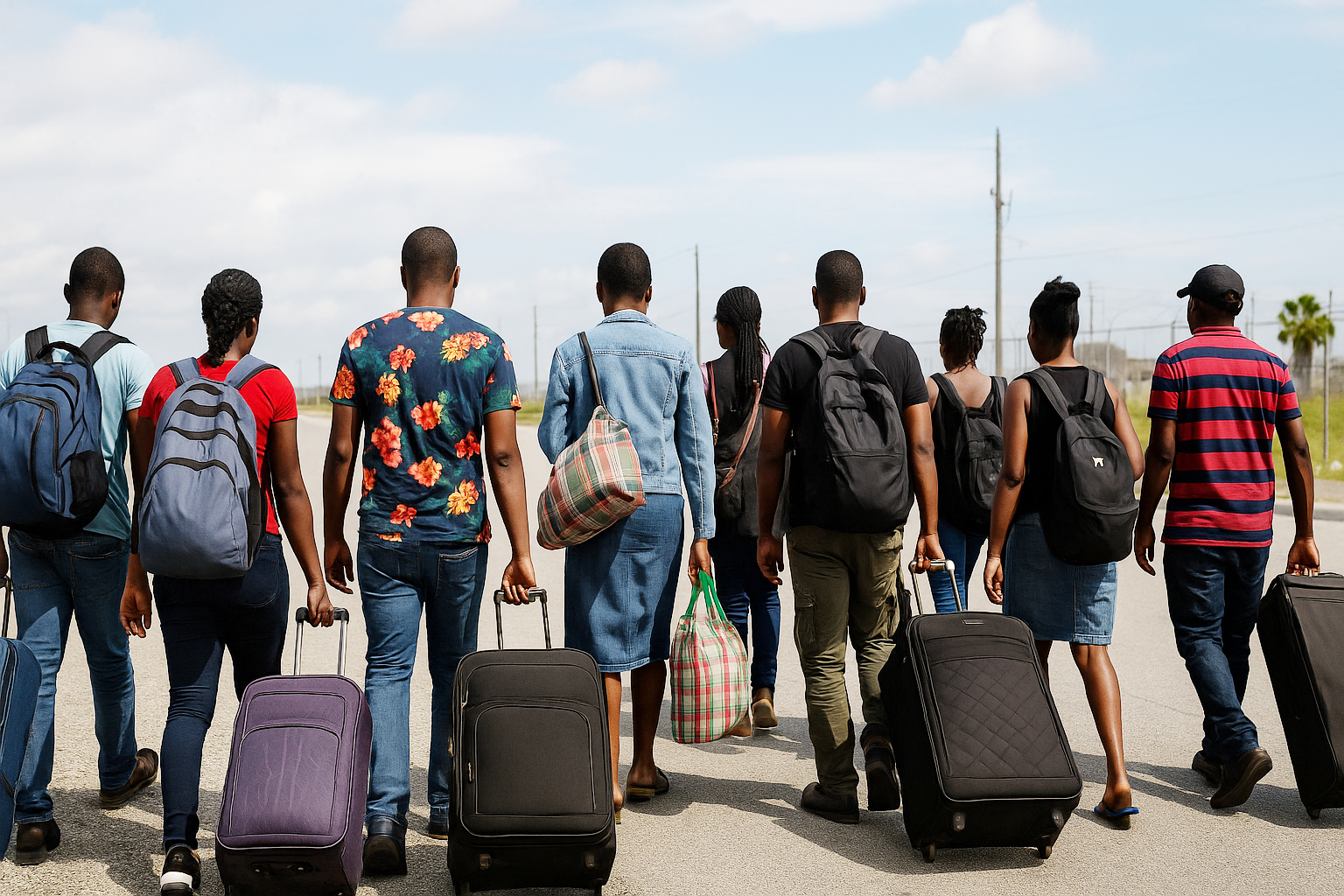
The recent decision to terminate the parole program implemented under the Biden administration—commonly referred to as the “CHNV” program (for Cubans, Haitians, Nicaraguans, and Venezuelans)—has left thousands of migrants, especially Haitians, in a legal and emotional limbo. While the Department of Homeland Security is following through on the original terms—two years of legal stay—there is a fundamental question the administration must now answer: What happens next for those already here?
Let’s be clear: these individuals did not cross the border illegally. They came because the United States government invited them through an official humanitarian parole program, offering a legal and orderly path to safety. They underwent thorough background checks, secured sponsors, and complied fully with the law. Yet now, in a sudden and unannounced shift, the current administration has abruptly terminated the program, leaving thousands in legal limbo and facing the unthinkable: being forced to return to a homeland overwhelmed by violence, political instability, and complete collapse.
“There are no flights to Haiti, and even if there were, I can’t take my kids back to that hell,” said Marie-Louise Célestin, a 35-year-old single mother living in Homestead. “I left Gressier after gangs started taking over our neighborhood. Now my children are in school, learning English. What am I supposed to do—wait to be deported with no job, no home to return to?”
Haiti is in total disarray. Port-au-Prince is effectively cut off by gang-controlled zones. The country has no stable government, no reliable infrastructure, and no pathway for safe repatriation. Forcing people to return now is not only unrealistic—it’s dangerous.
“I was working, paying taxes, and sending money home to help my mother and younger siblings survive,” shared Jean-Michel Dor, a 29-year-old Haitian man living in Naples. “I didn’t come here to take anything. I came to live, to work, and to be part of something better. Now, with my work permit revoked and the government telling us to leave, I wake up every day afraid—afraid of losing everything I’ve built and being forced back into chaos.”
The administration has the authority—and the responsibility—to respond with compassion and logic. Whether through re-designating Temporary Protected Status (TPS), offering Deferred Enforced Departure (DED), or creating a new path to adjustment for parolees already here, something must be done.
“I signed the two-year agreement. I knew the terms,” admitted Roselaine Pierre, a CNA (Certified Nursing Assistant) in Fort Lauderdale. “But I also believed that if I followed the rules, something good would come. I left behind my family, my life. I didn’t come here to play games—I came because I believed in this country.”
These individuals upheld their end of the agreement. They followed every rule, arrived legally, worked hard, and began building lives rooted in dignity and hope. They placed their trust in the promise of the United States—a nation that presented itself as a beacon of refuge and opportunity. To now abandon them in the midst of instability and send them back to danger is not only a betrayal of that promise, but a stain on the nation’s moral conscience.
America has a choice to make—not just a political one, but a human one. These men and women are not asking for handouts. They are asking for fairness, for compassion, and for the chance to continue contributing to a country that opened its doors to them.
They’ve done their part. Now, it’s time for America to honor its word—