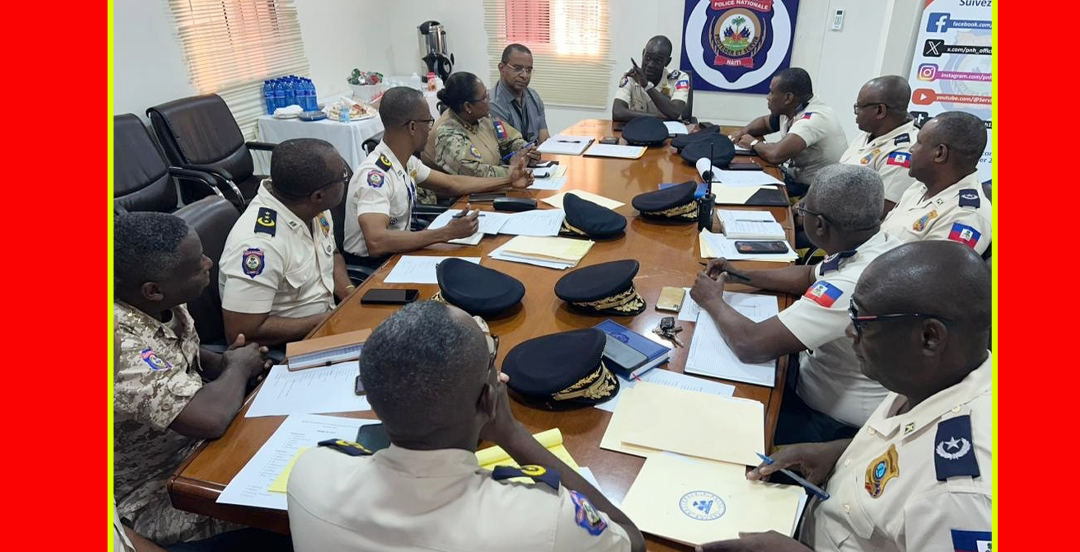
Security operations carried out by the Haitian National Police in Delmas 2, a neighborhood long considered a stronghold of gang leader Jimmy “Barbecue” Chérizier, are being viewed as a major test of the state’s ability to reclaim territory from armed groups.
PORT-AU-PRINCE, HAITI (Le Floridien) — After months of relentless gang violence that paralyzed entire sections of the capital, recent police operations suggest that the Police nationale d’Haïti may be slowly regaining control of neighborhoods long terrorized by heavily armed groups in Port-au-Prince.
On Wednesday, January 14, the PNH announced the launch of a major security operation in Delmas 6, an area widely described as the stronghold of gang leader Jimmy Chérizier, better known as “Barbecue.” Chérizier is considered the most visible figure of the gang coalition Viv Ansanm, which U.S. authorities have designated as a terrorist organization.
In a statement released by the police communications office (DIKOP), the PNH confirmed that the operation is being conducted jointly with the Forces armées d’Haïti, the Task Force, the FRG, and the PMC. According to the police, security forces are advancing inside the neighborhood with the objective of dislodging armed groups, dismantling their bases, and restoring state authority in a zone that has long remained beyond government control.
While Delmas 6 has been the focus of past police interventions, the current operation appears broader in scope and coordination. Authorities emphasize that this renewed push reflects an effort to move beyond symbolic incursions and toward sustained territorial control. The police insist that their objective is not only to confront gangs militarily, but also to reestablish order in areas where residents have lived under constant threat.
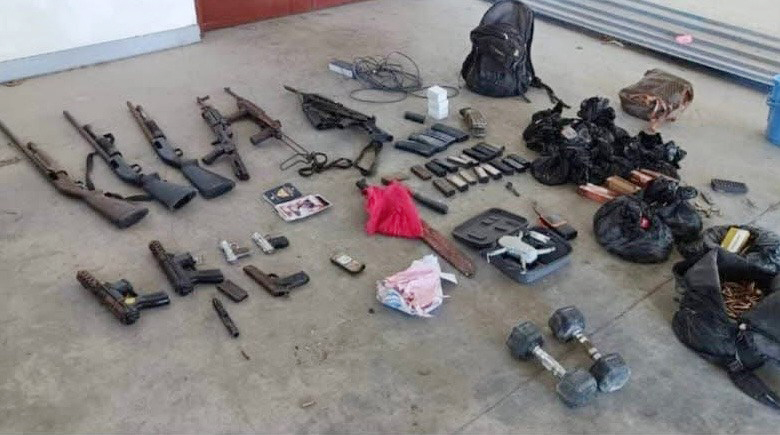
At the same time, similar operations are being carried out in other parts of the metropolitan area. In Bel-Air, for instance, recent police actions have reportedly forced gang members to retreat, allowing law enforcement to reoccupy zones that had effectively been abandoned by the state. For residents, the return—however partial—of uniformed officers represents a break from months of unchecked violence, extortion, and displacement.
Taken together, these developments are seen by some observers as signs of a renewed operational capacity within the PNH, supported by improved coordination among domestic security forces. After years of criticism over its inability to contain gang expansion, the police now appear more assertive, launching simultaneous operations and targeting areas previously considered untouchable.
Still, caution prevails. Despite repeated operations in Delmas 6, Jimmy Chérizier continues to surface publicly, speaking openly on behalf of Viv Ansanm and challenging state authority. His continued visibility raises doubts about whether the police can translate tactical advances into lasting control.
Beyond the security dimension, the timing of these operations has also sparked political debate. They are unfolding as the mandate of the Conseil présidentiel de transition approaches its scheduled end on February 7. Some analysts question whether the renewed show of force reflects a genuine turning point in the fight against gangs—or a strategic effort to demonstrate progress at a moment when political legitimacy is under scrutiny.
Beyond Haiti’s borders, these developments are being followed closely by Haitians in the diaspora, particularly in the United States, Canada, and France. For many, the prospect of improved security in Port-au-Prince revives a long-held hope: the ability to return home safely, even if only to visit family, attend funerals, weddings, or cultural events, as they once did. Years of gang violence and instability have forced countless Haitians abroad to postpone or abandon travel plans, deepening the emotional distance from their homeland. Any sign that the police are reclaiming control is therefore not only a security matter, but a powerful signal to the diaspora that reconnecting with Haiti may one day again be possible.
The central question remains unresolved: is Haiti witnessing the beginning of a durable reconquest of state authority in Port-au-Prince, or a fragile security push whose sustainability will depend on political will, resources, and continuity beyond the current transition?
For now, residents of neighborhoods like Delmas 6 and Bel-Air are watching closely, hoping that this time, the return of the police will last longer than the sound of the gunfire that preceded it.