From Little Haiti to North Miami, South Florida remains the beating heart of the Haitian diaspora — where culture, faith, and community keep Haiti’s spirit alive every day.
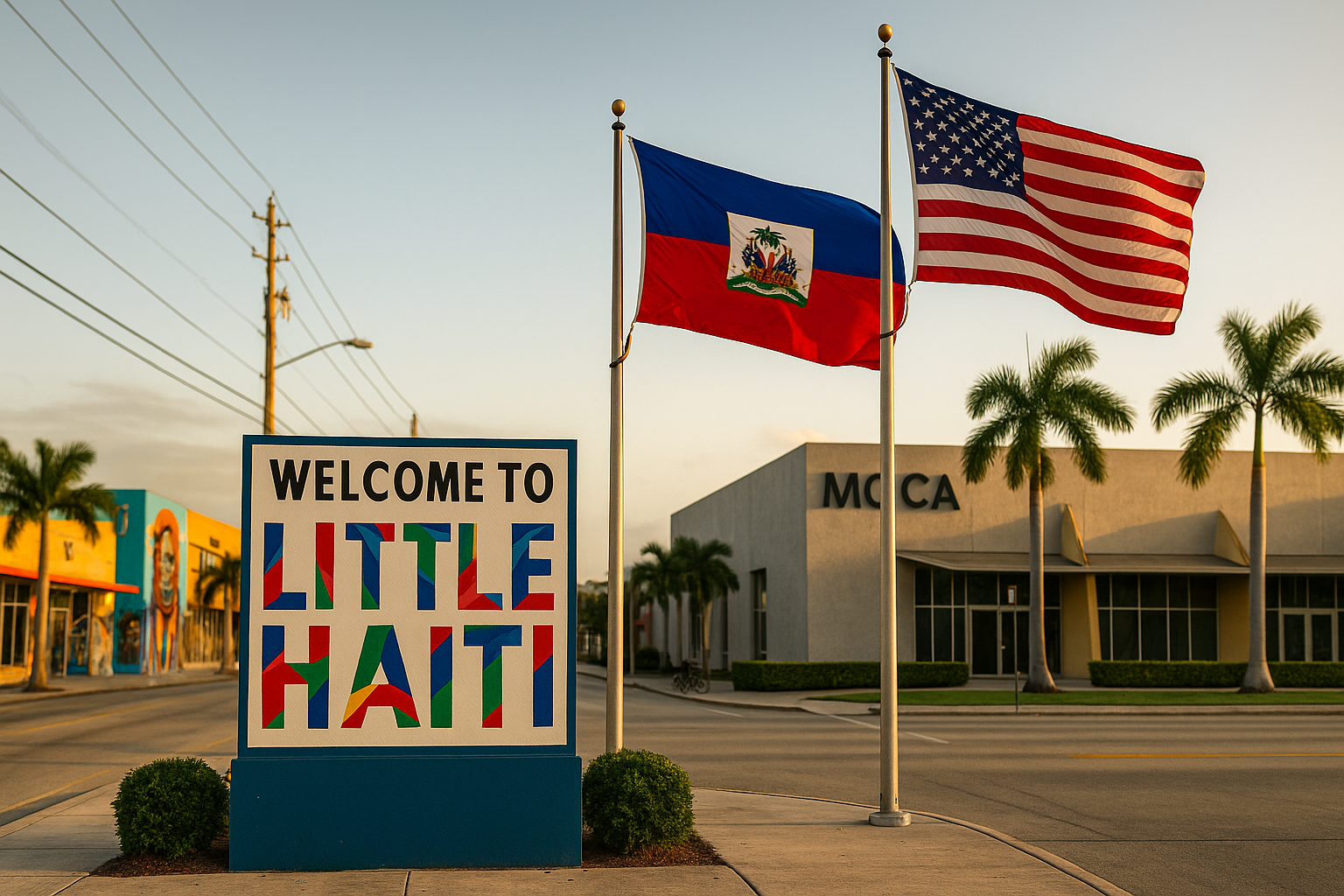
South Florida is more than just home to a large Haitian community — it is the living, breathing heart of the global Haitian diaspora. From the vibrant murals of Little Haiti to the flourishing Haitian-owned businesses in North Miami, North Miami Beach, Miramar, and beyond, this region tells a story of resilience, identity, and transformation. Across Miami-Dade, Broward, and Palm Beach Counties, the spirit of Haiti — the world’s first Black republic — beats powerfully, shaping the culture and economy of an entire region.
The bond between Haiti and South Florida was forged in the 1960s and 1970s, when political refugees fled the Duvalier dictatorship and sought safety along Miami’s shores. For thousands, Florida offered their first taste of freedom and new opportunities to build a better life — not only for themselves but also for the families they had left behind. The region’s tropical climate, warm breezes, and coastal landscapes evoked the familiar rhythms of the Caribbean, making South Florida feel less like exile and more like a continuation of home. Out of hardship and hope, neighborhoods emerged that carried Haiti’s soul into this new yet familiar land. Little Haiti soon became the cultural and emotional capital of Haitian America, where the cadence of Creole conversations, the rhythm of konpa music, and the aroma of griot and pikliz keep alive the heartbeat of a nation that refuses to fade.
According to the most recent U.S. Census data, more than 180,000 Haitian-born residents live in South Florida — primarily within Miami-Dade, Broward, and Palm Beach Counties — forming the largest concentration of Haitians in the United States. In North Miami and North Miami Beach, Haitians comprise a clear majority, transforming civic leadership and local governance. North Miami, in particular, is led by a majority Haitian-American city council (4–1), a testament to how public servants, entrepreneurs, and educators have turned community challenges into civic strength. From housing, immigration and health care advocacy to small business development, Haitian leadership continues to shape the region’s political and social future.
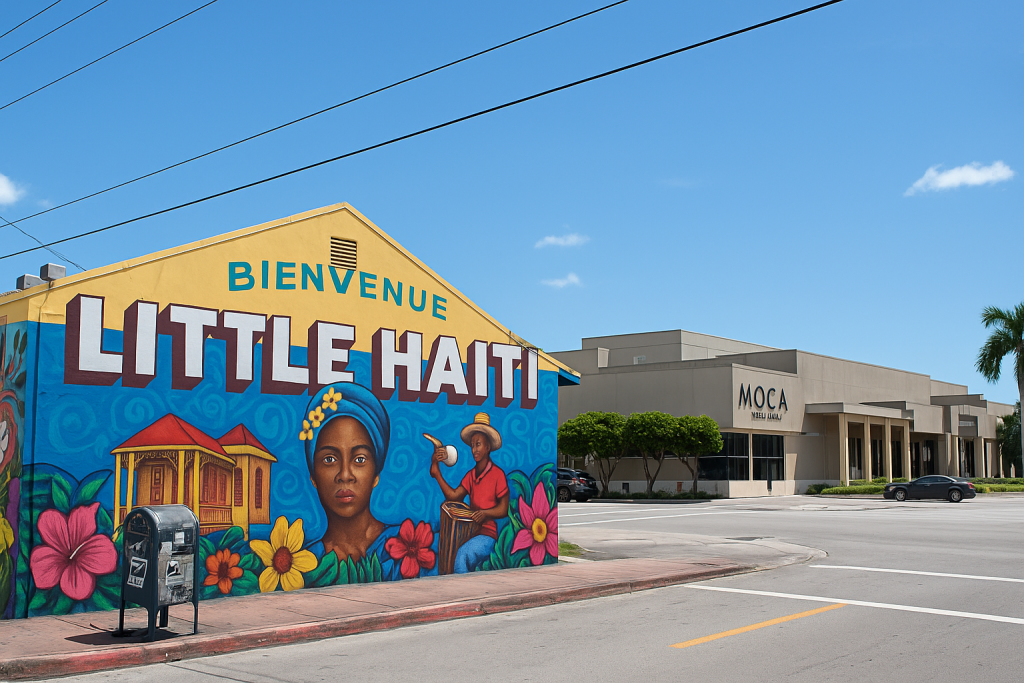
Culturally, South Florida stands as Haiti’s most vibrant echo abroad. Each May, Haitian Heritage Month fills the streets with parades, art exhibitions, and musical celebrations that honor the richness of Haitian identity. At the center of this cultural renaissance stands the Little Haiti Cultural Complex, a dynamic space that showcases Haitian art, music, theater, and community dialogue year-round. More than a landmark, it serves as a living monument to Haiti’s creativity and endurance, a place where children learn traditional dance, artists exhibit their work, and the diaspora gathers to honor its heritage.
Local media outlets, including Le Floridien, Island TV, Planet Radio, and Radio Mega, ensure that the Haitian voice continues to resonate across South Florida, not only in Creole and French, but increasingly in English. This linguistic bridge connects generations, enabling Haitian stories to reach broader audiences while preserving their cultural integrity. Through journalism, art, and everyday storytelling, Haitian identity in South Florida does not simply endure, it evolves, adapting to modern realities while remaining deeply rooted in its origins.
The Haitian influence also extends deeply into South Florida’s economic landscape. Across the tri-county region, Haitian-owned enterprises are a driving force behind local commerce and community development. Beloved restaurants such as Chef Creole, Cuisine Creole, Randy’s, Le Bebe, Pimank Book, and L’Auberge have become culinary landmarks, while nightlife venues like Hollywood Live and The Kartz energize the social scene. Beyond food and entertainment, a thriving network of law offices, medical practices, community centers, barbershops, beauty salons, and electrical and air-conditioning companies showcases the breadth of Haitian entrepreneurship and professional excellence. In Broward County, dynamic Haitian communities in Miramar, Lauderdale Lakes, Margate, and Pompano Beach stand as powerful examples of immigrants who built prosperity from the ground up. Further north, in Palm Beach County, a new generation of Haitian professionals is leaving its mark in education, health care, law, and technology — clear proof that the community’s influence continues to expand and redefine success across South Florida.
Faith and solidarity remain the spiritual pillars of the Haitian presence in South Florida. At Notre Dame d’Haiti Catholic Church in Miami, faith and community converge in a sanctuary that has long anchored the diaspora’s resilience. Beyond worship, the church functions as a humanitarian hub — coordinating disaster relief for Haiti, supporting struggling families, and nurturing the next generation of Haitian leaders. Across the region, churches and community organizations turn prayer into action, embodying the compassion and unity that define the Haitian spirit.
Today, a new generation of Haitian-Americans born and raised in South Florida — many of them the sons and daughters of the first wave of immigrants — is redefining what it means to be both Haitian and American. They are physicians, journalists, educators, artists, athletes, entrepreneurs, and elected officials who blend cultural pride with innovation and civic purpose. Their accomplishments affirm that South Florida is not only the heart of the Haitian diaspora but also its mind and voice — a place where Haitian dreams take shape, evolve, and inspire communities far beyond America’s shores.
As long as the songs of Little Haiti echo through Miami’s streets, as long as families gather in North Miami to celebrate both freedom and faith, and as long as Haitian businesses continue to thrive from Miami-Dade to Palm Beach, the heartbeat of Haiti will continue to sound — strong, steady, and full of life — in the vibrant soul of South Florida.