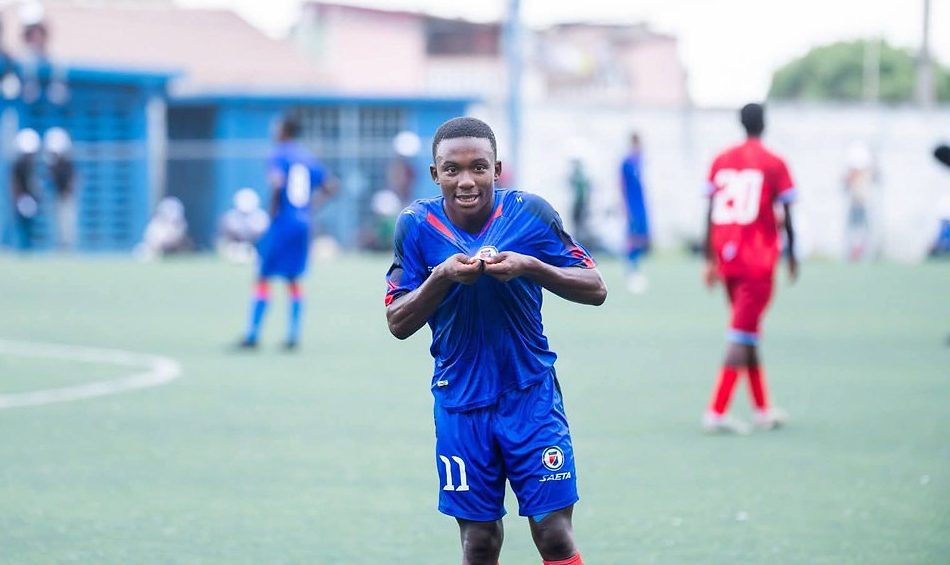
Overview:
Théodore Djuny, a gifted young footballer from Aquin, has stirred both admiration and debate after abruptly leaving Haiti’s U17 national team camp in Spain ahead of the FIFA World Cup. His unexpected departure, reportedly to pursue opportunities with a European club, highlights the tension between personal ambition and national loyalty. While some view his move as a courageous leap toward professional growth, others see it as a blow to Haiti’s football aspirations. Djuny’s decision reflects the broader challenges faced by young Haitian athletes—caught between patriotism, limited local opportunities, and the allure of a global football future.
By Le Floridien Staff_____________________
When news broke that Théodore Djuny, one of Haiti’s most promising young footballers, had abruptly left the national team camp in Spain, the reaction among fans and observers was mixed, ranging from admiration for his courage to disappointment in his timing. The 17-year-old striker from Aquin (southern coast Haiti) was not just another player in the squad; he was a vital piece of Haiti’s offensive puzzle heading into the FIFA U17 World Cup. His decision to walk away on October 18, shortly after attending the FC Barcelona vs Girona FC match with teammates, sent shockwaves through Haitian football circles.
According to sources close to the team, Djuny’s departure was deliberate, not impulsive. It appears he saw in Europe a door that Haiti could not yet open for him, a chance to train, grow, and compete in an environment that could accelerate his career. Reports suggest that a friend helped him connect with a French club interested in assessing his potential. For many young athletes from developing football nations, this is the dream: to break through the limits of local infrastructure and reach the professional circuits that shape world-class talent.
From one perspective, Djuny’s move is an act of vision and agency. In a country where sporting opportunities are limited, players often face the difficult choice between national duty and personal advancement. Haiti has long struggled with inadequate sports investment, inconsistent management, and unstable pathways for youth athletes. For Djuny, Europe might represent not a betrayal, but an escape, a chance to secure professional training and visibility that Haiti’s system simply cannot yet guarantee.
However, the timing and method of his departure raise important questions about commitment, structure, and communication within Haitian football. Walking away during a World Cup preparation camp sends a damaging message to teammates and officials. It undermines the unity and discipline that international competition demands. Haiti’s under-17 squad was counting on his creativity and finishing skills; his absence now forces a last-minute tactical reshuffle and may dent morale.
This incident also exposes the systemic fragility of Haitian football development. If a player feels that his best option for progress is to leave camp without coordination or transparency, it reflects deeper issues—lack of career planning, weak player management, and absence of long-term support. Too often, talented youths are caught between passion and survival, forced to make solitary decisions without institutional backing or clear professional pathways.
The Haitian Football Federation (FHF) has yet to release an official statement, but the silence speaks volumes. How the federation responds will determine not only Djuny’s fate but also the message sent to the next generation of Haitian athletes. Will they see loyalty as a burden and self-determination as the only path forward? Or will the FHF use this episode to reflect on how to better nurture, protect, and retain young talent?
In the end, Théodore Djuny’s departure is neither a simple act of rebellion nor a straightforward story of ambition. It is a mirror reflecting the realities faced by many Haitian youths, driven by dreams too big for their environment, willing to take risks others fear, and caught between patriotism and the pursuit of personal excellence. His story should challenge Haiti’s football authorities to transform frustration into reform, because for every Djuny who leaves, there are dozens watching, wondering if they must do the same to be seen.
If Europe becomes the place where he fulfills his potential, Haiti will still share in that success. But perhaps the greater victory will come when young players like him no longer have to choose between serving their flag and chasing their future.