Once again, the Haitian community in South Florida stands at a critical crossroads—this time over the fate of thousands of Haitian immigrants whose lives hang in the balance, as the Trump administration prepares to terminate Temporary Protected Status (TPS) on September 2nd.
And once again, our so-called leaders have responded not with unified strength, but with discord. Not with strategy, but with fragmentation. Not with one powerful, coordinated voice—but with a chorus of scattered, disconnected efforts.
This past weekend starkly revealed the deepening divisions within the Haitian community in South Florida. Two separate events—each addressing the looming termination of Temporary Protected Status (TPS)—were held in rapid succession, yet neither reflected a unified strategy or shared vision.
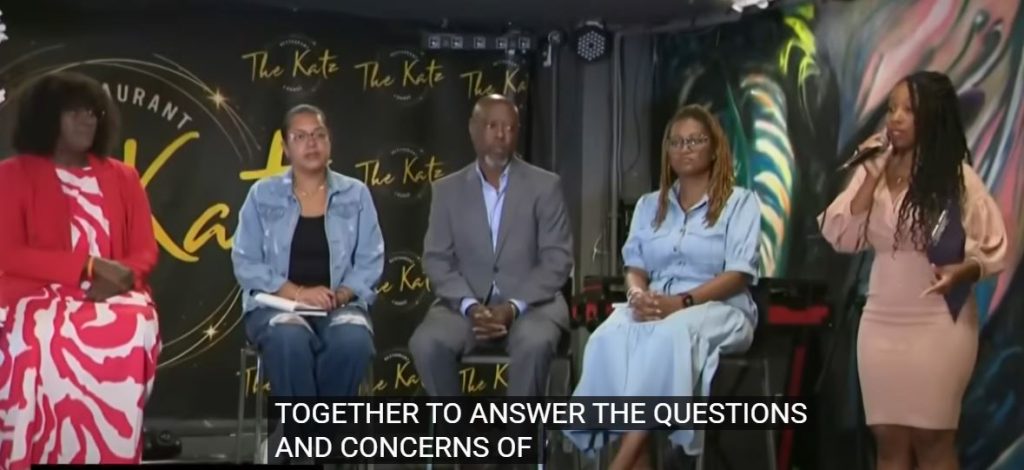
On Sunday afternoon, a Haitian-American community member, Christine Sanon Jules, organized an “Emergency Town Hall Meeting” at The Kartz Restaurant in North Miami, under the name of an unregistered local group called “Haitian Advocates.” While the invitation was widely shared via WhatsApp by Naomi Blemur, former North Miami mayoral candidate, Ms. Blemur was not the main organizer of the event. Although the gathering aimed to address a pressing and urgent issue, it ultimately reflected the ongoing pattern of isolated efforts that lack broader coordination. Despite the urgency implied in its title, the event appeared disconnected from any unified advocacy plan or coalition strategy—highlighting, once again, the fragmentation that continues to hinder the effectiveness of Haitian-led initiatives in South Florida.
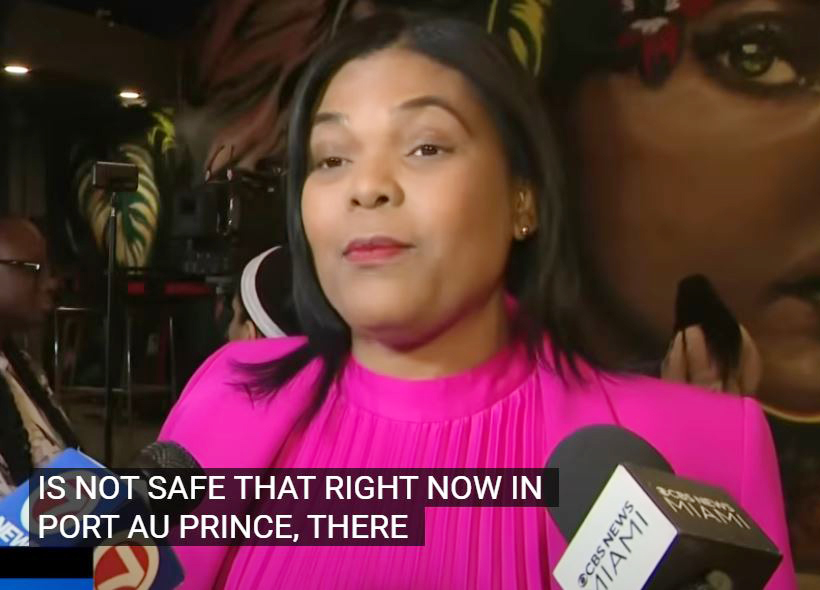
Former North Miami mayoral candidate Naomi Blemur speaks to local television stations following the “Emergency Town Hall Meeting” held at The Kartz Restaurant on Sunday, June 29, 2025, addressing the urgent concerns facing Haitian TPS recipients amid escalating insecurity in Haiti. Photo via CBS Miami.
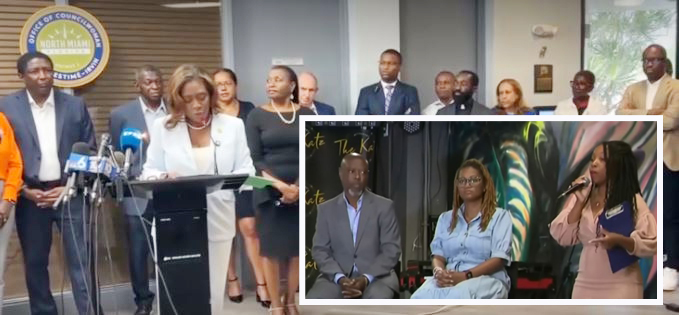
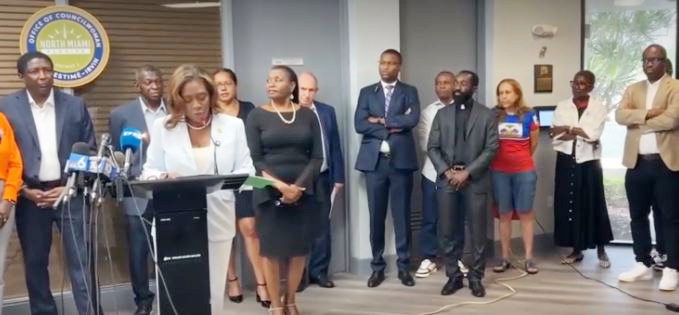
The following day, on Monday, a seemingly more coordinated press conference—organized by the National Haitian American Elected Officials Network (NHAEON)—was held at the Griffing Community Center, led by North Miami Councilwoman Mary Estimé-Irvin in her capacity as chair of the organization. The event brought together a broader and more diverse coalition of stakeholders, including current and former elected officials, faith leaders, legal advocates, and community organizers. In contrast to the previous day’s hastily assembled gathering, this press conference projected a more unified and strategic tone. Speakers issued urgent warnings about the severe human consequences of deporting Haitian TPS recipients, citing credible threats of kidnapping, sexual violence, and death awaiting returnees in a nation increasingly defined by lawlessness and political chaos. Meanwhile, another similar gathering is reportedly being planned in Broward County in the coming days, further underscoring the persistent lack of centralized coordination and the continued fragmentation of efforts within the Haitian-American community.
Two events. Two separate platforms. And two missed opportunities for collective impact. This latest display of fragmentation—spanning Miami-Dade and Broward counties—once again resulted in a disjointed and redundant response to a crisis that urgently calls for unified strategy and coordinated leadership. Far from advancing the cause, such division deepens public skepticism and reinforces a troubling reality: that for far too many, personal branding and political posturing continue to take precedence over the pressing needs of the Haitian community.
This dysfunction is not new. In 2011, during early efforts to commemorate the catastrophic Haiti earthquake, similar patterns emerged. Rather than organizing a single, dignified memorial, self-anointed community figures pursued their own isolated events. Many seemed more eager to circulate 30-second video clips on Facebook or WhatsApp—as digital trophies of personal visibility—than to engage in meaningful collective remembrance. The result: overlapping ceremonies, diluted messaging, and a confused, disengaged public.
So what is the objective of all this division? A fleeting appearance on local news? A selfie at the podium? If that’s the standard of success, then let us be clear: we are failing our people.
This level of disunity is not just disappointing, it is dangerous. With TPS holders facing imminent deportation—and credible reports indicating that returnees may face rape, abduction, or even death, there should be one plan, one message, and one mobilized community working in unison to push legal, political, and humanitarian strategies forward.
Instead, we see redundant efforts, fractured messaging, and a deepening crisis of leadership. Haitian families are living in fear. Parents face separation from their children. Immigrants who have built lives here are now uncertain if they will be here next month. This is not the time for egos. This is the time for real leadership, strategic, unified, and uncompromisingly focused on the greater good.
At Le Floridien, we issue a clear call to action: we urge every Haitian-American elected official, activist, and self-styled “community leader” to come together under one roof, and speak with a single, authoritative voice. We also call on our fellow members of the media—though few consistently uphold the standards of integrity our community deserves—to stop amplifying fragmented, self-serving efforts, and instead hold those in power accountable for their ongoing failure to cooperate.
The Haitian community does not lack intelligence, passion, or resources. What it lacks is the collective will to put unity before ego, and service before self-interest.
The survival and dignity of our people may well depend on what we do in the days ahead. Let us not go down in history as the community that could not unite to defend itself.
The era of scattered press conferences must end.
The time for unity is now.