By Le Floridien______________
Florida shoppers could soon see higher prices at the grocery store because of new trade tariffs being imposed by former President Donald Trump. The tariffs are meant to bring more manufacturing jobs back to the United States, but they also mean that imported goods—including many foods—will cost more.
Starting August 1, the tariffs will include a 25% tax on products from countries like Japan and South Korea, and a 10% tax on goods from most other nations. There will also be a 20.9% tariff on tomatoes from Mexico and a 50% tariff on orange juice and coffee concentrate from Brazil. These items are commonly found in Florida stores and are important parts of many households’ weekly shopping.
Florida is one of the largest importers of goods in the United States, bringing in $117 billion worth of products in 2024 alone. Experts from Florida TaxWatch, a well-known economic watchdog, are warning that these new tariffs could cause grocery prices in Florida to rise by 10 to 15 percent.
Economists at Yale University estimate that American households could lose around $3,800 a year in purchasing power because of these tariffs, with food prices rising as much as 5% for certain items. Other reports even suggest the cost could go as high as $4,900 per year for some families if they don’t change how they shop.
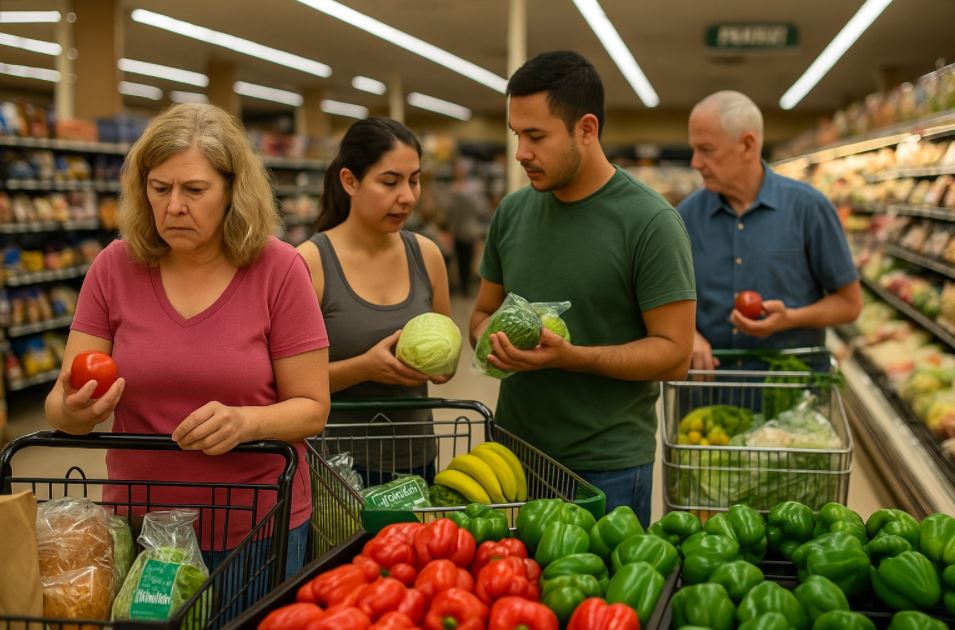
For Florida families, the price hikes will likely show up first in the produce aisle. Tomatoes from Mexico, orange juice from Brazil, and coffee are just a few of the items expected to get more expensive. For example, tomatoes could go up by about 10%, while the cost of orange juice is already rising on the market because of these policies.
Some retailers like Costco are trying to protect their customers from these increases by buying more products from within the U.S., but not all stores will be able to do that. Eventually, most of these higher costs will be passed on to shoppers.
Florida TaxWatch says this is the price consumers will pay for these tariffs, even though the goal is to protect U.S. industries in the long run. Florida families, especially those already struggling with high living costs, will feel the impact every time they check out at the grocery store.
“It’s already hard enough to afford groceries,” said Miami resident Roseline Paul, a mother of two. “Now we’re going to have to pay more for tomatoes and coffee? I just don’t see how people are supposed to keep up.”
In the months ahead, Florida shoppers should prepare for higher bills on many of their everyday food items. While the tariffs may serve a political purpose, the effect on family budgets will be very real.