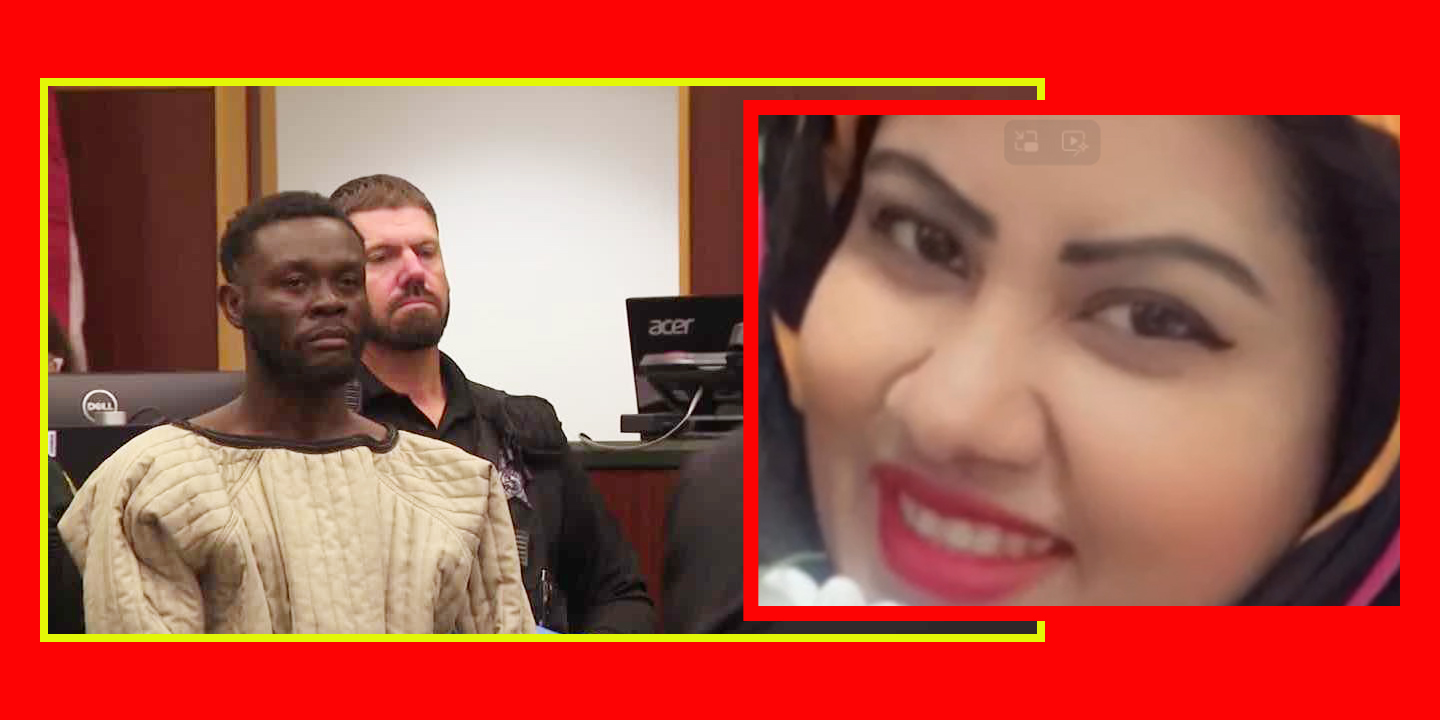
FORT MYERS, Fla. — What began as a local crime story has rapidly evolved into a case drawing national, and even international, attention.
The killing of Nilufa Easmin, a gas station clerk and mother of two, is raising serious questions. What really happened? Here’s what we know so far — and why this case, among many others, has captured such widespread attention.
The Killing of Nilufa Easmin: A Brutal Crime That Resonates
At the center of the case is the nature of the attack itself.
Authorities say Easmin was struck multiple times with a hammer in broad daylight, outside her workplace, an act whose violence and setting have deeply shocked the public. Reports that surveillance footage captured the incident have further intensified reactions.

Beyond the brutality, the identity of the victim has also contributed to the case’s reach. Easmin, originally from Bangladesh, was described as a hardworking woman devoted to her two teenage daughters.
Her story, one of a working mother going about her daily life, has made the tragedy more relatable, particularly among immigrant and diaspora communities, where the case has been widely shared.
Immigration and a Highly Charged National Debate
Another major factor behind the case’s visibility is the immigration status of the suspect, Rolbert Joachim, a Haitian national.
Federal authorities have confirmed that the 40-year-old suspect first entered the U.S. in August 2022 and was released into the country under the Biden administration. A federal judge issued a final order of removal against him in 2022, but the Biden administration granted him Temporary Protected Status which expired in 2024.
This dimension has placed the case at the center of an already sensitive national conversation around immigration policy, enforcement, and public safety.
Critics argue that Joachim’s case exposes what they view as serious shortcomings in the Biden administration’s immigration enforcement, saying the decision to release him and later allow him to remain in the country despite a deportation order preceded the fatal attack on an innocent woman.
In a deeply polarized political climate, incidents that intersect crime and immigration often gain rapid traction, transforming local cases into symbols within broader national debates.
A Story That Crosses Borders
The case has also attracted attention beyond U.S. borders.
With the victim originally from Bangladesh and the suspect identified as a Haitian national, the story touches multiple international communities. It has circulated widely across diaspora networks, including in the Caribbean and South Asia.
In today’s interconnected media landscape, stories involving migration, identity, and violence often travel quickly across borders, amplifying their reach and impact.
More Than a Local Case
Ultimately, the killing of Nilufa Easmin has drawn widespread attention because it reflects more than a single act of violence.
It sits at the intersection of human tragedy, public safety concerns, and national policy debates, factors that continue to drive both media coverage and public interest.
As the legal process unfolds, the case remains under close scrutiny, with authorities emphasizing that the investigation is ongoing and that the accused is presumed innocent until proven guilty.