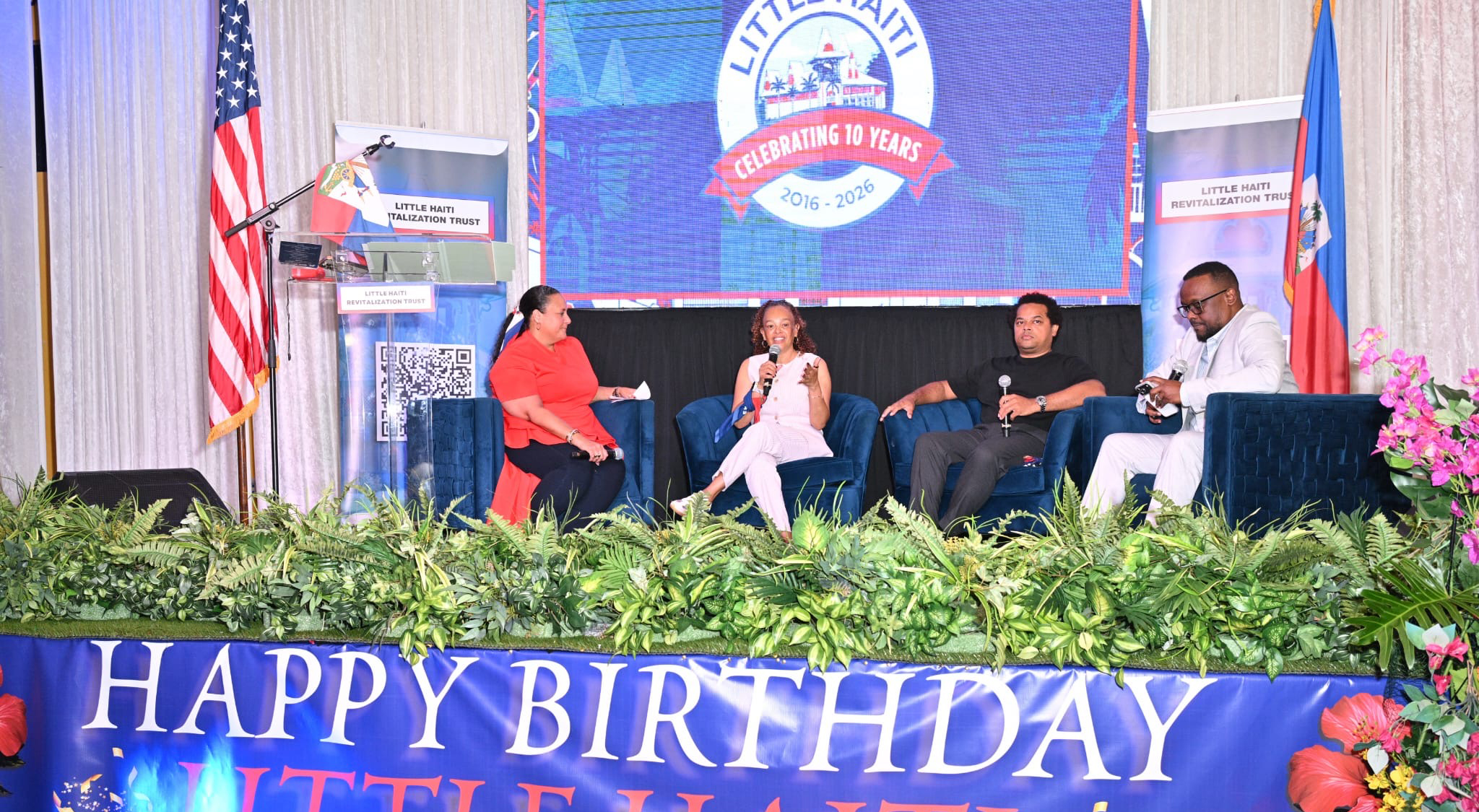
MIAMI (Le Floridien) — Community leaders, elected officials, business owners, and longtime residents gathered Tuesday evening at the Caribbean Marketplace to celebrate the 10th anniversary of Little Haiti’s official recognition as a Miami neighborhood.
The event, organized by the Little Haiti Revitalization Trust (LHRT) in partnership with Kamikaz LLC and the Little Haiti Cultural Complex, brought together residents and community stakeholders to honor a major milestone in the history of Miami’s Haitian community.
Held at the iconic Caribbean Marketplace, the celebration highlighted Little Haiti’s cultural, economic, and historical contributions to the City of Miami. Guests paid tribute to the generations of Haitian immigrants who helped transform the neighborhood into the cultural heart of the Haitian diaspora in South Florida.
The anniversary also served as a reminder of the years of advocacy that led to the historic May 26, 2016 vote, when the Miami City Commission unanimously approved the official designation and boundaries of Little Haiti. The effort was championed by then-City Commissioner Keon Hardemon and supported by many Haitian-American community figures, including Marleine Bastien, Joann Milord, Gepsie Metellus, and others who worked to preserve the neighborhood’s identity amid growing development pressures.
Ten years later, many of those same leaders returned to celebrate a victory that placed Little Haiti on Miami’s official map and affirmed the lasting contributions of the Haitian community to the city’s history and future.
A Celebration of Culture and Community Pride
The evening began shortly after 7 p.m. with hosts Carel Pedre and Mia Lopez, who welcomed guests and reminded them of the importance of the occasion. They described the anniversary as more than a celebration of a name on a map, calling it a tribute to the Haitian immigrants, activists, and community leaders whose determination helped protect Little Haiti’s cultural identity.
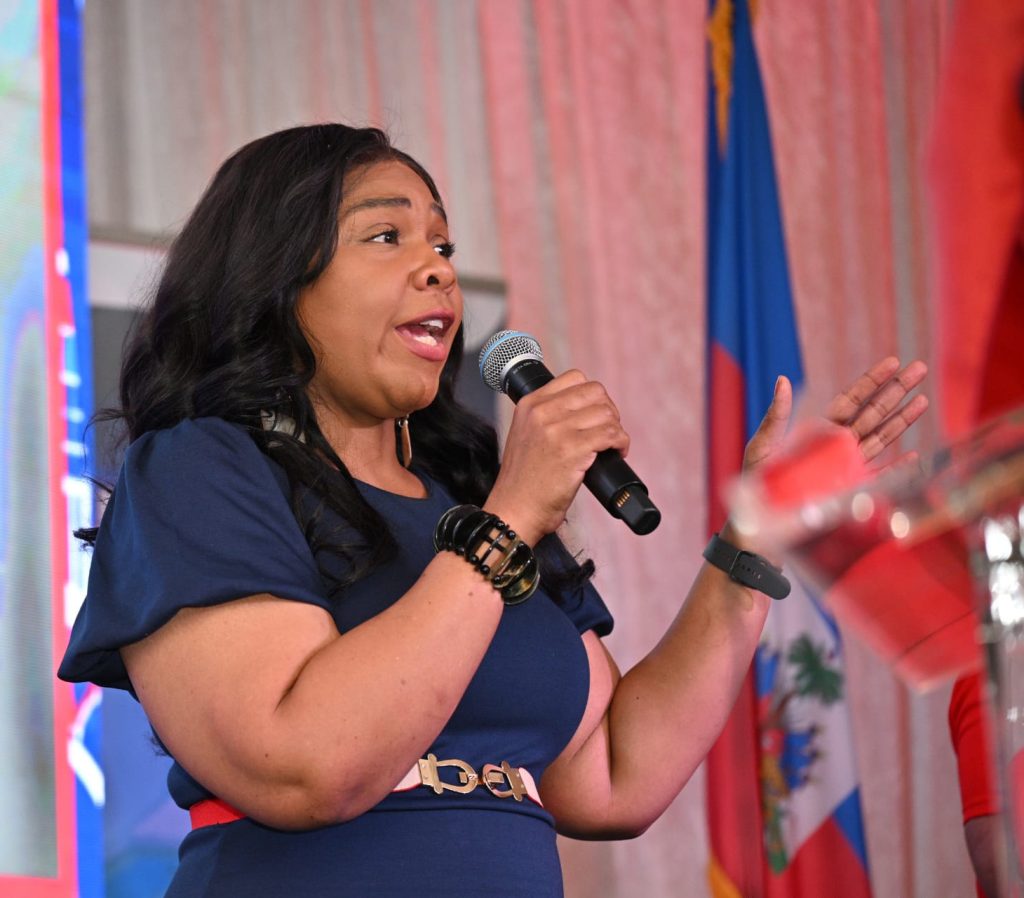
One of the evening’s highlights came when local singer Sheila Be performed the national anthems of the United States and Haiti. Her powerful rendition brought the audience to its feet and set a tone of unity and pride for the evening.
The cultural portion of the program continued with a vibrant performance by members of the NSL Dance Ensemble, who blended traditional and contemporary Haitian rhythms. Their choreography reminded the audience that music, dance, and culture have always been central to Little Haiti’s identity.
Father Reginald Jean-Mary, pastor of Notre-Dame d’Haïti Catholic Church, then delivered the invocation. He reflected on the long journey that led to Little Haiti’s official recognition and paid tribute to the pioneers, activists, and residents who helped make the designation possible. He also offered prayers for those who contributed to the movement but are no longer alive to witness the anniversary celebration.
His remarks reminded the audience that Little Haiti is more than a geographic location. It remains the cultural and spiritual heart of South Florida’s Haitian community.
Leaders Reflect on Little Haiti’s Past and Future
The evening’s panel discussion featured Miami-Dade County District 3 Commissioner Keon Hardemon, who served as City of Miami District 5 commissioner when the historic vote took place in 2016, and current City of Miami Chairwoman and District 5 Commissioner Christine King.
Their conversation gave the audience a deeper look at the political work, community advocacy, and determination required to make Little Haiti’s official designation a reality.
Hardemon used the occasion to deliver a strong message about unity, responsibility, and neighborhood pride.
“This is a time in which Black people have to start to work together to make their neighborhoods better,” he said. “And if you’re not trying to make the community a little better, then you’re not my friend — and that’s okay. So let’s all be friends and work together.”
Speaking about development in neighborhoods such as Little Haiti, Chairwoman King emphasized the need for community involvement, accountability, and direct communication with residents.
“I am your public servant, and if I don’t communicate with you, how do I know what the needs are for our community?” King said. “You are not going to come and ask to develop in District 5 without me asking: What are you going to do for the community? How are you going to give back? Not under my watch.”
Joann Milord, President and Chief Executive Officer of the Little Haiti Revitalization Trust, delivered the closing remarks. She thanked the speakers, elected officials, community advocates, business leaders, residents, and supporters who attended the celebration.
Milord said the milestone was the result of years of advocacy, cultural preservation, and collective work to protect the identity of Little Haiti.
As President and CEO of LHRT, Milord plays an important role in supporting affordable housing, economic development, cultural preservation, and community engagement in the neighborhood. Under her leadership, the Trust continues to work so residents have a voice in Little Haiti’s growth while protecting the Haitian heritage that makes the neighborhood one of South Florida’s most important cultural communities.
Ten years after its official recognition, Little Haiti remains a powerful symbol of resilience, identity, and community pride.