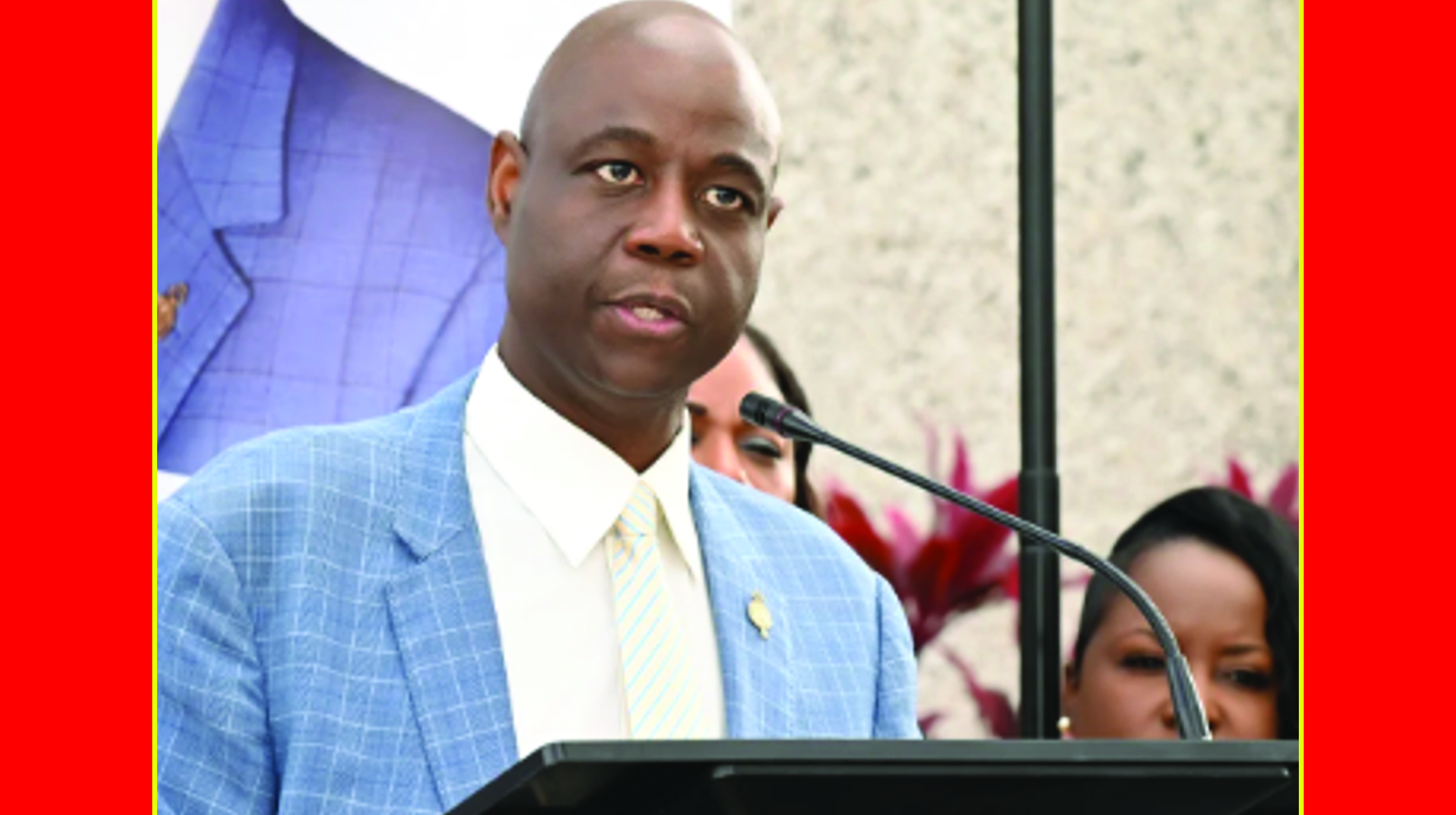
After nearly four years as mayor, Alix Desulme faces an abrupt political setback. While some sympathize with his disqualification, others revisit the controversial extension of his tenure, questions about his leadership, and the legacy he leaves behind.
Analysis by

Dessalines Ferdinand
NORTH MIAMI, FL (Le Floridien) — The disqualification of North Miami Mayor Alix Desulme from the November 3 election has sparked sharply contrasting reactions within the community. While some residents sympathize with the Haitian-American mayor over the legal setback, others express little regret, pointing to questions about his leadership and record in office.
For supporters, Desulme’s removal from the race over the method used to pay his qualifying fees is an unfortunate development for a public official with years of municipal service. His critics, however, see the controversy as an opportunity to reassess his administration’s priorities, political relationships, and responsiveness to the broader community.
When news broke on Monday, October 19, 2026, that a judge had ruled against Desulme, effectively removing him from the November 3 mayoral election, some residents gathered outside the North Miami Public Library reacted with visible satisfaction. Their response reflected deeper frustrations with his leadership, as critics accused him of favoring a select circle of supporters rather than serving all segments of the community equally. For these residents, his political setback represented more than a legal defeat; it underscored longstanding dissatisfaction with how he had governed the city.
The dispute has also brought renewed attention to Desulme’s record in office, the priorities of his administration, and the lasting impact of his leadership on North Miami.
A Controversial Path to the Mayor’s Office
Desulme became mayor in December 2022 following the resignation of his predecessor, Philippe Bien-Aime, who had unsuccessfully sought the Miami-Dade County Commission District 2 seat against community activist Marleine Bastien.
On December 13, 2022, the North Miami City Council unanimously appointed Desulme, then vice mayor, to fill the vacancy.
That same evening, the council approved changes to the City Charter and municipal election schedule, moving elections originally set for May 2023 to November 2024. The decision extended the terms of several sitting officials, including Desulme, by approximately 18 months.
City leaders defended the move as a cost-saving measure intended to boost voter participation by aligning municipal elections with federal and statewide contests. The extension nevertheless drew criticism because it allowed incumbents to remain in office beyond their previously scheduled election dates without first seeking a new mandate from voters.
For Desulme, the change meant serving nearly two years as an appointed mayor before facing the electorate.
He ultimately secured that mandate on December 3, 2024, defeating Hector Medina in a runoff with 67.61% of the vote. While the victory confirmed his electoral support, the circumstances surrounding his initial appointment and extended tenure remain part of the political debate over his administration.
Did Desulme’s Administration Serve All of North Miami Residents?
Desulme’s leadership has also faced criticism from some segments of North Miami’s Haitian community, where concerns have been expressed about whether his administration represented the broader population or devoted disproportionate attention to individuals within his political and personal circle.
Those raising these concerns argue that City Hall could have been more responsive to ordinary residents, particularly those without established political connections.
Although determining whether preferential treatment occurred would require supporting evidence, the criticism raises broader questions about transparency, political inclusiveness, and equitable access to municipal resources, appointments, and public services.
In a culturally diverse city such as North Miami, elected officials are expected to represent residents across neighborhoods, backgrounds, and political affiliations. How effectively Desulme fulfilled that responsibility remains a point of disagreement.
Official Travel Raises Questions About Spending and Accountability
Desulme’s official travel has drawn scrutiny from some community members who question whether the resources devoted to such engagements produced tangible benefits for North Miami.
During his tenure, Desulme participated in official trips, including an August 2023 visit to several African countries alongside other South Florida elected officials. The delegation reportedly took part in diplomatic meetings, cultural exchanges, and discussions involving sister-city initiatives.
Although international partnerships can encourage investment and economic cooperation, critics have called for greater transparency regarding travel expenses and documented outcomes. On October 19, 2026, outside the North Miami Public Library, some residents went further, openly suggesting that Desulme’s official travel expenditures should be independently audited to determine how the trips were financed and whether they delivered tangible benefits to the city.
Their questions raise important issues of public accountability: How much did these trips cost, and who paid for them? What agreements or opportunities resulted from them? And what measurable benefits did North Miami residents receive?
A comprehensive review of travel records, funding sources, and subsequent achievements would be necessary to assess their value. Nevertheless, the issue highlights an important expectation of public accountability: Officials should be prepared to demonstrate how official activities advance municipal interests, especially when residents face pressing concerns involving infrastructure, housing affordability, and essential services.
A Disqualification That Changed the Political Landscape
Desulme’s bid for another term suffered a decisive setback on October 19, 2026, when Miami-Dade Circuit Judge Beatrice Butchko Sanchez ruled that he had failed to comply with election qualifying requirements.
The case centered on two bank-issued cashier’s checks totaling $5,392.80, which Desulme used to pay his qualifying fees. Florida election law requires such payments to be made directly from a campaign account through checks signed by the campaign treasurer.
Desulme’s attorney, Benedict “Ben” Kuehne, argued that the funds originated from the mayor’s campaign account and that the payment complied with the city’s election requirements. The judge disagreed and ordered his disqualification.
Desulme’s legal team subsequently challenged the eligibility of his remaining opponent, George Morgan, alleging that Morgan’s qualifying payment was short by 80 cents. On October 22, the court rejected Desulme’s counterclaim and request for relief.
The ruling left Morgan as the sole qualified candidate. Under the county’s election procedures, the mayoral race was declared unopposed, meaning votes cast in the contest would not alter the outcome.
Kuehne indicated that Desulme intended to pursue an appeal.
Although the dispute concerned election-law compliance rather than his performance as mayor, its consequences effectively ended his immediate bid for reelection, subject to any further court intervention.
Sympathy for Some, Little Regret for Others
Desulme’s political setback has prompted differing assessments of his years at City Hall.
Supporters point to his administration’s work on infrastructure, flood mitigation, affordable housing, and community programs. They also emphasize his decisive victory in the December 2024 runoff as evidence that he earned a mandate from voters.
Others remain less sympathetic, citing the controversial extension of municipal terms, concerns about political inclusiveness, and unanswered questions about the costs and benefits of official travel.
These competing perspectives underscore the complexity of Desulme’s political standing. His disqualification may be viewed by supporters as a harsh consequence of a procedural violation, while critics see it as a moment to examine the decisions and priorities that defined his tenure.
The contrasting reactions reveal how differently Desulme’s years in office are viewed, underscoring the divide between those who emphasize his public service and those who question his administration’s priorities and decisions.
What Legacy Will Alix Desulme Leave Behind?
As Desulme’s tenure approaches its conclusion, attention shifts from the legal circumstances of his disqualification to the broader record of his administration. After nearly four years in office, identifying a defining achievement that residents can widely associate with his leadership remains a subject of debate.
His tenure began with a controversial appointment, followed by an extended period before his first mayoral election and a subsequent victory at the polls. Supporters point to his years of public service, community engagement, and initiatives they believe contributed to North Miami’s development. Critics, meanwhile, question whether his administration delivered meaningful, lasting improvements, citing concerns about political representation, spending priorities, and public accountability.
These contrasting assessments illustrate the challenge of separating Desulme’s political controversies from the broader impact of his administration.
Ultimately, the historical assessment of his years as mayor will depend less on the circumstances of his arrival or departure from office than on what his leadership delivered for the people of North Miami.
Dessalines Ferdinand is the Publisher and Chief Editor of Le Floridien. A media professional with more than 35 years of experience, he has closely observed and covered Haitian-American politics in South Florida for nearly three decades.