Less than three months after Le Floridien highlighted her ambitious initiative, the Haitian-American psychologist and her partners have taken a concrete step toward helping deported Haitians rebuild their lives with dignity.
By Le Floridien Staff
MIAMI, FL (Le Floridien) — In a Haitian diaspora community where ambitious humanitarian projects are frequently announced but do not always materialize, Dr. Guerda Nicolas is demonstrating that meaningful commitments can translate into concrete action.
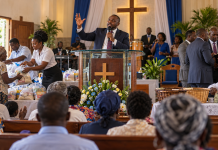
On October 28, 2026, a coalition of 38 organizations from Haiti and the diaspora officially inaugurated the BED ROCK reception center in Zovensen, near Cap-Haïtien. The facility is designed to assist Haitians deported or otherwise returning from the United States as they confront the difficult process of rebuilding their lives in their homeland.
The inauguration represents an important milestone for an initiative that Le Floridien first highlighted on August 10, 2026, in an article titled “How a South Florida-Based Organization Is Helping Former TPS Holders Return Home With Dignity and Rebuild Their Lives in Haiti.”

At the time, Dr. Nicolas, a University of Miami professor, psychologist, and president and co-founder of Ayiti Community Trust (ACT), outlined an approach to helping Haitians facing possible return from the United States. Her vision centered on providing a soft landing — practical assistance that would allow returnees to reconnect with their communities, secure employment opportunities, and regain economic independence.
Today, that vision has begun taking physical shape.
A Promise Followed by Action
What makes this development particularly noteworthy is the relatively short period between the public presentation of the initiative and the opening of a facility intended to put its objectives into practice.
Rather than allowing the project to remain an appealing idea discussed in meetings and conferences, Nicolas and her partners have helped advance it toward implementation.
The BED ROCK center is designed to provide administrative assistance, professional guidance, educational support, and psychosocial services to returning migrants.
Among its planned services are assistance with obtaining passports, tax identification numbers, and other official documents, as well as helping parents enroll their children in school and connecting qualified individuals with employment opportunities.
The initiative also incorporates a digital platform, Ayiti Home Link, intended to help returnees register their needs, identify their professional skills, and access available support.
A Collective Effort With a Clear Mission
While Dr. Nicolas has played a prominent role in developing the initiative, the project reflects a broader mobilization involving approximately 38 organizations based in Haiti and abroad.

Among the participating organizations are Ayiti Community Trust, Children of the Promise, Anseye Pou Ayiti, PH Global, United for Women Empowerment, and Fondation Alfred Beliard.
Dr. Geralde Vital Gabeau, another leading figure in the initiative, has also emphasized the importance of restoring hope and dignity to Haitians forced to begin again in their country of origin.
The project recognizes that many deported Haitians face difficulties far beyond their immediate arrival. Some have spent decades living and working in the United States, raising families, establishing careers, and building lives they never expected to leave behind.
For these individuals, returning to Haiti can mean confronting unfamiliar economic conditions, limited employment opportunities, and serious security challenges.
BED ROCK seeks to provide a support system to help them navigate those obstacles.
An Example Worth Recognizing
Within the Haitian diaspora, calls for unity, investment, and community development are common. Turning those aspirations into functioning institutions, however, requires sustained leadership, financial resources, cooperation, and determination.
That is why the opening of BED ROCK deserves recognition.
For Dr. Nicolas, the inauguration represents more than a ceremonial ribbon-cutting. It provides visible evidence that the humanitarian initiative she helped promote is moving beyond the planning stage.
At the same time, the center’s long-term impact will depend on its ability to deliver consistent services, secure sustainable funding, and produce measurable results for the people it intends to assist.
Opening a facility is an important first step. Successfully reintegrating vulnerable returnees will be the more demanding test.
It is equally important to emphasize that humanitarian assistance for deported migrants should not be interpreted as an endorsement of U.S. deportation policies or as evidence that Haiti is safe for everyone being returned.
The goal is to ensure that those who do return are not left to face their circumstances entirely alone.
For now, one achievement is clear: a project that Dr. Guerda Nicolas was discussing publicly in August has reached a concrete milestone by October.
In a community where many initiatives struggle to move beyond promises, that transition from words to action is a meaningful accomplishment — and an example of the leadership and collaboration that Haiti and its diaspora urgently need.