By Le Floridien ____________________
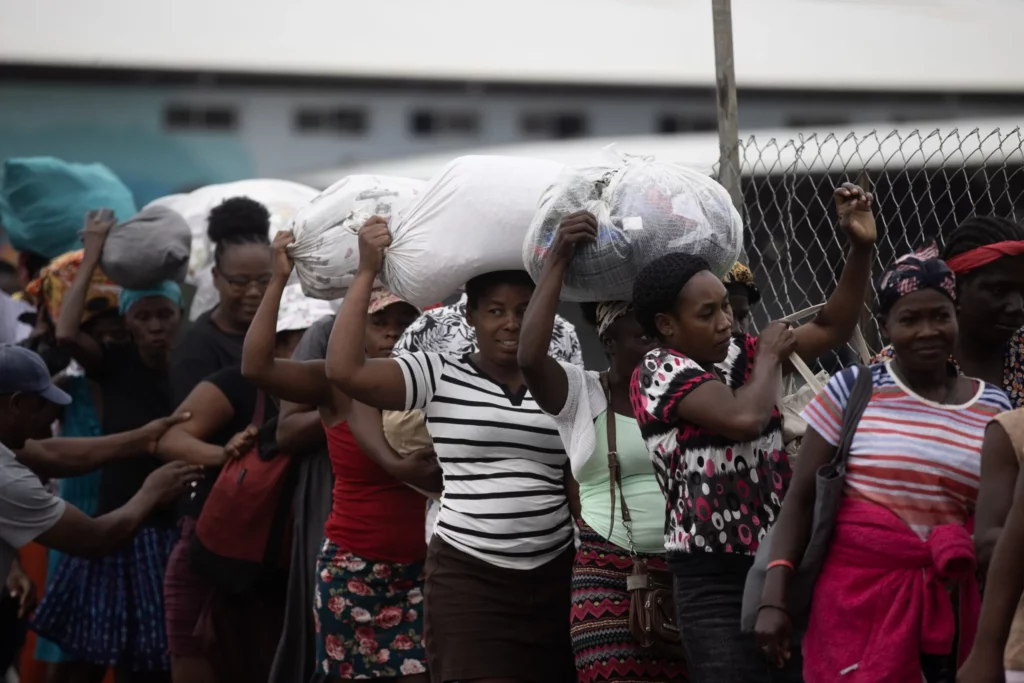
Santo Domingo — The General Directorate of Migration (DGM) has reported that 115,461 undocumented Haitians have voluntarily left the Dominican Republic so far this year, citing government measures targeting irregular immigration. In August alone, 20,586 Haitians returned home under policies designed to encourage “voluntary” departures.
The DGM stated that the process is conducted “with respect for human rights” and in a “safe, orderly manner” aimed at promoting citizen security and combating human trafficking. However, beneath the official narrative lies a stark reality: many Haitians are leaving under duress, facing growing hostility, lack of basic services, and systemic discrimination in the Dominican Republic.
A Humanitarian Crisis Deepens
Since January 2025, authorities have also deported 250,741 Haitians who remained in the country without proper documentation. These actions follow President Luis Abinader’s April directive urging undocumented migrants to leave voluntarily or face forced repatriation, amid a backdrop of Haiti’s ongoing political, economic, and security crises.
While Dominican officials describe these measures as necessary for national security, human rights organizations paint a different picture. According to reports from the International Organization for Migration (IOM) and Amnesty International (AI), vulnerable groups—including pregnant women, nursing mothers, and children—are being sent back to Haiti’s fragile environment, where gang violence, food insecurity, and a collapsed healthcare system make survival increasingly difficult.
Life for Haitians in the Dominican Republic: Between Fear and Discrimination
For many undocumented Haitians, daily life in the Dominican Republic has become unbearable. Beyond the threat of deportation, numerous reports highlight racial profiling, denial of basic services, and social marginalization. Amnesty International has repeatedly accused the Dominican government of racialized immigration practices, citing systemic discrimination against Haitians and Dominicans of Haitian descent.
Thousands of people born in the Dominican Republic to Haitian parents have also been stripped of their nationality, leaving them stateless—unable to access education, healthcare, or formal employment. Many are forced into exploitative labor, particularly in agriculture and construction, sectors heavily dependent on Haitian workers yet notorious for low pay and poor conditions.
Human rights advocates argue that these policies create a climate of fear, compelling Haitians to “voluntarily” leave even when returning to Haiti means plunging back into poverty, instability, and violence.
Regional and International Repercussions
The mass exodus of Haitians from the Dominican Republic threatens to worsen Haiti’s already dire humanitarian crisis. With the country grappling with political instability, rampant gang violence, and widespread shortages of food and medicine, returning migrants often find themselves homeless, unemployed, and unprotected.
International organizations have called on both governments to coordinate safe migration policies and ensure respect for human rights. So far, however, regional cooperation remains limited, and the burden continues to fall disproportionately on Haitians caught between systemic discrimination abroad and instability at home.