Overview
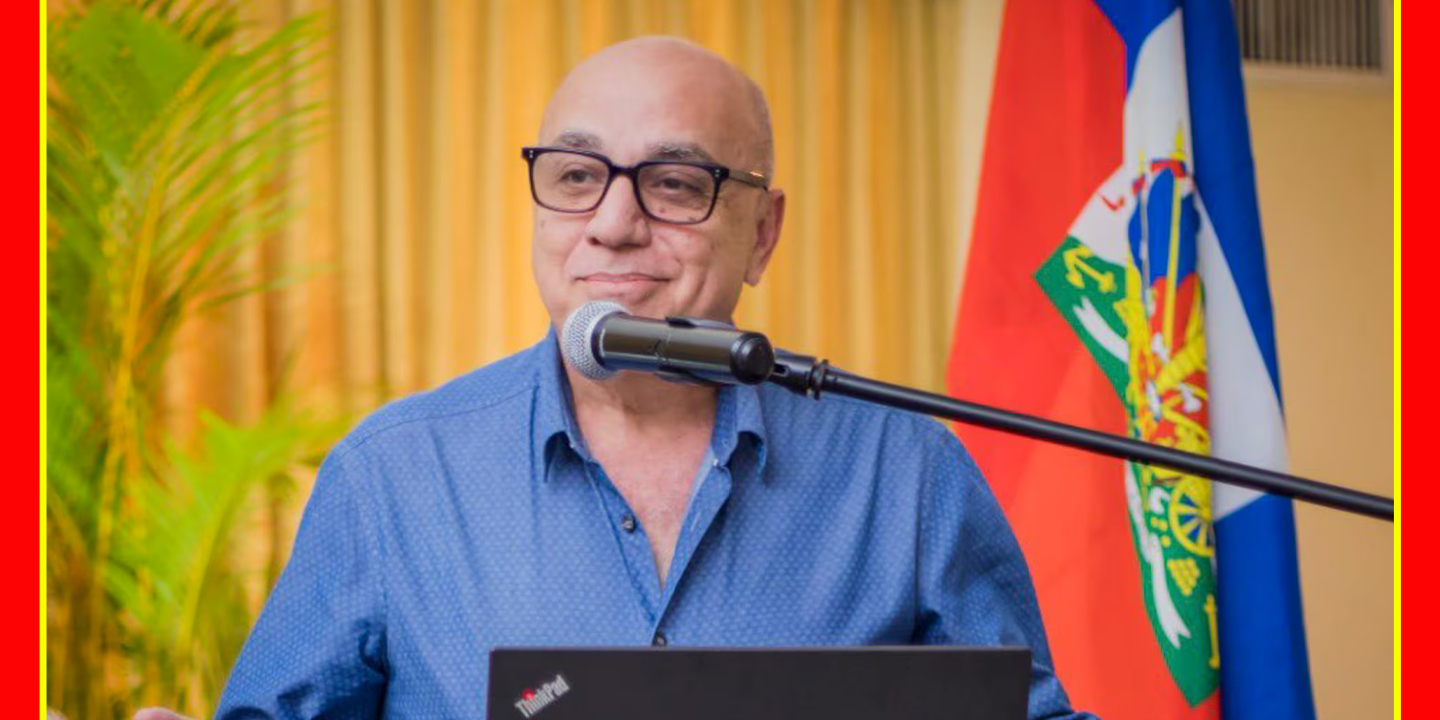
The case of Haitian businessman Reginald Boulos remains uncertain, even as U.S. authorities appear to have moved forward with plans to remove him from the country. Court records suggest he was to be deported not to Haiti, but possibly to a third country, with Colombia and Mexico both mentioned as possible destinations. Still, key questions remain unanswered, including whether he has in fact been released from immigration detention and where he may ultimately be sent.
By Le Floridien
In a move raising as many questions as answers, Haitian businessman and political figure Reginald Boulos appears to be facing deportation from the United States, but not to his home country.
Instead, U.S. authorities seem to be preparing to send him to a third country, with Colombia and Mexico both mentioned as possible destinations. The unusual nature of the case has sparked confusion and concern among Haitians at home and in the diaspora: why is Haiti not an option?
An uncertain deportation process
According to federal court records, the Department of Homeland Security had been authorized to proceed with Boulos’ removal after months in immigration detention. A judge also ordered that he be granted a bond hearing, marking a partial legal victory, though it did not stop the deportation process already underway.
However, key details remain unclear. Boulos no longer appears in ICE’s online detainee locator, a system used to track individuals in immigration custody. His absence could indicate that he has been released, deported, or transferred, but U.S. authorities have not publicly confirmed his status or location.
Reports have suggested he may have been sent to Colombia, while other information points to Mexico as a possible destination. At this stage, no official confirmation has settled the question, leaving his current whereabouts uncertain.
A rare legal justification
At the center of the case is a little-known provision of U.S. immigration law tied to foreign policy interests. U.S. officials determined that Boulos was deportable under this authority, which allows removal when an individual’s presence is considered harmful to broader U.S. policy goals.
Secretary of State Marco Rubio alleged that Boulos was involved in activities contributing to instability in Haiti, including violence, gang support, and trafficking of weapons and drugs, claims Boulos has denied.
His legal team challenged both the basis of his detention and the government’s interpretation of immigration law, arguing that he should be eligible for release while his case proceeds. Boulos has also claimed U.S. citizenship, further complicating the legal landscape.
Why not Haiti?
Perhaps the most striking aspect of the case is the apparent decision not to deport Boulos to Haiti.
While officials have not fully explained this choice, it reflects broader concerns about Haiti’s ongoing instability. With armed groups controlling large parts of the capital and state institutions under severe strain, deportation to Haiti, particularly in sensitive cases, may be viewed as impractical or inconsistent with U.S. foreign policy objectives.
As a result, authorities appear to have turned to third countries as alternatives, even though the final destination remains unclear.
A broader pattern? Another businessman detained
The case of Reginald Boulos may not be entirely isolated. Another member of Haiti’s economic elite, Dimitri Vorbe, is currently being held at a U.S. immigration detention facility, adding a new layer of attention to how authorities are handling high-profile Haitian figures.
While the details of Vorbe’s case have not been made public to the same extent, his continued detention gives the situation a broader dimension. What might otherwise appear to be a singular legal battle now raises the possibility, though not the confirmation, of increased scrutiny on influential members of Haiti’s private sector.
The overlap between the two cases is enough to prompt questions. Are these independent legal matters, or do they reflect a shifting posture by U.S. authorities toward certain Haitian business figures, at a time when many Haitians continue to suspect that members of the country’s economic elite were connected, in one way or another, to the July 2021 assassination of former democratically elected President Jovenel Moïse?
A case defined by uncertainty
For now, much about Boulos’ situation remains unresolved. It is still unclear whether he has already been deported, where he may be sent, or what the final outcome of his legal challenge will be.
What is clear, however, is that this is not a routine immigration case. The decision to potentially deport a Haitian national to a country other than Haiti, combined with the lack of confirmed information about his status, highlights the complexity of the situation.
As developments continue, the case raises broader questions not only about one man’s fate, but about the intersection of immigration enforcement, foreign policy, and Haiti’s ongoing crisis.