MIAMI, FL (Le Floridien) — More than 350,000 Haitians living in the United States are facing one of the most important immigration battles in recent memory as the U.S. Supreme Court prepares to hear arguments this Wednesday in a case involving Temporary Protected Status (TPS), a program that has allowed thousands of Haitians to live and work legally in America.
For many Haitian families in South Florida, the upcoming hearing is more than a legal dispute. It is a question of survival, stability and the future of their children.
What Is at Stake
Temporary Protected Status is a humanitarian program that allows nationals of certain countries facing war, natural disasters or extraordinary conditions to remain temporarily in the United States and receive work authorization.
Haiti first received TPS after the devastating 2010 earthquake. Since then, repeated crises — including political instability, gang violence, kidnappings, economic collapse and natural disasters — have led to repeated extensions of the program.
Today, many Haitian TPS holders have lived in the United States for more than a decade. They work, pay taxes, raise families and contribute to communities across South Florida and the nation.
If TPS protections are terminated, many Haitians could lose legal work authorization and face the risk of deportation to a country currently suffering severe instability. Critics of ending TPS argue that forcing Haitians to return under current conditions would be both dangerous and inhumane.
For Haitian families in Miami-Dade, Broward and Palm Beach counties, the fear is immediate. Many households depend on TPS recipients as primary breadwinners. Others have children who are U.S. citizens. Business owners, church members, healthcare workers and service employees across South Florida could all be affected by the Court’s decision.
South Florida Waits for the Court
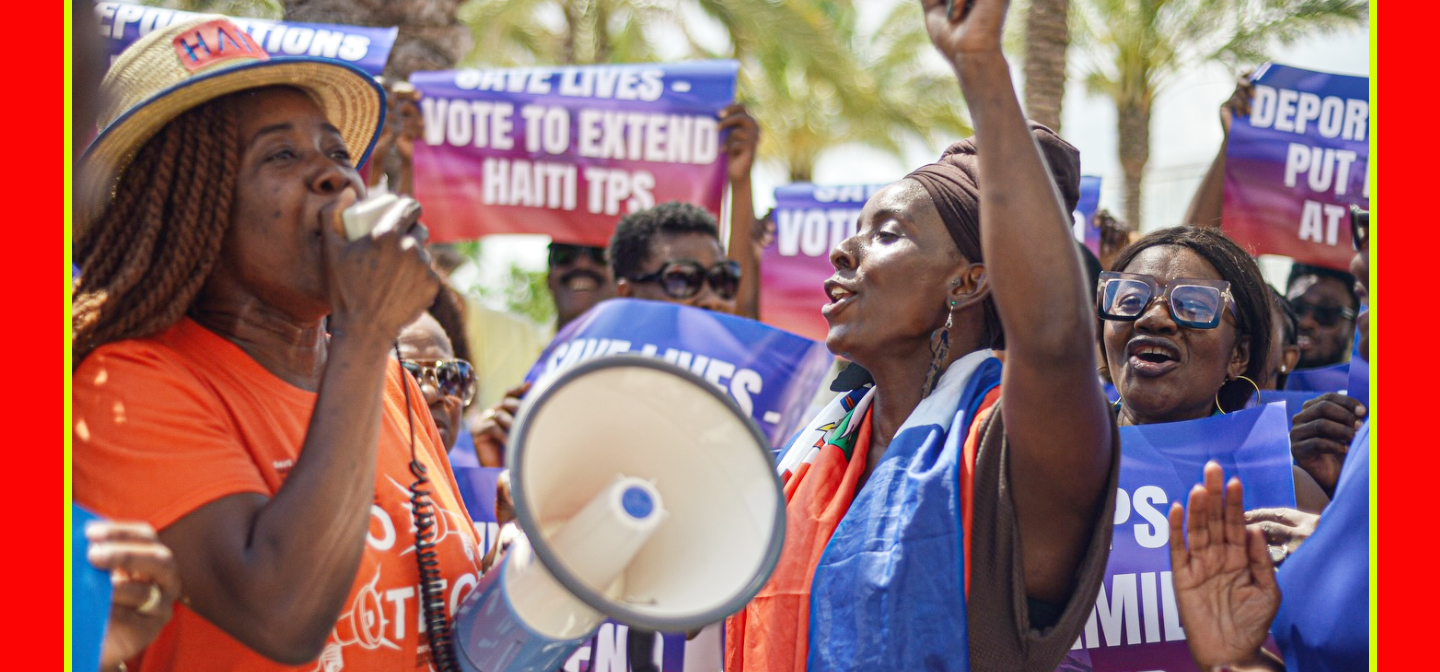
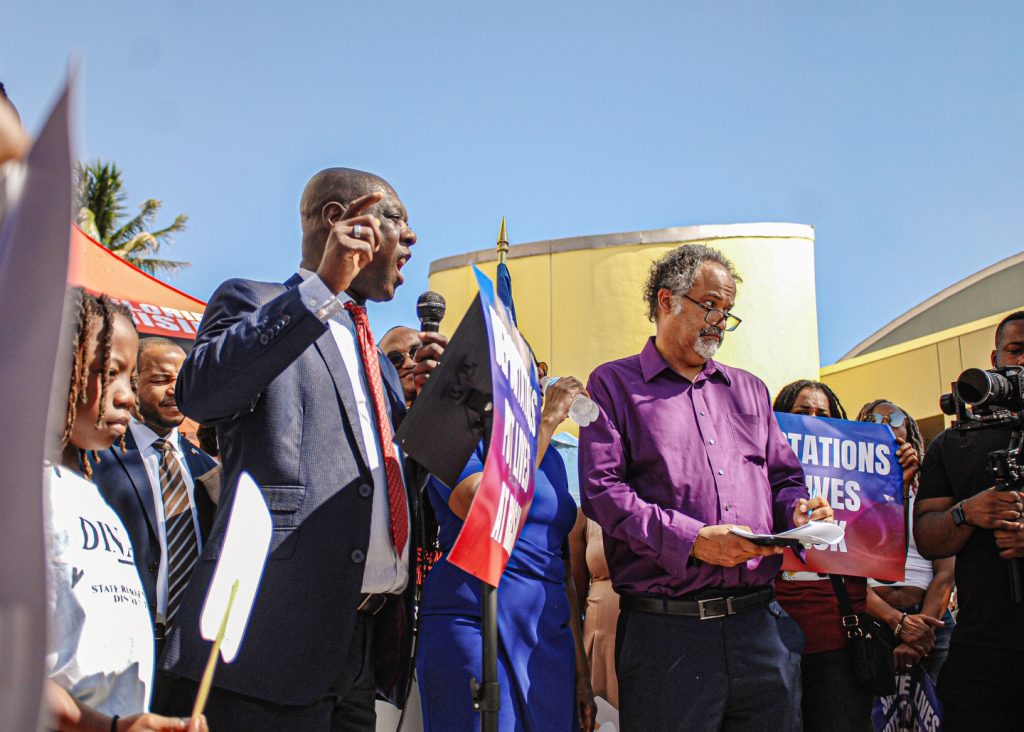
In recent days, community members and advocates have gathered in North Miami and other cities to demand an extension of Haitian TPS and to call attention to conditions in Haiti.
Religious leaders, elected officials and immigration advocates say the issue goes beyond immigration politics. They argue it is about protecting families who have become part of the fabric of American life.
For many Haitian immigrants, the uncertainty has already taken an emotional toll. Families say they are struggling with stress, fear and questions about what comes next.
The Supreme Court hearing will focus on whether the government has the authority to terminate TPS and whether federal courts can review how that decision was made. A final ruling is expected later this year.
Until then, thousands of Haitian families in Florida and across the United States remain in limbo — hoping that justice, humanitarian concern and common sense will prevail.
For South Florida’s Haitian community, this Wednesday’s Supreme Court hearing is not just another case on a legal calendar. It is a defining moment that could shape the future of hundreds of thousands of lives.