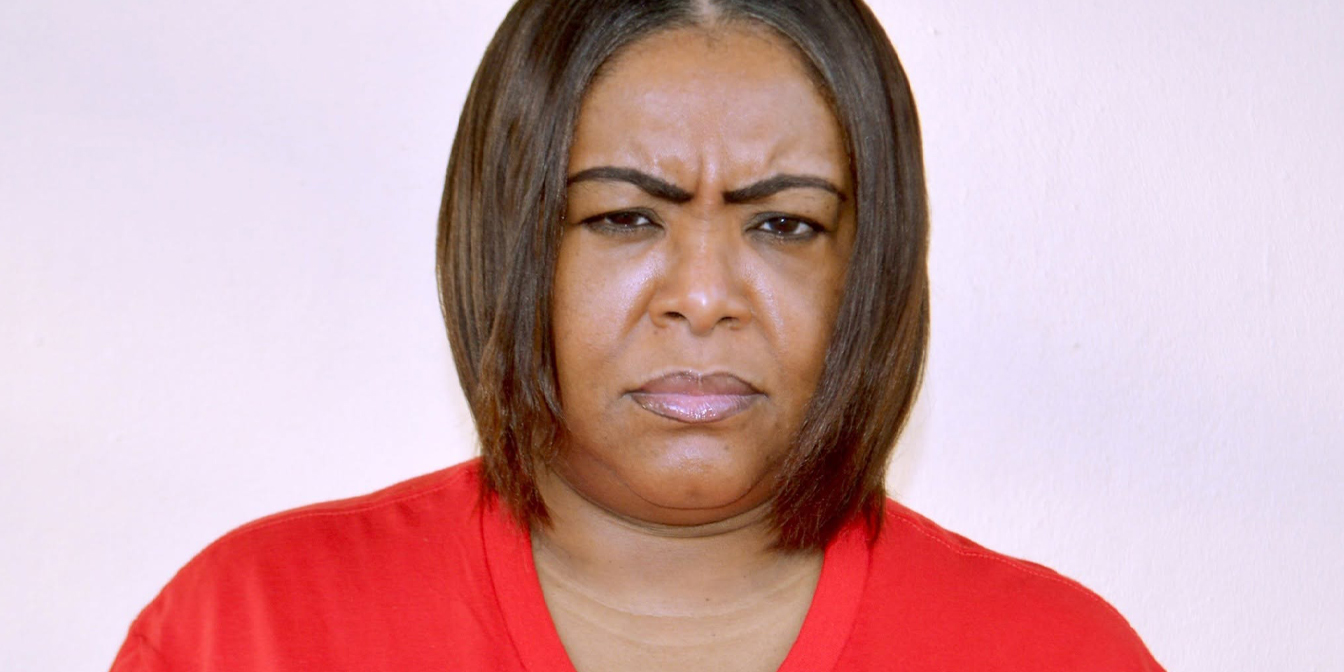
Farah Larrieux, a Haitian TPS holder and South Florida community leader, has emerged as one of the nation’s strongest advocates for Haitian Temporary Protected Status. Through interviews with CNN, NPR, and other major media outlets, she continues to speak out as the Trump administration moves to end TPS protections for Haitians.
By Dessalines Ferdinand, Chief Editor
For years, Farah Larrieux has been one of the Haitian community’s most outspoken advocates. Today, as the future of hundreds of thousands of Haitian immigrants hangs in the balance, she has become one of the most recognizable voices defending Temporary Protected Status (TPS) for Haitians. What makes her advocacy especially compelling is that she is not simply speaking on behalf of others—she is a TPS beneficiary herself, living the uncertainty faced by thousands of Haitian families across the United States.
Temporary Protected Status was first granted to Haitians following the devastating 2010 earthquake, which killed hundreds of thousands of people and left much of the country in ruins. The U.S. government concluded that conditions in Haiti were too dangerous for nationals to safely return, allowing eligible Haitians already in the United States to remain and work legally while the country recovered.
More than 16 years later, however, the legal landscape has changed dramatically. Last month, the U.S. Supreme Court allowed the Trump administration to move forward with ending TPS protections for Haitians while legal challenges continue. The decision has left approximately 500,000 Haitian TPS holders facing an uncertain future.
From TPS Beneficiary to National Advocate
Throughout this debate, Larrieux has refused to remain silent. She has accepted interviews with numerous local and national media organizations, including CNN, NPR, WLRN, ABC’s This Week in South Florida, and other news outlets, becoming one of the most visible Haitian advocates explaining what the termination of TPS means for families who have built their lives in the United States.
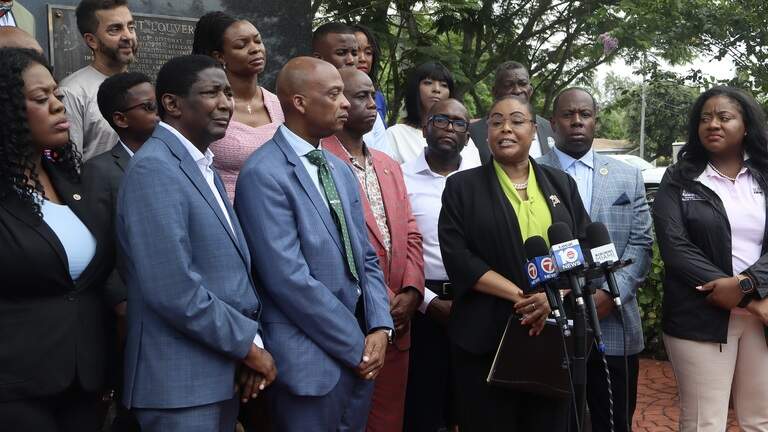
Photo: Vera Lucia Pappaterra / Miami Herald
Speaking openly despite the personal risks, Larrieux has consistently reminded Americans that TPS recipients are more than immigration statistics. They are parents raising American children, healthcare workers, business owners, church members, taxpayers, and longtime contributors to their communities. Having lived in the United States for decades under lawful status, many now face the possibility of returning to a country still struggling with extraordinary instability.
The Trump administration has defended its decision to terminate Haiti’s TPS designation. In a statement, the Department of Homeland Security (DHS) said that “conditions in Haiti have improved sufficiently to support the return of Haitian nationals.” The agency also argued that TPS “was never intended to be a de facto asylum program” and that “temporary protections cannot become permanent by default.”
Those statements have sparked strong criticism from many Haitian community leaders and immigration advocates, who argue that the situation in Haiti remains far too dangerous for large-scale returns.
Adding to the debate is the position of the U.S. Department of State, which continues to advise U.S. citizens not to travel to Haiti because of widespread violence, kidnappings, and insecurity. The State Department notes that Haiti has remained under a national state of emergency since March 2024, raising questions among many observers about whether the country is truly safe for the return of hundreds of thousands of people.
For Larrieux, these contradictions reinforce why she believes it is important to continue speaking publicly. In interviews, she has described the fear and uncertainty experienced by many Haitian families while emphasizing that conditions in Haiti remain extremely dangerous. She has also expressed concern that, because of her previous work as a media personality and her outspoken public profile, returning to Haiti could place her personal safety at greater risk.
A Lifetime of Serving the Haitian Community
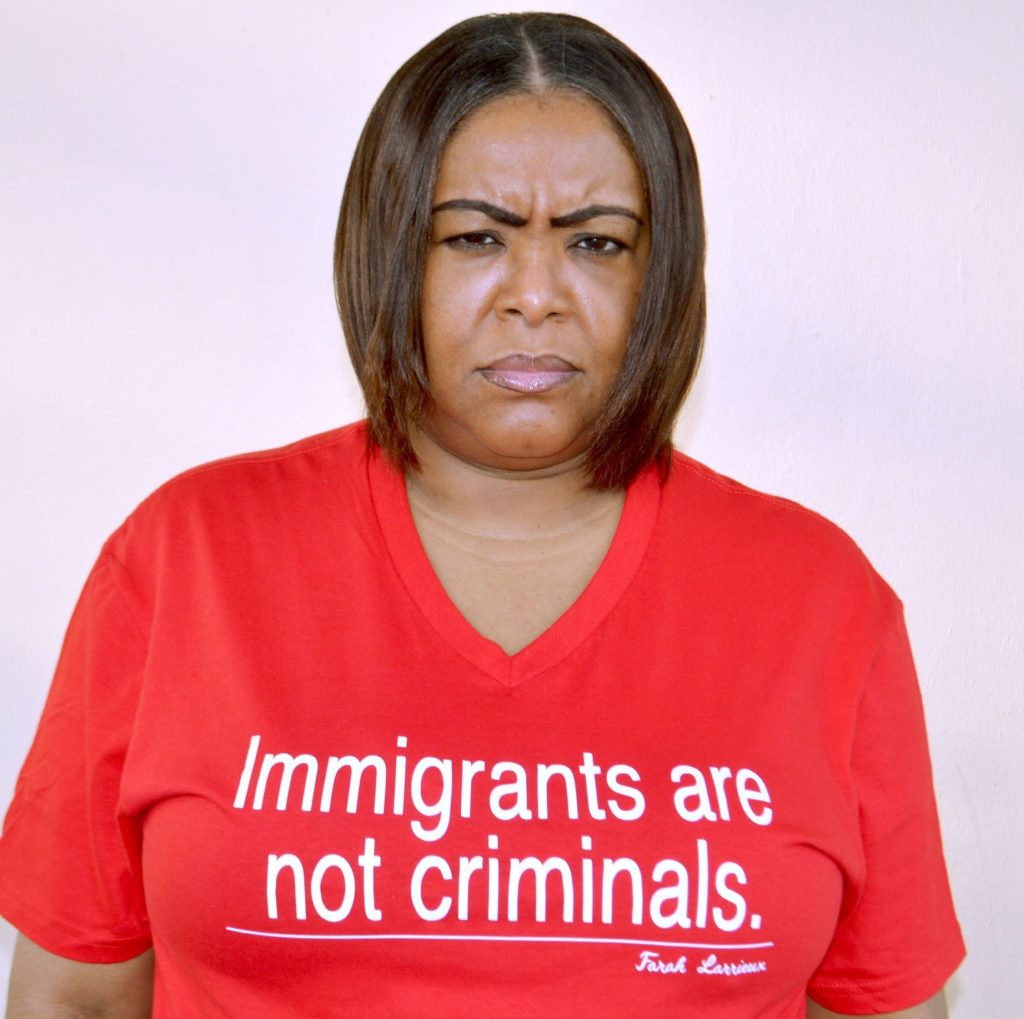
Beyond immigration advocacy, Larrieux has also dedicated herself to strengthening the Haitian community in South Florida. As Chair of the Miramar Haitian-American Residents and Business Owners Association, she has promoted civic engagement, community development, and greater representation for Haitian Americans in local affairs.
Larrieux is also well known in the Haitian entertainment industry for her work in public relations and artist management. Through her company, Thelar Management Group, she has managed publicity and promotional campaigns for several prominent Haitian musicians and bands, including the legendary compas group Zenglen. Her extensive experience in media relations and communications has helped make her an effective spokesperson, allowing her to confidently articulate the concerns of Haitian TPS holders before national audiences. Whether representing artists or advocating for immigrants, Larrieux has built a reputation as a passionate communicator who is not afraid to speak up whenever her community needs a voice.
Whether appearing before television cameras, speaking to reporters, or addressing community organizations, Farah Larrieux has remained steadfast in her mission. At a time when many TPS beneficiaries fear public attention, she has repeatedly chosen to speak out, becoming one of the strongest and most recognizable advocates for Haitian immigrants in the national conversation over TPS.
Regardless of how the legal battle ultimately unfolds, Larrieux’s willingness to stand before the cameras and tell her story has made her a respected voice within the Haitian community and beyond. Her advocacy has helped ensure that the debate over TPS is not viewed solely as an immigration issue, but as a human story involving families, livelihoods, and the future of hundreds of thousands of people who have called the United States home for many years.