By Le Floridien staff |
A Haitian national who attracted widespread attention after cursing at President Donald Trump and declaring that he would never return to Haiti has been deported by U.S. Immigration and Customs Enforcement.
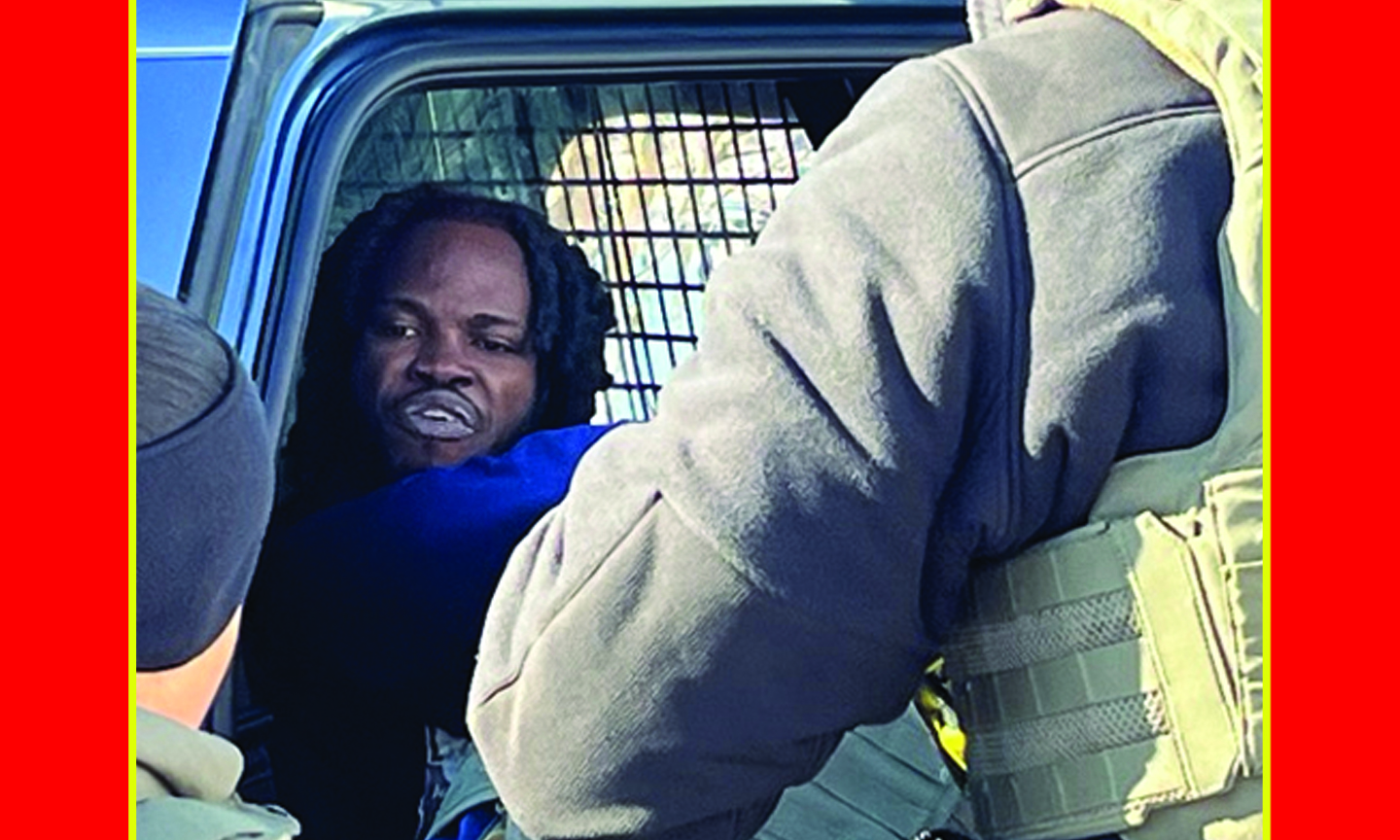
Wisteguens Jean Quely Charles was returned to Haiti on September 10, 2026, approximately 19 months after ICE agents arrested him in Boston. During the January 2025 arrest, Charles was recorded shouting, “F— Trump, Biden forever!” He also told officers that he was not going back to Haiti.
The video quickly spread across social media and was widely featured by conservative news outlets. Charles’ defiant remarks turned what might otherwise have remained a routine immigration enforcement case into a nationally recognized story.
According to federal authorities, Charles entered the United States through Miami in July 2013 and was granted Temporary Protected Status. U.S. Citizenship and Immigration Services later terminated his individual TPS protection in July 2022.
ICE said Charles accumulated 17 criminal convictions in Massachusetts between August 2022 and August 2024. The offenses included assault and battery, resisting arrest, drug possession and distribution, trespassing, carrying dangerous weapons and unlawful possession of ammunition. The agency also identified him as a member of a violent Haitian street gang.
Following his January 22, 2025, arrest, Charles remained in federal immigration custody while his case proceeded. An immigration judge reportedly issued a final removal order against him on November 7, 2025. Federal officials said he exhausted the legal options available to prevent his deportation.
The Department of Homeland Security confirmed that Charles was eventually placed aboard a removal flight and returned to Haiti.
His deportation gave the Trump administration an opportunity to revisit the viral video and present the case as proof that the president was delivering on his promise to remove undocumented immigrants with serious criminal records.
Shortly after Charles’ arrest, Trump’s border czar, Tom Homan, was shown the footage during a television interview. When told that Charles had declared he would not be sent back to Haiti, Homan responded that he was wrong and would be deported.
Following the removal, Homeland Security Secretary Markwayne Mullin criticized the previous administrations for failing to deport Charles sooner. The White House also highlighted his criminal history and praised the Trump administration for removing him from the country.
Federal authorities cited Charles’ immigration status and criminal record when discussing his case. No publicly available evidence shows that his criticism of Trump was the legal reason for his deportation.
That distinction is essential. Criticizing or insulting a president is not, by itself, a deportable offense. Charles was subject to removal because he no longer had legal protection to remain in the United States, had a final deportation order and, according to federal authorities, had an extensive criminal record.
His remarks nevertheless had significant public consequences. By cursing at Trump and confidently declaring that he would never return to Haiti, Charles drew national attention to himself and became a highly visible symbol of the administration’s immigration crackdown.
The video allowed Trump officials and supporters to frame his eventual deportation as a direct answer to his public challenge. His words were repeatedly replayed alongside statements from administration officials promising that he would be removed.
The case illustrates how comments made during an arrest can shape public perception, even when those comments do not determine the legal outcome. A brief video can spread rapidly, follow an individual throughout court proceedings and transform a personal immigration case into a political message.
For immigrants whose legal status is uncertain, public statements can therefore carry practical consequences beyond the courtroom. They may attract media scrutiny, expose personal records to a wider audience and cause a case to become associated with a broader political debate.
At the same time, Charles’ case should not be used to characterize the larger Haitian immigrant population. Hundreds of thousands of Haitians in the United States work, support their families and have no serious criminal records. The actions of one person do not represent an entire community.
It would also be inaccurate to suggest that immigrants who criticize Trump will automatically face deportation. Every immigration case depends on individual circumstances, including legal status, criminal history, pending applications and decisions issued by immigration courts.
Charles became famous for saying that he would never return to Haiti. Nineteen months after his arrest, ICE sent him back—not because officials established that insulting the president was an immigration violation, but after his loss of legal protection, his criminal convictions and a final order of removal.
His case now stands as both an immigration enforcement story and a reminder that provocative public comments can turn a legal proceeding into a national political spectacle.
This report is based on information released by U.S. Immigration and Customs Enforcement and the Department of Homeland Security, along with published reports concerning Charles’ deportation. His alleged gang affiliation is attributed to federal authorities.