By Le Floridien Staff |
FORT LAUDERDALE, Fla. — The federal arrest of Wesler Jean Baptiste, a Haitian businessman and former candidate for the Haitian Senate, is drawing attention in South Florida and Haiti as more details emerge about the criminal case against him.
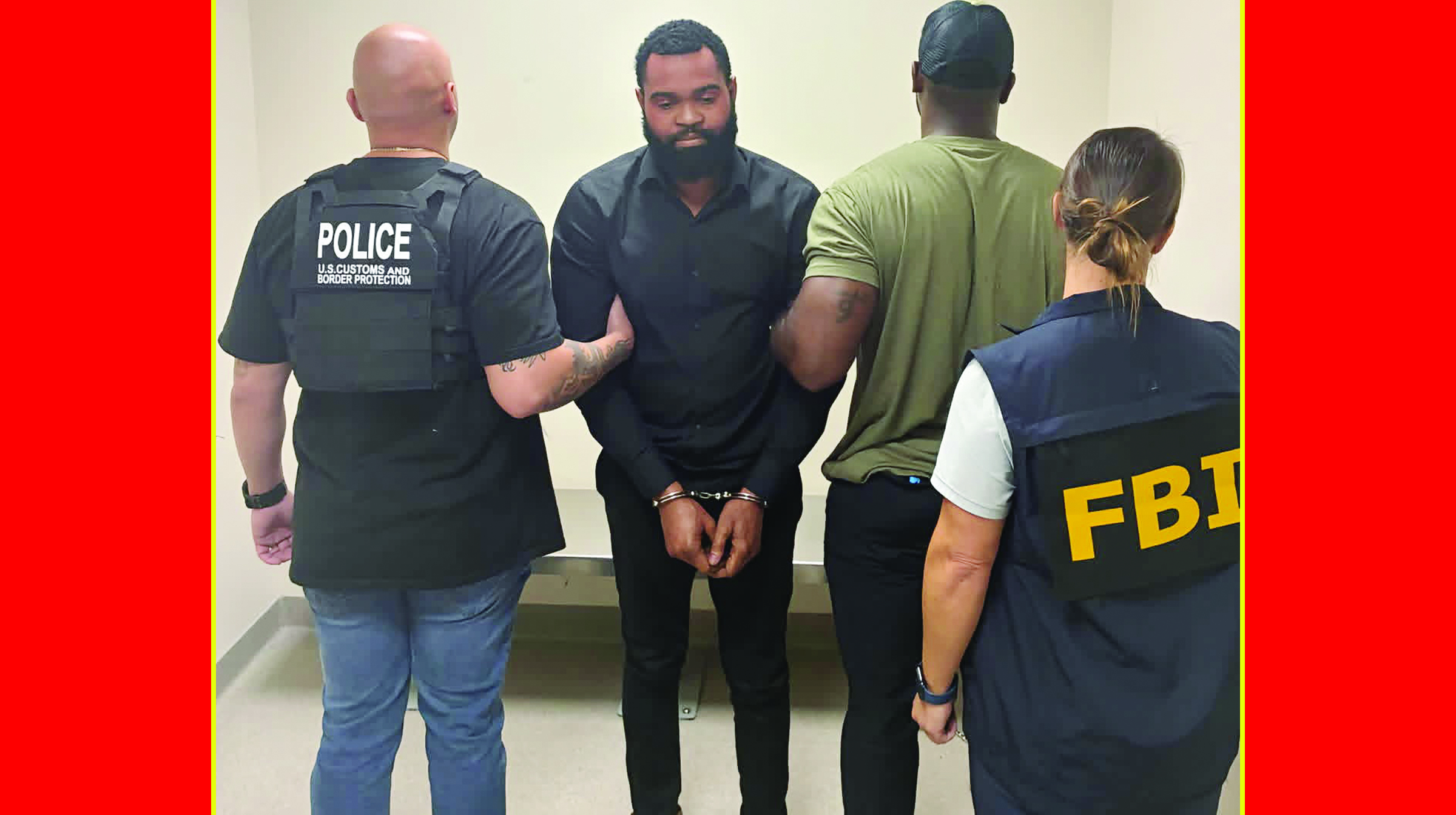
Baptiste was arrested on September 15, 2026, at Fort Lauderdale-Hollywood International Airport as he was preparing to board a flight to Haiti. According to the FBI, agents received a time-sensitive notification about his presence and coordinated with U.S. Customs and Border Protection to prevent him from departing.
His arrest was the latest development in a case that had quietly been pending for more than a year. A federal grand jury in the Southern District of Florida indicted Baptiste on June 26, 2025. The indictment was initially sealed, and the case was later placed in fugitive status while an arrest warrant remained outstanding.
Baptiste faces seven counts of wire fraud and one count of money laundering stemming from an alleged scheme involving federal COVID-19 economic-relief programs.
According to the indictment, prosecutors allege that between May 2020 and March 2021, Baptiste submitted applications containing false information to obtain funds through the Paycheck Protection Program (PPP) and Economic Injury Disaster Loan (EIDL) program.
The indictment identifies several businesses connected to the applications, including Grande Cines Hotel KLW Corp., doing business as La Grande; M&W Tax Pro Servicing LLC; and Le Grande CH Spa Restaurant and Unisex Boutique.
Prosecutors allege that the applications contained false or misleading information about employees, revenues and payroll expenses. The indictment describes approximately $782,000 in pandemic-relief payments, including an $8,000 EIDL grant and three PPP loans totaling more than $774,000.
Federal prosecutors further allege that substantial portions of the money were used for personal expenses rather than authorized business purposes.
One transaction is at the center of the money-laundering charge. According to the indictment, on March 29, 2021, a $60,635 check was used to purchase a 2021 Jeep Gladiator from Fort Lauderdale Automall. Prosecutors allege the money used for the purchase came from proceeds of the alleged fraud.
The chronology also raises an important question about Baptiste’s attempted trip to Haiti. Although the case had been placed in fugitive status, the indictment had been filed under seal. The publicly available record does not establish that Baptiste knew he had been indicted or that federal authorities were seeking him.
Therefore, while he was arrested as he prepared to board a Haiti-bound flight, there is currently no public evidence establishing that he was deliberately attempting to flee prosecution.
FROM HAITIAN POLITICS TO A FEDERAL COURTROOM
Baptiste’s background makes the case particularly relevant to the Haitian community.
In 2016, Wesler Jean Baptiste ran for the Haitian Senate representing the Artibonite department. Contemporary election records list him as a candidate under Concorde Nationale, candidate number 29. Published election results show that he received 460 votes, approximately 0.35% of the vote.
His documented political history is important because recent reports have attempted to connect him with current Haitian political organizations. Those claims should be treated cautiously unless supported by official electoral records.
Florida corporate records also identify Baptiste as CEO, president and registered agent of Grande Cines Hotel KLW Corp., one of the companies identified in the federal allegations.
Following his September arrest, prosecutors initially sought to keep Baptiste in custody. However, on October 2, he was arraigned on all eight counts and released under a $200,000 personal surety bond, according to reporting based on the federal court docket.
His release does not end the prosecution. The case will continue through the federal court system, where prosecutors will have to prove the allegations beyond a reasonable doubt if the case proceeds to trial.
For now, the case presents an unusual intersection of Haitian politics, South Florida business activities and an alleged U.S. pandemic-relief fraud scheme involving approximately $782,000.