
By Dessalines Ferdinand, Chief Editor
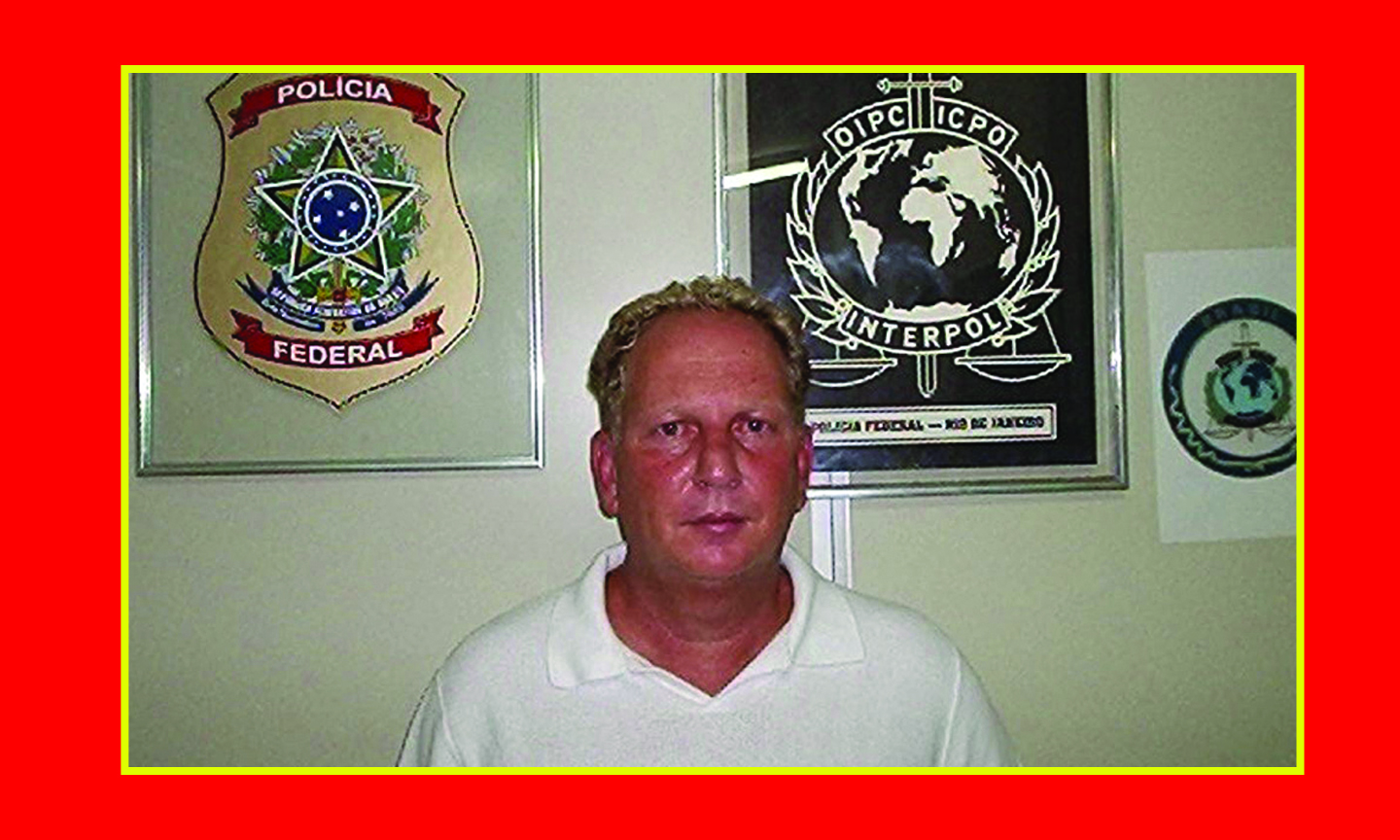
Nearly three decades after his name emerged in one of the Dominican Republic’s most notorious lottery scandals—and two decades after an international extradition battle involving drug-trafficking and money-laundering allegations—Haitian businessman Frédéric Salers Marzouka is once again before a U.S. federal court.
On August 11, 2026, Marzouka filed a habeas corpus petition in the U.S. District Court for the Middle District of Georgia. The case is an immigration proceeding in which he is identified as an “Alien Detainee.”
The filing raises questions about his current immigration detention, the circumstances that led to it and what action the U.S. government may now be pursuing against him. But it also brings renewed attention to a controversial history stretching from the Dominican Republic to Haiti, Brazil and the United States, including reports about his relationships within Haiti’s political establishment.
The 1997 Dominican Lottery Scandal
Long before his arrest in Brazil, Marzouka’s name had already attracted considerable attention in the neighboring Dominican Republic.
Dominican newspaper El Caribe identifies Frederick Marzouka, a Haitian national, as one of the principal figures accused in a massive 1997 National Lottery fraud involving more than RD$90 million.
According to the newspaper, investigators accused Marzouka and others of participating in a scheme that allegedly manipulated lottery drawings through an electronic mechanism controlling the release of winning numbers. A major incident occurred during the February 23, 1997 drawing, when two grand prizes were declared, resulting in reported losses of RD$6.5 million to the Dominican state.
Marzouka surrendered to Dominican prosecutors and was detained, according to El Caribe. After reportedly developing stomach problems, he was transferred from jail to Clínica Abreu in Santo Domingo.
On the night of August 13, 1997, he escaped from the clinic along with the police officer assigned to guard him, according to the newspaper. The officer was subsequently prosecuted over the escape.
A later Dominican court proceeding left the portion of the lottery case concerning Marzouka unresolved until he could be apprehended and brought before the court. The same ruling raised questions about aspects of the broader prosecution, including how the alleged RD$90 million loss had been calculated.
One detail from the Dominican reporting is particularly relevant to Marzouka’s later history. El Caribe described him, based on people who knew him at the time, as a businessman with extensive relationships at the level of the Haitian government. That characterization is not independent proof of political influence, but it shows that reports about Marzouka’s political connections existed long before his later extradition battle.
Arrested in Brazil
Almost nine years after his escape in the Dominican Republic, Marzouka was arrested by Interpol in Rio de Janeiro on February 17, 2006.
Brazilian reporting identified him by his full name, Frederic Salers Marzouka. He was wanted by U.S. authorities and subsequently became the subject of an American extradition request.
The Brazilian Supreme Federal Court said the U.S. extradition request involved accusations of drug trafficking and money laundering.
Marzouka denied the allegations. His lawyers maintained that international financial transactions cited against him involved transfers between his personal account in Haiti and his personal account in Miami.
In November 2006, Brazil’s Supreme Court approved his extradition, conditioned on the United States agreeing that any potential life sentence would be limited to no more than 30 years. Marzouka continued fighting his extradition through subsequent habeas corpus petitions and remained detained in Brazil for years.
Reported Connections to Haiti’s Political Establishment
Marzouka’s reported proximity to Haiti’s political establishment makes his latest federal case particularly noteworthy.
During the period surrounding his Brazil arrest and extradition battle, his name appeared in reporting involving political circles associated with former presidents Jean-Bertrand Aristide and René Préval.
The political dimension even surfaced in his Brazilian litigation. An official Brazilian Supreme Court summary shows that Marzouka’s lawyers sought information concerning his alleged relations with Haiti’s ousted presidency.
Contemporary Brazilian reporting also said Marzouka claimed that he had left Haiti because he was being pursued by American authorities following Aristide’s departure from power in 2004. That was Marzouka’s explanation, not a finding by a court.
Other Haitian-oriented reporting went further, alleging that Marzouka had financially supported political figures associated with the Aristide-Préval political movement.
Those allegations require caution. Le Floridien has not independently located official campaign-finance documentation or a judicial finding establishing that Marzouka financed René Préval’s presidential campaign. Such claims therefore should be understood as allegations rather than established facts.
Still, when combined with the much earlier Dominican description of Marzouka as someone with extensive relationships within the Haitian government, the reports raise legitimate historical questions about the intersection of business money and political power in Haiti.
What Led to His Current Immigration Detention?
One important part of Marzouka’s latest case remains unclear.
His detention in Brazil beginning in 2006 and the subsequent extradition proceedings are documented. What has not yet been independently established is when and under what circumstances he entered his current U.S. immigration detention.
What is established is that he is now pursuing federal habeas corpus relief in an immigration case.
Until additional court or immigration records clarify those circumstances, it would be premature to characterize his current detention as a recent ICE arrest or assign it a specific date.
An Echo of the Dimitri Vorbe Case
Marzouka’s case comes as another prominent Haitian businessman, Dimitri Vorbe, is fighting his own detention by U.S. immigration authorities.
The circumstances are different. Vorbe’s case involves U.S. foreign-policy concerns and allegations related to Haiti’s instability, which he has contested. There is currently no evidence that Marzouka’s immigration case rests on similar grounds.
Still, there is a notable parallel: two prominent Haitian businessmen whose names have intersected with Haiti’s political establishment have found themselves in U.S. immigration detention and have turned to federal courts seeking relief.
A Controversial Name Returns
The addition of the Dominican chapter makes clear that Frédéric Salers Marzouka’s controversial history did not begin with his 2006 arrest in Brazil.
His name can be traced through major legal controversies across three decades and several countries: the 1997 Dominican lottery case and his escape from custody; his later presence in Haiti; his 2006 arrest in Brazil; the U.S. extradition proceedings; and now his appearance in a federal immigration case in 2026.
Running alongside that legal history are repeated reports of connections to Haiti’s political circles.
Some are documented references. Others remain allegations.
That distinction is important.
But Marzouka’s history nevertheless raises a larger question that remains highly relevant to Haiti: What relationships have historically existed between wealthy business figures and those who hold political power?
His latest federal case may eventually tell us what the U.S. government intends to do with Frédéric Salers Marzouka today.
His past raises a much older question for Haiti:
Who finances political power, who benefits from those relationships—and how much does the Haitian public really know about the people operating behind the political curtain?



Left the part of how he got into the US from Brazil to be arrested by ICE when he wasn’t extradited.