The controversy surrounding remarks by Haiti’s consular representative in Miami about TPS beneficiaries considering a voluntary return to Haiti has reignited a broader debate over the quality of the country’s diplomatic representation abroad. Beyond one controversial statement, this analysis examines why Haiti must prioritize competence, qualifications, experience and sound judgment over political connections when appointing diplomats—particularly in strategic posts serving large Haitian diaspora communities.
By Dessalines Ferdinand, Chief Editor
The controversy surrounding recent comments by Haiti’s top consular representative in Miami offers a troubling illustration of a much larger problem that has plagued Haitian diplomacy for decades: what happens when people entrusted with representing the country abroad appear insufficiently prepared for the responsibilities, sensitivities and consequences that come with diplomatic office?
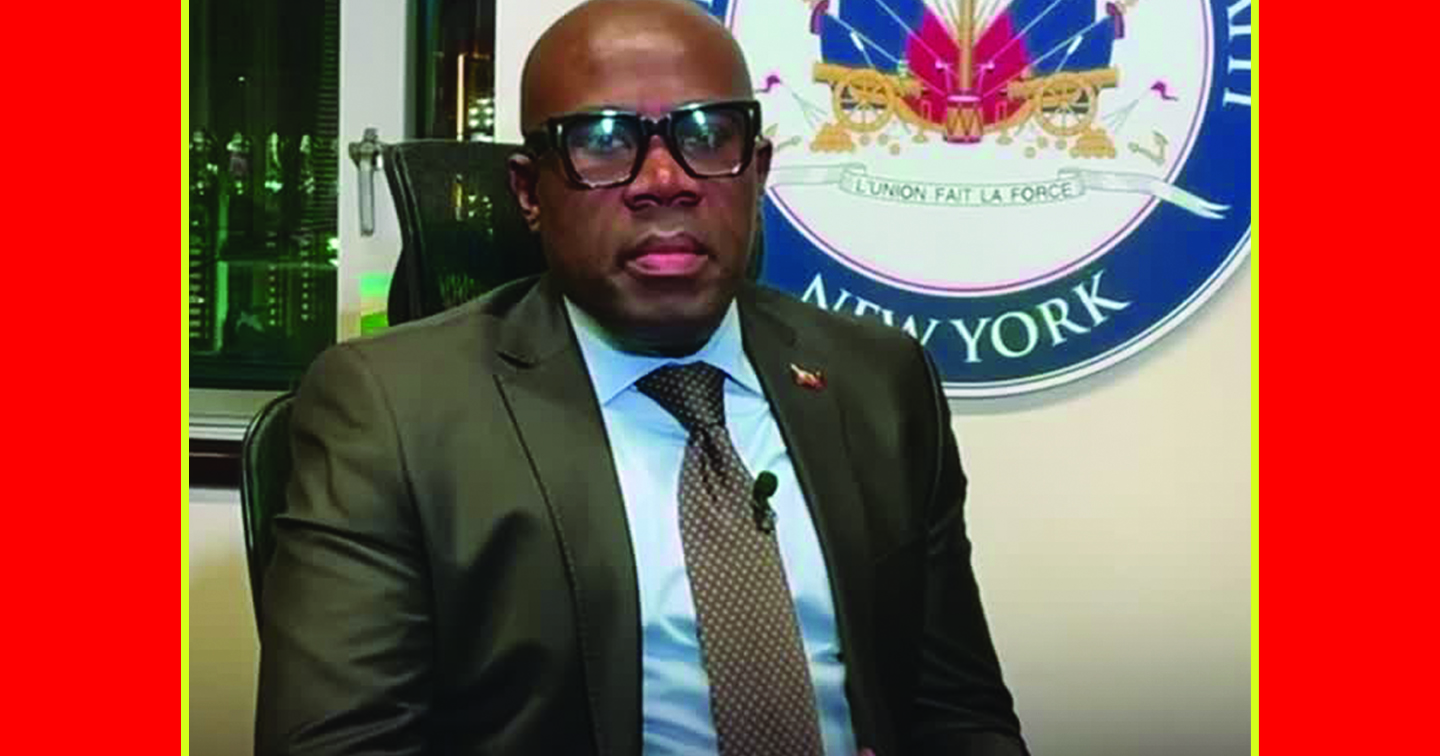
Yverick Delerme Cyril, identified publicly as Haiti’s consul general in Miami, triggered an intense reaction within the Haitian diaspora after comments concerning former Temporary Protected Status (TPS) beneficiaries considering a voluntary return to Haiti. During an interview with journalist Luckson St-Vil, Cyril reportedly questioned why the Haitian government should be expected to make special preparations for these returning citizens, essentially arguing that Haitians going back to Haiti are simply returning to their own country.
Taken literally, there is a simple truth buried in that argument: Haitian citizens have the right to return to their homeland. But diplomacy is not merely the art of stating literal truths. It requires understanding circumstances, anticipating consequences and choosing words appropriate to the human reality behind a political issue.
And that is precisely where the statement became problematic.
These are not ordinary travelers returning from vacation
The Haitians affected by the TPS crisis are not tourists coming home after spending several weeks abroad. Many have lived legally in the United States for years — some for more than a decade. They have built careers, raised children, purchased homes, paid taxes and established their lives in American communities.
Some have U.S.-born children. Others no longer have a functioning family home in Haiti. Some come from neighborhoods that have been overtaken or devastated by armed groups.
South Florida community organizations have been warning precisely about this problem. Sant La Haitian Neighborhood Center told Local 10 that some potential returnees may have no home or adequate basic services awaiting them in Haiti.
Human Rights Watch has painted an even more alarming picture. In a July report based partly on interviews with Haitian TPS holders in Miami, the organization described a country where criminal groups control large portions of the capital, nearly 1.5 million people are internally displaced and millions face acute food insecurity.
Against that background, telling people, in effect, that they are merely returning home and therefore should not expect particular preparations risks appearing extraordinarily detached from reality.
The role of a diplomat is not simply to occupy an office
This controversy raises a broader question that Haiti can no longer afford to ignore: How are the people representing the country abroad selected?
Diplomatic and consular appointments should not be treated as political rewards.
A consulate — particularly Haiti’s mission in Miami — is not an honorary office. It sits in one of the largest concentrations of Haitians outside Haiti and serves a community confronting immigration uncertainty, family separation, economic disruption and fear about what comes next.
Indeed, the Consulate General of Haiti in Miami describes its own mission as representing Haiti’s interests, serving the diaspora and providing “assistance and support” to community members.
That requires more than political access.
It requires knowledge of international relations, immigration realities, crisis communication, diaspora affairs, public administration and, perhaps most importantly, an understanding that every public statement made by a diplomat can carry the weight of the Haitian state.
When diplomatic positions are filled primarily because of political connections, personal relationships or loyalty rather than qualifications — wherever that occurs — predictable problems follow. Officials can enter sensitive positions without sufficient preparation; improvised remarks can become diplomatic controversies; communication failures can damage confidence in the government; and the very citizens whom diplomats are supposed to serve can feel abandoned by their own state.
The Miami controversy demonstrates why those risks matter.
A diplomatic response should have been different
A more appropriate response would not necessarily have required the Haitian government to promise housing, employment or financial assistance that it may not have the resources to provide.
A trained diplomat could simply have acknowledged the magnitude of the problem.
He could have said that Haiti welcomes its citizens while recognizing that people who have lived abroad for many years may face serious difficulties reintegrating. He could have acknowledged the country’s security and humanitarian conditions. He could have explained what assistance the Haitian government can realistically provide — and what it cannot.
That would have been diplomacy.
Instead, the remarks were widely interpreted as dismissive of people facing one of the most consequential decisions of their lives.
This distinction matters because preparation for returning TPS holders is not an imaginary concern. In July, one Haitian woman who had already returned from South Florida told CBS Miami that returning to Haiti was possible with careful planning, while cautioning that not every part of the country was safe or capable of receiving large numbers of returnees.
Meanwhile, Haitian community advocates in South Florida have repeatedly urged affected families to prepare for possible separation, housing difficulties and other consequences of losing TPS.
It therefore seems particularly unfortunate for a representative of Haiti to minimize the very preparation that organizations working directly with these families consider essential.
The controversy is bigger than one diplomat
The easiest reaction would be to turn this episode into a personal attack against the consul general. That would miss the larger issue.
The real question is institutional.
For decades, Haiti has struggled with accusations that diplomatic and consular posts can become part of a system of political patronage rather than a professional foreign service built primarily around competence, experience and merit. Whether that criticism applies to any particular official requires evidence and should not be assumed.
But the principle itself is worth defending vigorously.
A country in Haiti’s condition needs its most capable representatives abroad.
Its diplomats should be among the people best equipped to explain Haiti to foreign governments, defend Haitian interests, communicate during crises and maintain confidence among millions of Haitians living overseas.
Miami, in particular, should be considered one of Haiti’s most strategically important diplomatic postings.
A poorly chosen phrase spoken there can reach hundreds of thousands of Haitians within hours. Social media then removes whatever protection once existed between an improvised interview and a national controversy.
That is exactly what this episode demonstrates.
The diaspora deserved empathy, not dismissal
There is also something deeper behind the anger.
Many TPS beneficiaries have spent years sending money to Haiti, supporting relatives and contributing to an economy heavily dependent on remittances. Now, at the moment when some may themselves need assistance returning to a country dramatically different from the one they left, they expect their government at minimum to recognize the difficulty confronting them.
They may understand that Haiti cannot provide everything.
What they are much less willing to accept is the impression that their predicament is simply their problem.
Diplomacy begins with words. And when representing a country experiencing one of the gravest crises in its modern history, words must be chosen with discipline, empathy and an understanding of their consequences.
The outrage generated by the Miami interview should therefore become an opportunity for a broader discussion — not merely about one controversial statement, but about how Haiti selects the men and women entrusted with representing the nation abroad.
Diplomatic positions should never simply be rewards for proximity to power.
They are positions of national responsibility.
And when competence, preparation and judgment are missing from diplomacy, it is ultimately Haiti — and Haitians everywhere — who pay the price.