
Overview
Byron Donalds will become Florida’s first Black governor and the first Black Republican elected governor in U.S. history. During his campaign, he met with Haitian community members in North Miami, months after voting against a bill to extend Temporary Protected Status for Haitians. Once he takes office, Haitian Floridians will be watching how his administration handles immigration enforcement and what his affordability agenda means for homeowners and renters.
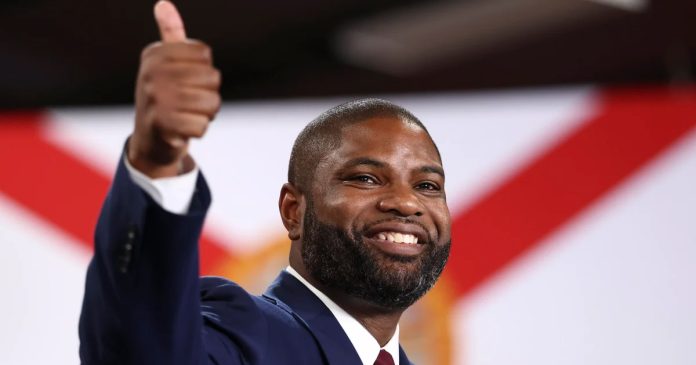
When Byron Donalds takes office in January, he will become Florida’s first Black governor and the first Black Republican ever elected governor in the United States. For Haitian Floridians, his victory raises a question closer to home. After seeking out Haitian voters on the campaign trail, how will he respond to their concerns from the governor’s office?
Donalds, a Republican congressman from Southwest Florida, defeated Democrat David Jolly in the Nov. 3 election by 105,376 votes, taking 50.00 percent to Jolly’s 48.73 percent, according to Florida’s official results. He will succeed Ron DeSantis, extending Republican control of the governor’s office while breaking a barrier that stood throughout Florida’s history.
Before this election, only three Black Americans had won election as governor of a U.S. state: Douglas Wilder in Virginia, Deval Patrick in Massachusetts and Wes Moore in Maryland. Donalds was one of four Black candidates to win a governorship for the first time on Nov. 3, alongside Keisha Lance Bottoms in Georgia, David Crowley in Wisconsin and Aaron Ford in Nevada. Moore won reelection. Donalds’ national distinction is that he is the first Black Republican to win election to a governor’s office.
The North Miami visit and the TPS vote
On Sept. 12, Donalds sat down with members of South Florida’s Haitian community at The Katz Miami Restaurant & Lounge in North Miami. Le Floridien covered the breakfast, which drew about 100 people and brought together pastors, business owners, community leaders and voters. For a Republican candidate seeking to broaden his support among Black voters, the event gave him a chance to make his case directly in one of South Florida’s largest Haitian-American communities.
Donalds returned to speak with members of South Florida’s Haitian community at an Island TV town hall just days before the Nov. 3 election. The appearance gave Haitian Floridians another opportunity to hear directly from the Republican candidate in the final stretch of the campaign.
That outreach came after two decisions that Haitian families have reason to remember. On April 16, Donalds voted against a House bill that would have required the Department of Homeland Security to designate Haiti for Temporary Protected Status. In August, he defended the Trump administration’s handling of TPS on CBS’s Face the Nation, arguing that the program should remain temporary. He also said he had met with Haiti’s transitional authorities to discuss efforts to stabilize the country.
What Haitian Floridians can ask of his administration
Since the election, Gov.-elect Byron Donalds has signaled that Florida will continue cooperating with U.S. Immigration and Customs Enforcement (ICE) under his administration. On Nov. 19, after the Tallahassee City Commission voted to consider ending its 287(g) agreement with ICE, Donalds wrote on X, “Florida is not a sanctuary state, and as Governor, I will never let it become one.” He added that Florida cities must comply with federal and state laws.
Temporary Protected Status (TPS) is a federal program. The question for Haitian Floridians is how Donalds will use his authority as governor. How will his administration work with ICE, and will his office meet regularly with the families, employers and community organizations affected by those decisions?
Affordability is another area where residents can ask for specifics. Donalds campaigned on lowering homeowners insurance costs and eliminating property taxes on homesteaded properties. Haitian homeowners can ask how those proposals would affect their premiums and tax bills. Renters can ask what relief his administration would offer households facing rent increases when their leases come up for renewal.
The September breakfast in North Miami and the Island TV town hall just days before the election gave Haitian Floridians a chance to hear directly from Donalds. After taking office, he could return to North Miami to explain his plans for immigration enforcement and affordability and take questions from residents about how those policies would affect their families. The first months of his administration will show whether the conversations he started as a candidate continue once he is governor.