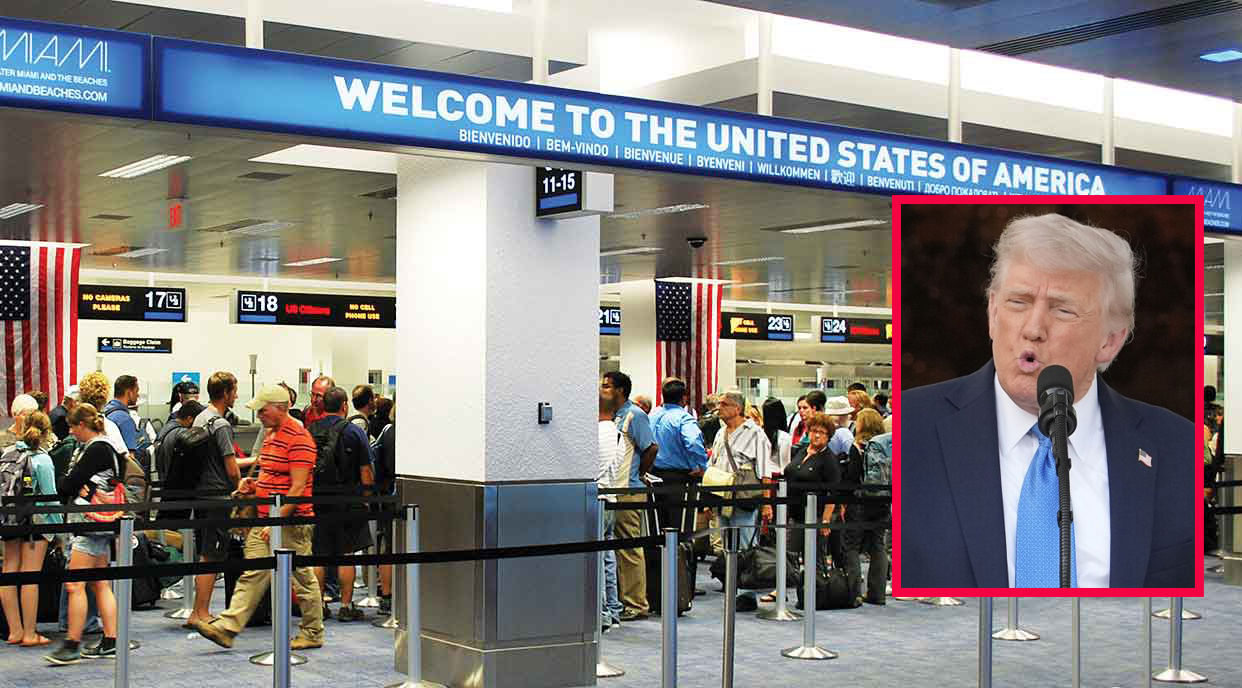
MIAMI (Le Floridien) — President Donald Trump has signed a sweeping new presidential proclamation that bans citizens of 12 countries, including Haiti, from entering the United States. The measure, announced on June 4, 2025, and effective as of June 9, significantly expands immigration restrictions under Trump’s second term and is expected to have a major impact on Haitian nationals both in Haiti and across the diaspora.
Citing national security concerns and alleged deficiencies in Haiti’s vetting systems, the Trump administration moved to fully suspend the issuance of both immigrant and non-immigrant visas for Haitians. The decision comes amid heightened political rhetoric about immigration and national security ahead of the 2026 midterm elections.
As Haitian communities scramble to understand the new reality, here is what every Haitian passport holder must know:
Who Is Affected?
Tourist Visa Holders — Who Is Barred and Who May Still Travel
Under the new restrictions, many Haitian citizens holding U.S. B-1/B-2 tourist visas will soon face limits on travel to the United States. Once the ban takes effect on June 9, 2025, most Haitian travelers — even those with valid tourist visas — will be barred from entering the U.S.
This impacts thousands of Haitians who regularly travel to visit family, seek medical care, or conduct business in U.S. cities such as Miami, New York, and Boston.
Important Exception:
Haitians who already possess a valid tourist visa that was issued before June 9, 2025, and who are outside the United States on that date, may not be subject to the ban, according to the official proclamation. Their ability to enter will depend on current U.S. Customs and Border Protection (CBP) enforcement and any future policy updates.
Travelers should consult the U.S. Embassy for the most current guidance before attempting to travel.
Students and Exchange Visitors Prohibited
Students enrolled at U.S. universities and participants in cultural and educational exchange programs under F, M, and J visas are included in the ban. Many young Haitians with hopes of completing degrees in the U.S. now face an uncertain future.
Applicants for Immigrant Visas Suspended
Haitians applying for family reunification, employment-based visas, or diversity lottery visas are also affected. Current applications will not be processed, and new immigrant visas will not be issued under the ban.
Who Is Exempt?
The proclamation does outline limited exemptions for certain categories of Haitian nationals:
Green Card Holders Can Return
Haitian nationals who already hold U.S. lawful permanent residency (green cards) are not subject to the ban and may return to the U.S. from Haiti or elsewhere. However, they should carry proof of their residency and be prepared for additional screening.
Dual Nationals with Another Passport
Haitian citizens who also hold a passport from a country not on the banned list can enter the U.S. by traveling on that non-Haitian passport.
Immediate Family of U.S. Citizens
Spouses and children (under age 21) of U.S. citizens may still be eligible to enter, provided they can demonstrate their family relationship and legal standing.

Diplomats and International Organization Representatives
Haitian diplomats and individuals employed by recognized international organizations (traveling under A or G visas) are exempt.
Athletes for Major Sporting Events
Haitian athletes and coaches participating in official international sporting events such as the upcoming 2026 FIFA World Cup and 2028 Olympic Games are also granted an exemption.
The Broader Impact
Legal experts and Haitian community leaders in South Florida have condemned the new policy, describing it as discriminatory and damaging to family unity. “This ban targets some of the most vulnerable and hardworking members of our community,” said Miami-based immigration attorney Reginald Duvivier. “Haitians with approved visas who are ready to visit family or pursue education in the U.S. are now left in limbo.”
The policy’s humanitarian exemptions are limited and require careful documentation. The administration insists the ban is necessary due to what it calls “national security deficiencies” in the affected countries, despite little evidence that Haitian nationals pose an elevated threat.
What Haitians Should Do Now
Haitian nationals planning to travel to the U.S. should:
Verify their visa category and legal status immediately.
Consult with the U.S. embassy in Port-au-Prince or an immigration attorney before attempting to travel.
Green card holders currently in Haiti should carry all required documentation when re-entering the U.S.
Those with pending immigrant visa cases should monitor the situation for potential legal challenges or policy updates.
For the Haitian community, this new travel ban represents a serious new obstacle to travel, family reunification, education, and economic opportunity. While green card holders and certain family members remain eligible to enter, the sweeping restrictions will affect thousands of Haitian families and businesses both in Haiti and in the U.S.
Le Floridien will continued to monitor developments and provide updates as the situation evolves.