PORT-AU-PRINCE, Haiti (Le Floridien) — The decision by the United States to let expire the special trade preferences that once gave Haiti’s garment exports duty-free access to the American market is crippling the country’s fragile economy and endangering its largest source of formal employment. For nearly two decades, programs such as HOPE (Haitian Hemispheric Opportunity through Partnership Encouragement) and HELP (Haitian Economic Lift Program) served as a lifeline, allowing Haitian-made apparel to enter the United States without tariffs. Their lapse has ended Haiti’s competitive advantage, forcing U.S. importers to pay tariffs of up to 30 percent on Haitian goods and leaving local factories unable to compete with lower-cost producers in Asia and Central America.
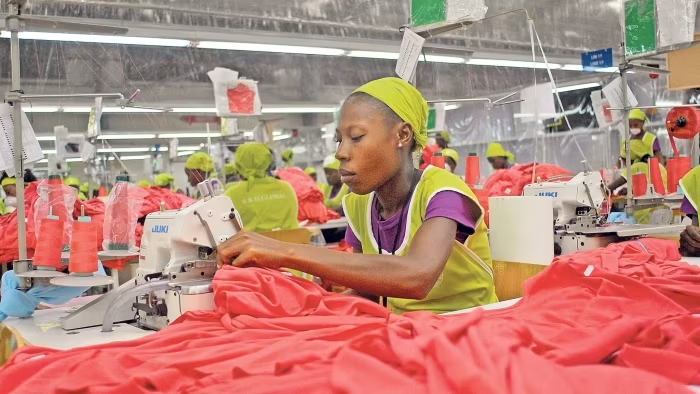
The consequences are devastating for Haiti’s textile sector, which represents nearly 90 percent of formal jobs outside agriculture and accounts for more than a billion dollars in export earnings annually. Factories that once sewed garments for American brands like Hanes, Gap, and Calvin Klein are losing orders or relocating operations elsewhere. In 2023, S&H Global, a major supplier based in the U.S.-backed Caracol Industrial Park, closed one plant and dismissed 3,500 workers after orders dried up, a stark symbol of how quickly the industry is unraveling.
Haiti’s loss of preferential access could not have come at a worse time. The country is already reeling from political instability, rampant gang violence, and widespread poverty. As thousands of garment workers are laid off, families lose their main source of income, consumption shrinks, and desperation deepens. Business leaders warn that the collapse of the industry risks fueling further unrest, migration pressures, and even gang recruitment as unemployed youth search for alternatives.
U.S. industry groups have also raised alarm. The American Apparel & Footwear Association has urged Congress to renew the HOPE and HELP programs, warning that their lapse hurts not only Haitian workers but also U.S. textile producers and global brands that rely on Haitian factories. So far, however, protectionist trade pressures in Washington make renewal uncertain.
For Haiti, the unraveling of its last big industry is more than an economic blow. It is a social and humanitarian crisis with repercussions that stretch far beyond factory walls. Unless the United States acts to restore preferential trade access, or international partners step in with emergency support, the country risks losing the one sector that has provided steady jobs and foreign exchange in an otherwise collapsing economy. The shutdown of the textile industry is not only shuttering factories; it is shutting down hope for thousands of Haitian families.