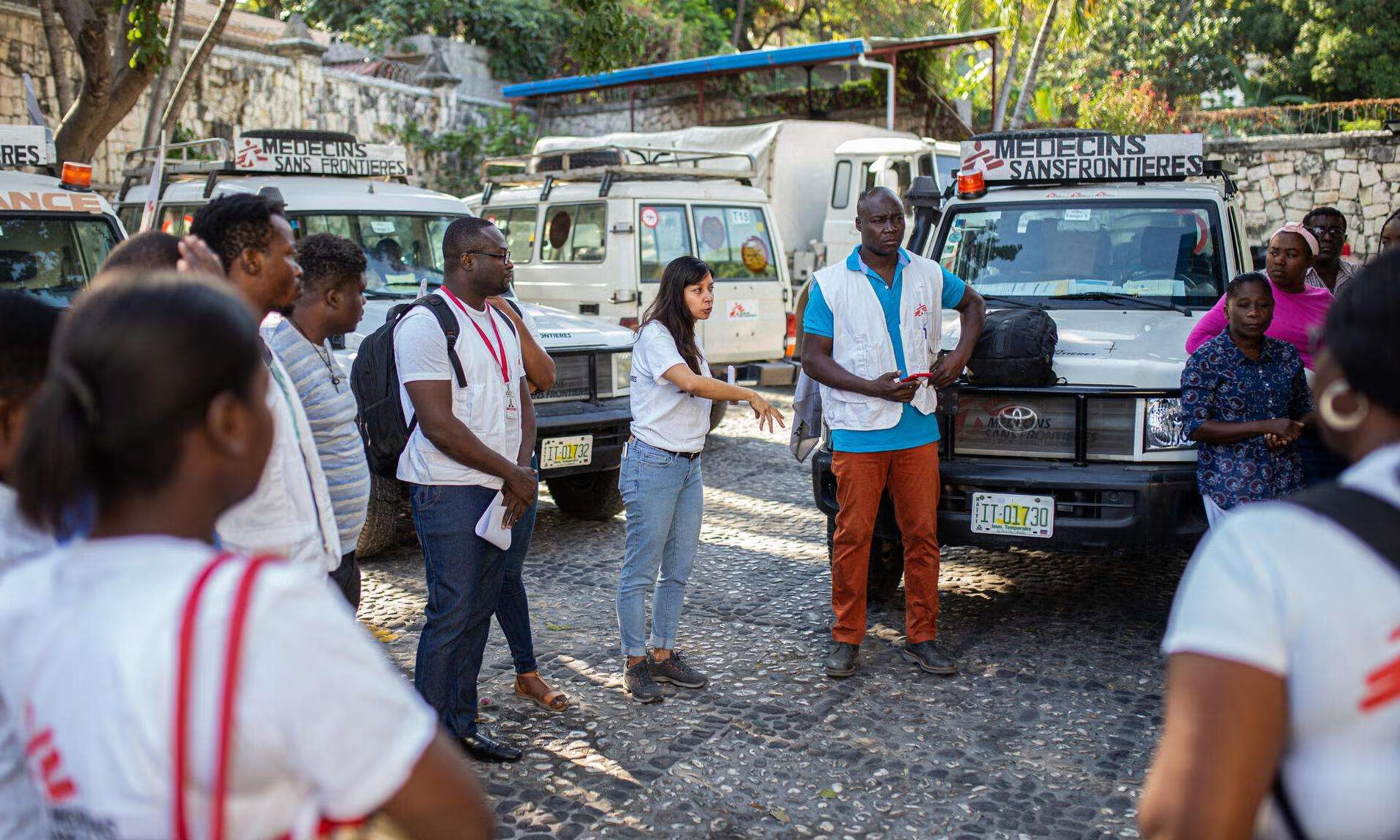
Port-au-Prince, Haiti (Le Floridien) — In yet another tragic setback for Haiti’s most vulnerable citizens, Doctors Without Borders (Médecins Sans Frontières, MSF) has announced the permanent closure of its emergency care center in Port-au-Prince, citing conditions too dangerous for both staff and patients.
The center, located in Turgeau, had long served as a vital lifeline for thousands of impoverished residents caught in the crossfire of gang warfare. Its closure comes as nearly 90% of the capital is under gang control and as more than 60% of health facilities, including the country’s general hospital, have been forced to shut down.
According to MSF, the decision follows a violent attack in March 2025, when armed men opened fire on four vehicles evacuating staff from the Turgeau facility, injuring several employees.
“The building has already been hit several times by stray bullets due to its location close to combat zones, which would make resuming activities too dangerous,” said Jean-Marc Biquet, MSF’s head of mission in Haiti.
Before the March attack, the emergency center had treated over 300 patients in just one week and recorded more than 2,500 consultations in February alone. Since relocating from Martissant to Turgeau in 2021, the facility had provided critical care to more than 100,000 patients — many of them living in neighborhoods where hospitals and clinics have long ceased to function.
The closure marks a crushing blow for the poorest Haitians, who now find themselves with even fewer options for emergency medical care as gang violence intensifies. From January to June 2025, over 3,100 people were killed and 1,100 injured, according to United Nations data.
Meanwhile, the humanitarian crisis deepens. More than 1.4 million people have been displaced by violence — a 36% increase since the end of 2024 — forcing thousands into overcrowded, makeshift shelters.
For countless Haitians, the departure of Doctors Without Borders is not just the loss of a hospital — it is the loss of hope itself in a city where survival has become a daily struggle.