Overview |
This editorial argues that Haiti’s government too often responds to preventable tragedies with mourning and promises after the fact, instead of exercising the planning, regulation, and accountability needed to prevent them. It contends that unless this pattern of reactive governance changes, similar avoidable disasters will continue to occur.
By Dessalines Ferdinand, Chief Editor
Once again, the Haitian state is doing what it has done far too often: mourning a preventable tragedy after failing to prevent it.
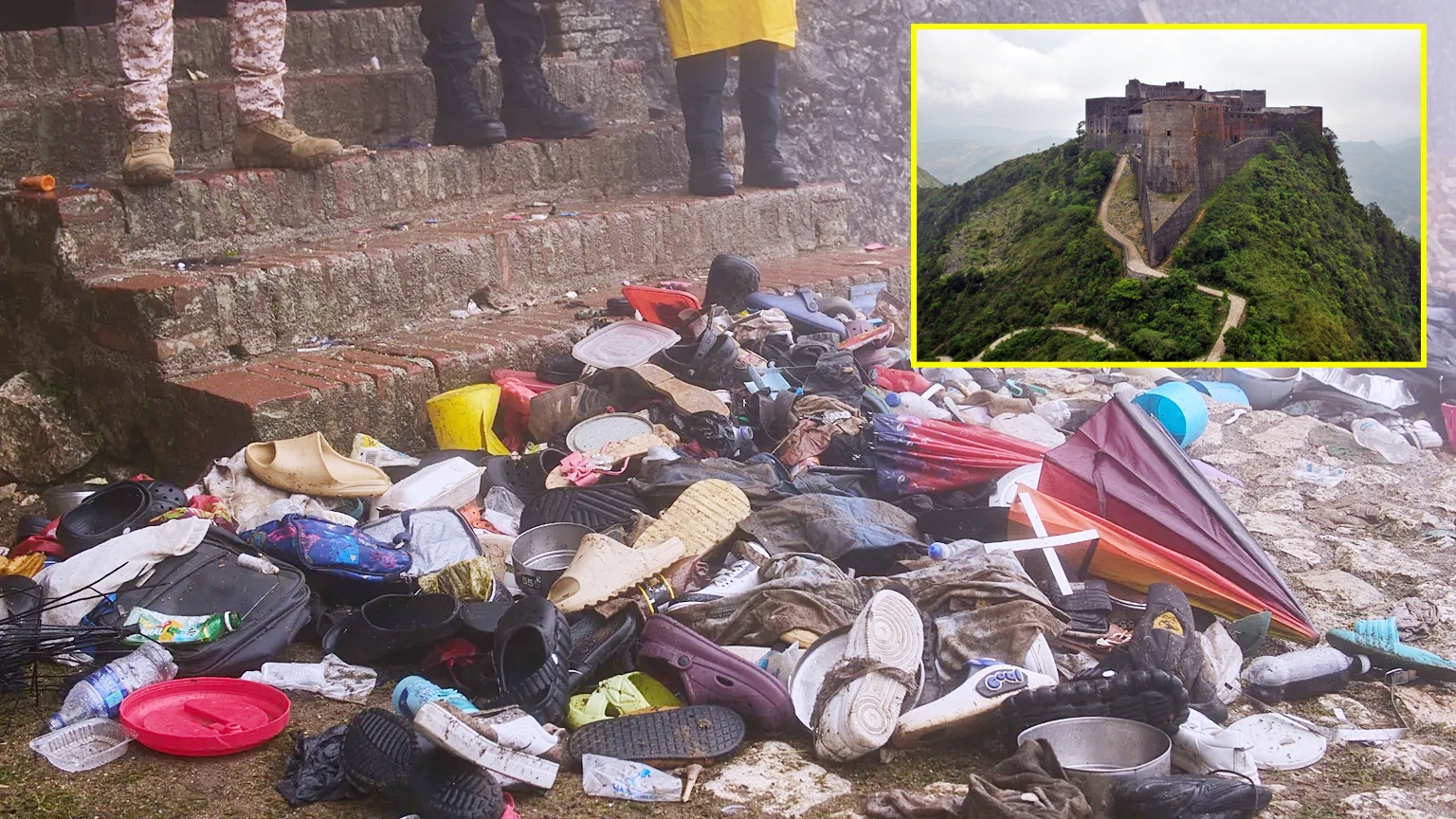
Following the deadly stampede at the Citadelle Laferrière that left 25 people dead, the government moved quickly to declare three days of national mourning, lower the flags, and promise to pay funeral costs. It called an emergency cabinet meeting, sent officials to the north, and assured the public that an investigation would be conducted and that those responsible would face justice.
But none of that answers the central and most disturbing question: why was this allowed to happen in the first place?
This was not an earthquake. It was not a hurricane. It was not an unforeseeable act of God. It was a human disaster born of negligence, weak planning, and the chronic irresponsibility of a state that too often shows up only after bodies are on the ground.
A major event, “Citadelle Vibe 3.0,” was heavily promoted on social media and drew thousands of young people to one of Haiti’s most historic and physically fortress sites. Authorities now admit the crowd exceeded the location’s capacity. That admission alone is devastating. If the risk was obvious after the fact, why was it not obvious before? Where were the safety measures, the crowd controls, the entry limits, the emergency protocols, and the serious state oversight that should accompany any event of that magnitude?
The answer is painfully familiar: in Haiti, prevention is weak, improvisation is the norm, and official seriousness often begins only when mourning becomes unavoidable.
This is one of the deepest failures of Haitian governance. For generations, governments in Haiti have excelled more at deploring tragedy than preventing it. They issue condolences more easily than regulations. They lower flags more quickly than they raise standards. They find money for funerals after the dead are counted, but too rarely invest the authority, planning, and discipline needed to keep people alive.
That is not leadership. That is not vision. That is not responsibility. It is a cycle of state failure disguised as compassion.
Yes, covering funeral expenses may bring limited relief to grieving families. Yes, national mourning may acknowledge the pain of the moment. But these gestures also risk becoming part of a ritual of political hypocrisy if they are not followed by hard truths and structural change. A government that repeatedly comforts the nation after preventable disasters, while doing too little to stop the next one, is not governing seriously. It is administering grief.
And the Citadelle tragedy should outrage every Haitian for another reason: this happened at one of the country’s greatest national symbols, a monument that embodies resistance, pride, and history. If the state cannot guarantee basic safety at a site as important and visible as the Citadelle, what does that say about the value it places on ordinary Haitian lives everywhere else?
The official promise that “those responsible will face justice” is one the public has heard before. In Haiti, investigations are often announced with urgency and forgotten with time. Accountability is proclaimed loudly in the first 48 hours, then buried under political distraction, institutional weakness, and national fatigue. The result is a country trapped in an endless loop: shock, mourning, promises, silence, then another tragedy.
And there will be another tragedy.
That is the bleak but honest conclusion. Unless Haiti develops a governing culture built on prevention rather than reaction, more cynical and avoidable disasters will happen again soon. Another overcrowded event. Another public safety failure. Another official statement. Another round of funerals the state will suddenly be ready to finance after ignoring the safeguards that could have spared lives.
Haiti does not only suffer from poverty, insecurity, or political instability. It also suffers from a chronic absence of foresight at the highest levels of public responsibility. That absence kills.
The country deserves better than symbolic mourning. It deserves a state capable of anticipating danger, enforcing standards, and protecting life before tragedy strikes.
Until that happens, Haiti will continue to bury victims of disasters that should never have happened, and leaders will continue asking for sympathy for failures they should have prevented.