Byron Donalds’ recent North Miami visit raises broader questions about political identity, community pressure and the Republican Party’s complicated relationship with Haitian voters.
By Dessalines Ferdinand | Analysis
NORTH MIAMI — The Haitian-American community is not politically monolithic. Although many Haitian Americans in South Florida identify with the Democratic Party, a significant number support Republican candidates and conservative causes. Yet some appear reluctant to discuss that affiliation publicly, particularly during the era of Donald Trump.
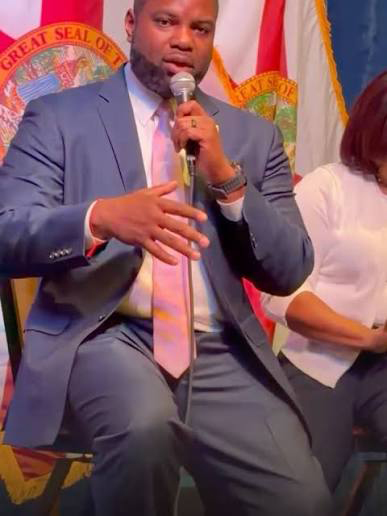
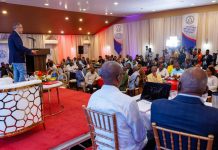
The recent visit by Byron Donalds, the Republican nominee for governor of Florida, brought that question into sharper focus. Billed as a “Community Breakfast & Conversation,” the September 12 campaign event at Katz Miami Restaurant & Lounge was intended to connect Donalds with pastors, business owners, elected officials, media representatives, community leaders and supporters. Despite taking place in North Miami, home to one of South Florida’s largest Haitian-American populations, the gathering drew a relatively modest audience of about 100 people.
Only a handful of prominent Haitian-American figures attended. They included Dr. Aldy Castor, policy committee chair of the Haitian-American Republican Caucus; Dr. Daniel Cedant, a Republican Party advocate; and Naomi Esther Blemur, the Democratic nominee for Florida commissioner of agriculture in 2022, who later ran unsuccessfully for mayor of North Miami. Blemur’s presence illustrates an important point: Participation in a community political event does not always conform to strict partisan boundaries.
The turnout at one campaign gathering cannot establish that Haitian-American Republicans are deliberately maintaining a low profile, nor can it reliably measure the political views of an entire community. Still, the event offers a timely opportunity to examine a broader question: Why do some Haitian-American Republicans appear hesitant to identify publicly with their party?
Republican Outreach Has a Long History
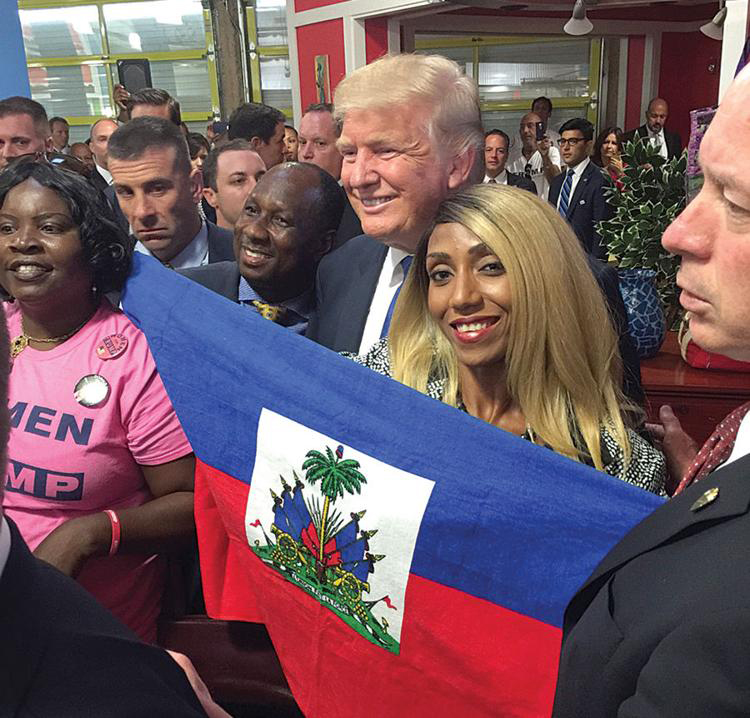
Haitian Americans have served as Republican activists, donors, campaign volunteers and candidates for years, and Republican outreach to the community is not new. On September 16, 2016, then-presidential candidate Donald Trump visited the Little Haiti Cultural Center in Miami, where he met with a small group of Haitian-American leaders. Later that day, he told supporters at a Miami rally that he intended to campaign aggressively for Haitian-American votes.
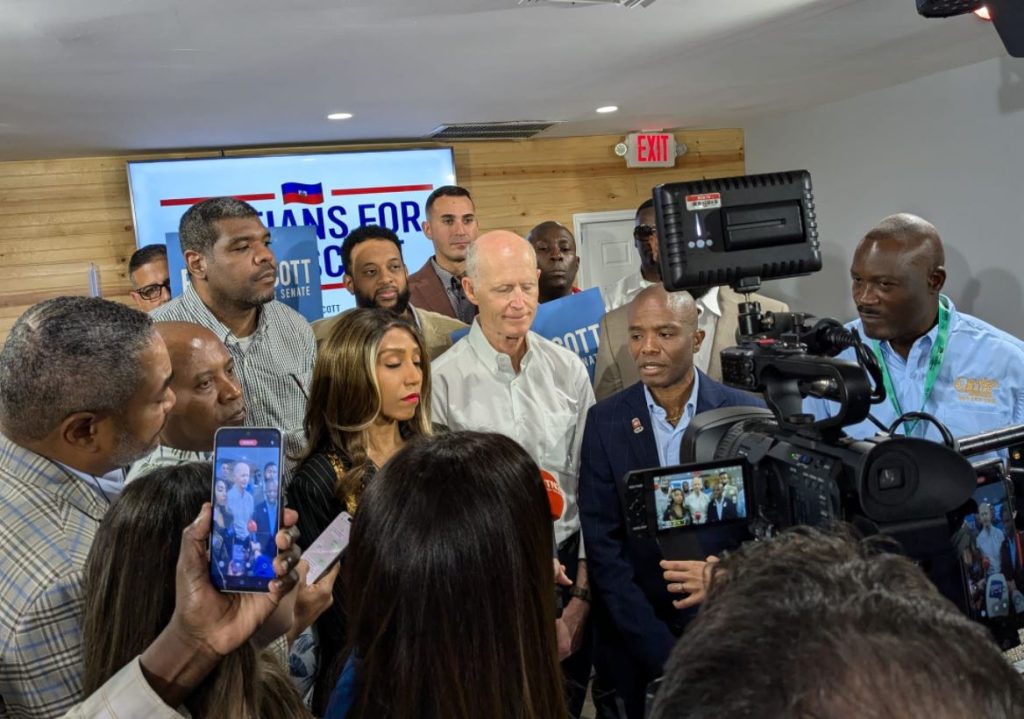
Republican Sen. Rick Scott made a similarly deliberate effort during his 2024 reelection campaign. Le Floridien documented his appearance at Tabernacle of Glory, the large Haitian-American congregation led by Bishop Gregory Toussaint in the Golden Glades area of northern Miami-Dade County.
Two days earlier, Scott had participated in a 90-minute meeting at Third Day Church in North Miami Beach. Billed as “Haitians for Rick Scott,” the event was hosted at the church led by Pastor Ariel Vasquez and attracted approximately 100 people. Attendees included Jeff Lozama, former chairman of the Haitian-American Chamber of Commerce of Florida; entrepreneur and political adviser Jean Patrick Maignan; former Haitian vice consul in Miami Guy François Jr.; and radio hosts Marc-Edner Jeudy and Rotschill Anderson. The two appearances showed that Scott’s campaign was seeking support through both civic leaders and influential religious institutions.
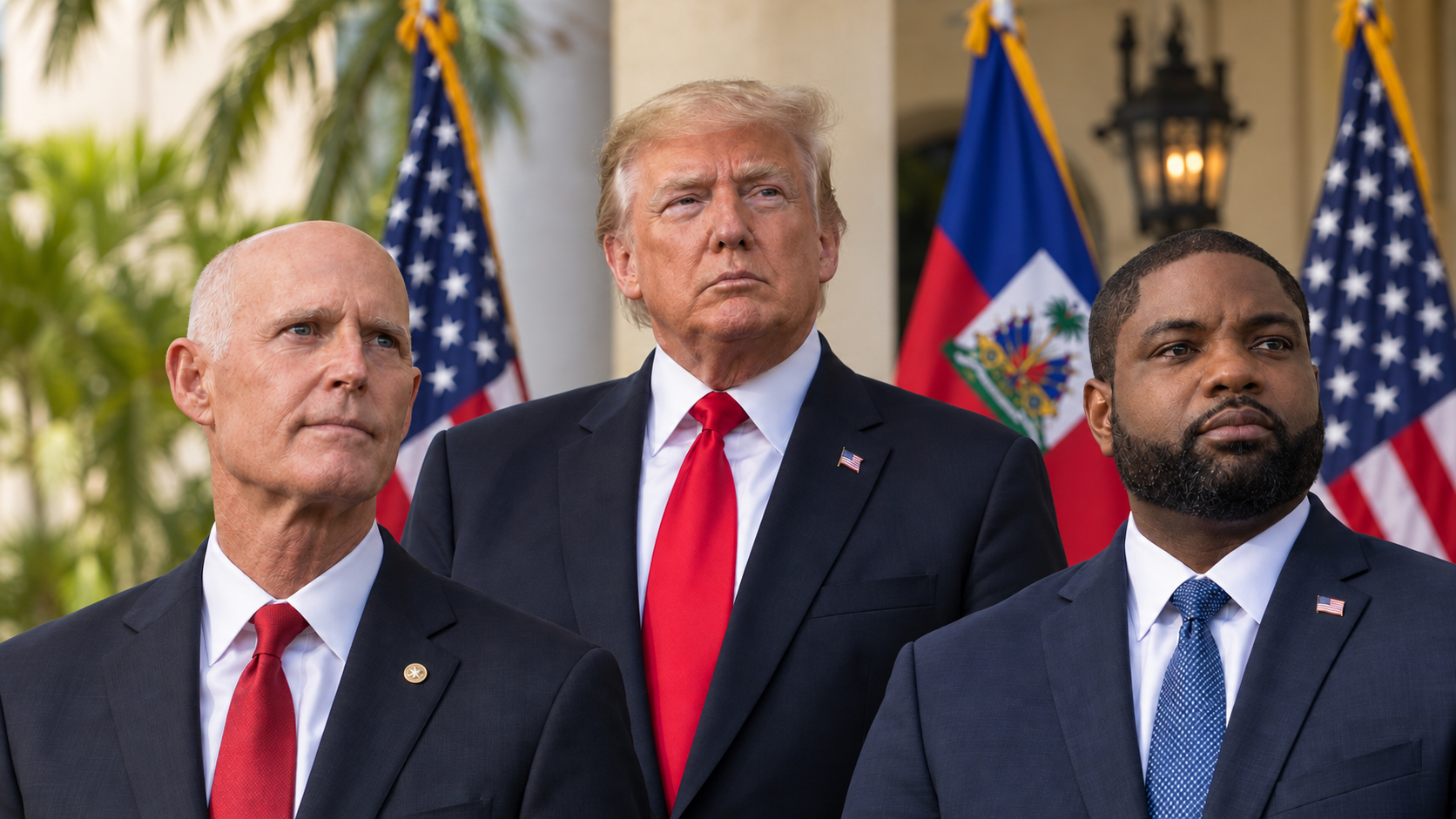
Taken together, the Trump, Scott and Donalds appearances demonstrate that Republican candidates view Haitian Americans as an important constituency. They also confirm that Haitian-American Republicans are not invisible. The more difficult question is why their public presence can appear smaller than their actual political influence or voting strength.
The Political and Social Cost of the Republican Label
The answer may begin with the complicated meaning of the Republican label in the Trump era. A Haitian-American voter may favor the party’s positions on taxes, entrepreneurship, abortion, religion, education, crime or government spending while strongly opposing its approach to immigration or Haiti. Publicly identifying as a Republican can therefore require that person to defend policies—or rhetoric—that he or she may not support.
Immigration has made that tension especially pronounced. Temporary Protected Status, deportation policy and enforcement actions have direct consequences for many Haitian families. A voter may embrace conservative economic or social principles but object to policies that could place relatives, employees, church members or neighbors at risk. In a polarized political climate, however, such distinctions are often lost. Support for a Republican candidate may be interpreted as approval of the party’s entire agenda or of Trump personally.
The structure of South Florida’s Haitian community can also make political affiliation difficult to separate from everyday life. Churches, businesses, nonprofit organizations, media outlets, professional networks and personal relationships frequently overlap. A public endorsement may affect not only how a person is viewed politically, but also how that person is received by customers, colleagues, congregants, donors, friends and relatives.
For business owners, the calculation can be particularly sensitive. Ken Sejour, owner of Chef Creole in Little Haiti, faced widespread criticism after disclosing that he had voted for Trump in 2024. He later expressed regret as the administration moved to end protections for Haitian immigrants, affecting members of his workforce, while heightened immigration enforcement near his restaurant reportedly frightened some customers away. His experience illustrates how a political choice can quickly become a business and community issue.
Pastors and nonprofit leaders may face similar pressures because their work often depends on relationships across party lines. Professionals may prefer not to have a photograph, social-media post or campaign appearance define them in the eyes of clients and colleagues. Their discretion does not necessarily indicate shame or uncertainty; it may reflect a practical assessment of the possible personal, professional and economic consequences of public partisanship.
That pressure is not unique to Republicans. Haitian-American Democrats, independents and politically unaffiliated residents may also avoid public political activity. Still, the Republican label carries distinct complications when the party’s immigration policies and statements about Haiti are perceived as hostile to the community.
What the Donalds Event Can—and Cannot—Tell Us
The modest turnout for Donalds should be interpreted cautiously. Attendance may have been affected by limited publicity, scheduling, the organizers’ community reach or the ordinary difficulty of attracting people to a campaign event. A gathering of about 100 guests is not insignificant, and one event cannot prove that Republican voters stayed away because they feared being seen.
Nor should visible attendance be treated as a substitute for electoral data or a scientific survey. Some Republicans may support candidates privately, contribute money, volunteer behind the scenes or simply vote without attending political events. Others may have disagreements with Donalds specifically, even if they generally favor Republican policies. The event therefore reveals little about the size of the Haitian-American Republican electorate on its own.
What it does reveal is a gap worthy of closer examination. Republican candidates have repeatedly sought Haitian-American votes, yet the public face of that support often appears limited. That contrast raises legitimate questions about whether some voters avoid partisan identification because of Trump, immigration policy, business concerns, social pressure or dissatisfaction with the party’s approach to Haiti.
The community itself is politically diverse. Haitian Americans hold differing views on taxes, education, health care, policing, immigration, foreign policy and the role of government. Some are Democrats, some are Republicans, and others are independents or reject party labels altogether. Those differences do not mean that any group cares less about Haiti or the future of Haitian Americans; they reflect competing judgments about which policies and candidates best serve those interests.
Ultimately, Haitian-American Republicans themselves are best positioned to explain how openly they discuss their politics and what, if anything, makes them cautious. Their answers are unlikely to produce a single explanation. Some may fear criticism or economic consequences. Some may be uncomfortable with Trump but remain loyal to conservative principles. Others may see no conflict at all and simply prefer to keep their votes private.
The Donalds gathering does not prove that Haitian-American Republicans are hiding. It does, however, renew an important question: In a community where politics, immigration, business and personal relationships are closely intertwined, how comfortable are Republican voters with being publicly identified with their party—and what does their level of visibility tell us about the pressures surrounding political expression?
Dessalines Ferdinand is the publisher and chief editor of Le Floridien. A media professional with more than 35 years of experience, he has closely observed and covered Haitian-American politics in South Florida for nearly three decades.