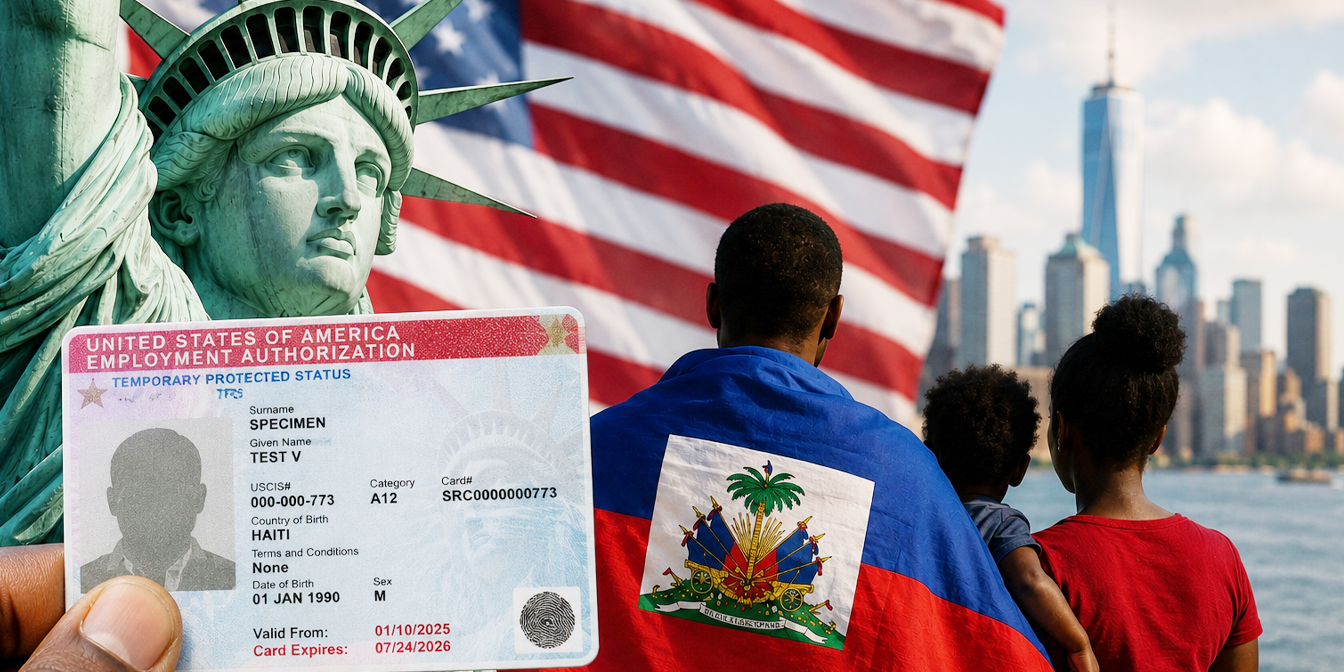

MIAMI — For thousands of Haitian families across the United States, the difference between keeping a job and suddenly losing work authorization came down to a last-minute announcement.
Just hours before employment authorization for eligible Haitian Temporary Protected Status beneficiaries was expected to expire on Friday, July 10, the Trump administration extended the validity of those work permits through July 24, 2026. The change gave Haitian workers and their employers two additional weeks to prepare, but it did not resolve the larger crisis surrounding the future of Haiti’s TPS designation.
The extension should therefore be understood for what it is: temporary administrative breathing room, not long-term protection.
For workers who feared being removed from payroll immediately, the announcement brought undeniable relief. Employers facing difficult decisions about whether they could legally continue employing Haitian TPS holders also received a brief period of clarity. But the new deadline merely moved the uncertainty from July 10 to July 24.
Relief Arrived — but Stability Did Not
USCIS indicated that the extension was issued pursuant to a court order as federal agencies continued implementing recent legal developments involving the termination of TPS for Haiti. The U.S. Supreme Court recently cleared the way for the administration to proceed with ending TPS protections for Haitians and Syrians, substantially weakening the legal barriers that had delayed implementation.
That distinction is important.
The administration did not announce a renewal of Haiti’s TPS designation. It did not provide a new long-term protection period. Nor did it guarantee that another extension would follow.
Instead, it extended certain employment authorization documents for a limited period while the government adjusted its procedures to comply with the court ruling and provide updated instructions to employers and TPS beneficiaries.
For Haitian workers, the practical message is troubling: they may continue working legally for now, but they still do not know what happens after July 24.
A Human and Economic Deadline
The July 24 date is more than a line on an immigration document. It could determine whether families can continue paying rent, mortgages, utility bills and school expenses.
Many Haitian TPS holders have lived in the United States for years. They work in healthcare, hospitality, construction, transportation, education, food service and other essential industries. In Florida alone, a significant number of Haitian workers and their families could be directly affected by the termination of their protections.
Employers are also caught in the uncertainty. Businesses must verify employment eligibility and comply with federal law but shifting deadlines and rapidly changing government guidance make workforce planning increasingly difficult.
A two-week extension may prevent immediate disruption, but it does not allow families or employers to make meaningful long-term plans.
Why Wait Until the Last Hours?
The timing of the announcement raises another important question: Why were thousands of workers and employers forced to wait until the final hours before learning whether employment authorization would remain valid?
Immigration policy is often complex, especially when federal courts are involved. Still, the repeated use of short deadlines and last-minute guidance creates confusion and anxiety. Workers may receive conflicting information from employers, attorneys, social media and government websites. Some may even be improperly suspended or dismissed because an employer has not yet seen the updated guidance.
That is why official communication matters.
USCIS and DHS must ensure that employers, state agencies and affected workers clearly understand that eligible documents remain valid through July 24. TPS holders should keep copies of updated USCIS guidance and seek qualified legal advice regarding their individual cases, especially because some may have another independent basis for remaining or working legally in the country.
Is July 24 a Bridge — or the End of the Road?
The most important question is whether the extension signals the possibility of further action or simply gives the administration time to complete the termination process.
There is currently no public guarantee of another extension. The Supreme Court ruling has strengthened the administration’s ability to end the program, and the short duration of the new deadline suggests that federal officials may be preparing for the next stage of implementation rather than reconsidering the broader policy.
Still, two weeks can matter politically and legally.
It gives immigration advocates additional time to pursue remaining legal options. It gives members of Congress more time to press for legislative action. It also gives Haitian officials, local elected leaders, employers, unions and community organizations another opportunity to urge the administration to consider Haiti’s catastrophic security and humanitarian conditions.
The House has already supported legislation that would extend protections for Haitians, but any lasting legislative solution would require further action in Congress and ultimately presidential approval.
The Larger Reality
The July 24 extension may be welcomed, but it should not be mistaken for a victory.
A genuine reprieve would provide enough time for families, employers and communities to prepare. A genuine solution would address the reality that deporting large numbers of people to a country experiencing widespread gang violence, institutional collapse and severe humanitarian instability could have devastating consequences.
For now, Haitian TPS beneficiaries have been given two additional weeks—not certainty, not permanent protection and not a clear path forward.
The clock has simply been reset.