By Dessalines Ferdinand
Chief Editor, Le Floridien
For decades, Haitian soccer fans dreamed of seeing their national team return to the FIFA World Cup. That dream became a reality when Haiti qualified for the 2026 tournament, setting up highly anticipated group-stage matches against Scotland, Brazil, and Morocco.
For many Haitians living in the United States, especially in South Florida, New York, New Jersey, Massachusetts, Georgia, Chicago, and other diaspora communities, the opportunity to watch Haiti compete on the world’s biggest stage seemed closer than ever. After all, the 2026 World Cup is being hosted largely in the United States.
Yet for thousands of Haitian-American supporters, attending the matches in person may remain financially out of reach.
Ticket Prices Put the Dream Out of Reach
The biggest obstacle is the cost of tickets, particularly for Haiti’s highly anticipated June 19 matchup against soccer powerhouse Brazil at Lincoln Financial Field in Philadelphia.
Among Haiti’s three group-stage matches, the Haiti-Brazil showdown is expected to be one of the most sought-after games involving the Haitian national team. Brazil remains one of the world’s most popular soccer nations, and strong demand has driven ticket prices sharply upward.
While official FIFA ticket categories for group-stage matches in Philadelphia ranged from approximately $60 to $445, resale prices for Haiti vs. Brazil have climbed well beyond those levels. Some resale platforms have listed tickets starting between $950 and $1,300, with average prices exceeding $1,100 for many seats.
For a Haitian family of four, the cost becomes staggering. Four tickets at current resale prices could easily exceed $3,500 to $4,500 before accounting for transportation, hotel accommodations, parking, food, and other expenses associated with traveling to Philadelphia.
The high prices are not limited to the Haiti-Brazil match. Across the tournament, FIFA’s use of dynamic pricing and the strong demand for World Cup tickets have generated widespread criticism. Attorneys general in New York and New Jersey have even launched investigations into FIFA’s ticketing practices, citing concerns about affordability and pricing transparency.
For many Haitian fans, the result is painful. Haiti’s return to the World Cup is a historic moment, but the cost of witnessing it in person may be beyond the reach of many families who have supported the Grenadiers for generations.
Last-Minute Deals May Not Help Everyone
Still, many supporters have not given up hope. Some believe ticket prices could decline in the days leading up to the match, as resellers lower prices to avoid being left with unsold inventory. Historically, last-minute deals have sometimes become available for major sporting events, giving patient buyers a chance to attend at a lower cost.
That strategy may benefit Haitian fans living closer to Philadelphia, including those in Pennsylvania, New Jersey, Delaware, Maryland, Washington, D.C., and the New York metropolitan area. Many of them can drive to the stadium on game day if affordable tickets become available.

For Haitians living in South Florida, Georgia, Chicago, and other parts of the country, however, the situation is very different. Even if ticket prices fall shortly before kickoff, last-minute airfare and hotel accommodations could still make the trip prohibitively expensive. Families traveling from Miami, Fort Lauderdale, West Palm Beach, Orlando, Atlanta, or Chicago would likely face additional costs for flights, hotels, transportation, meals, and other expenses.
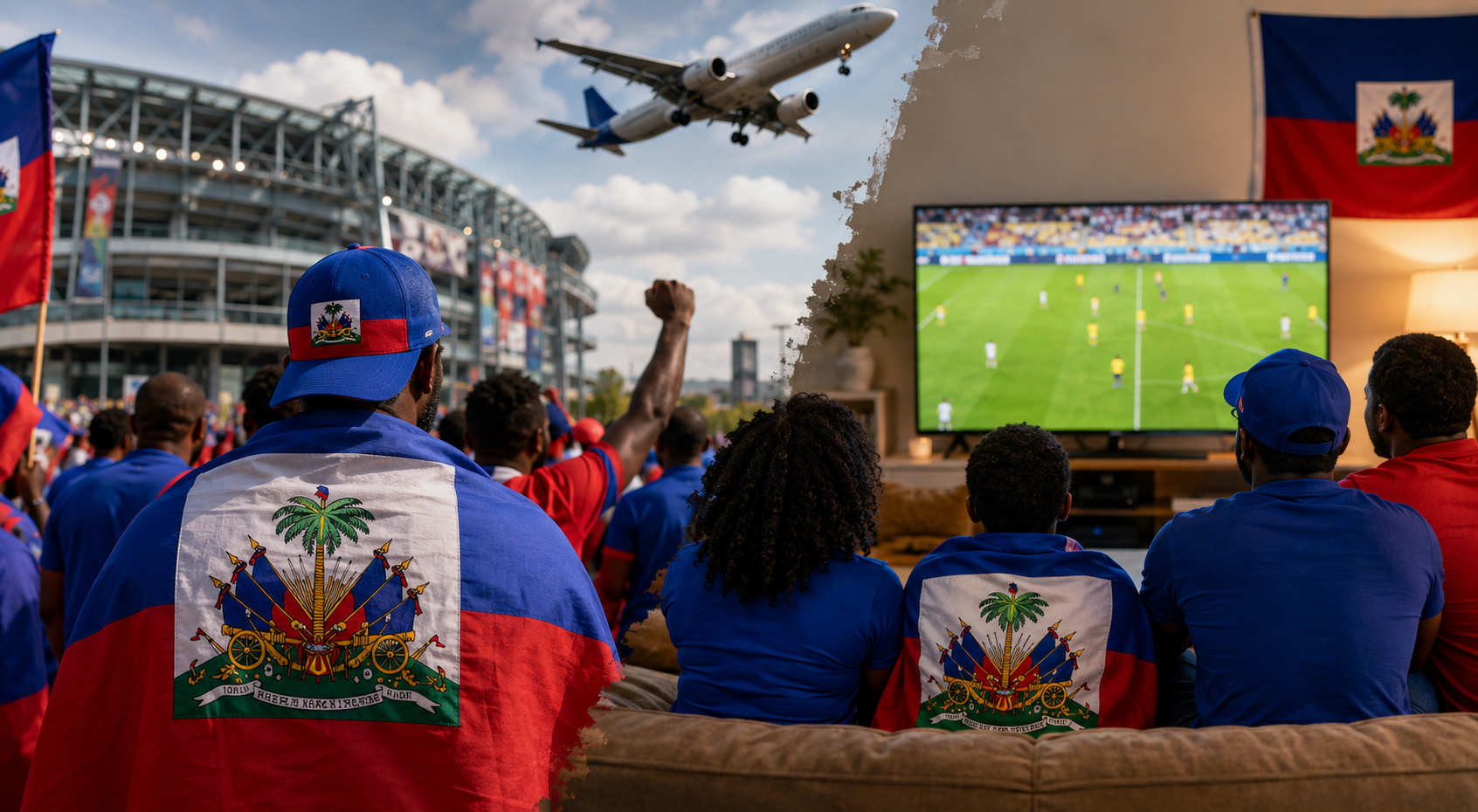
As a result, many Haitian supporters in the United States may find themselves in the same position as fans living in Haiti: watching the match on television rather than from inside the stadium.
The irony is difficult to ignore. Haiti’s long-awaited return to the World Cup is taking place on American soil, including in regions not far from some of the largest Haitian communities outside Haiti. Yet the price of attending one of the tournament’s most attractive matches may place the experience beyond the reach of many of the very fans who helped keep Haitian soccer pride alive in the diaspora.
For the Haitian community, the World Cup represents far more than soccer. It is a rare opportunity to celebrate national pride, cultural identity, and unity on a global stage. Many parents dreamed of bringing their children to witness a historic moment in Haitian sports history, especially a matchup against a legendary nation such as Brazil.
Instead, countless supporters may gather in homes, restaurants, sports bars, and community centers across the United States to cheer for the Grenadiers from afar.
That reality does not diminish the significance of Haiti’s achievement. However, it highlights a growing concern in international sports: major events are increasingly becoming experiences accessible mainly to those who can afford premium prices.
Whether ticket prices eventually decline or remain beyond reach, one thing is certain: on the day Haiti faces Brazil, millions of Haitians around the world will be watching. Unfortunately, many of those living in the United States may be doing so from in front of a television screen rather than from a seat inside the stadium.