Overview
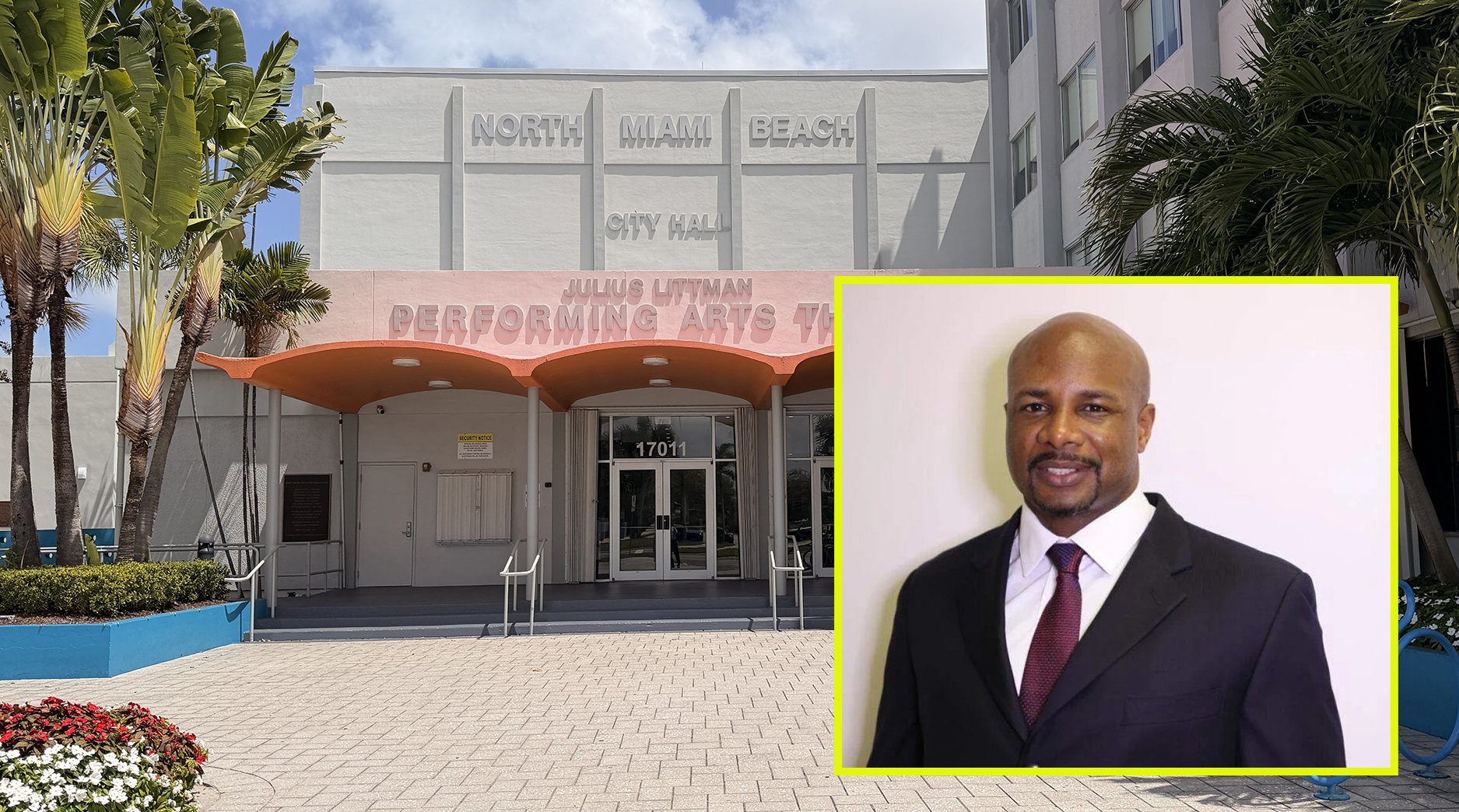
Newly appointed North Miami Beach City Manager Darvin Williams discusses his vision for unity, outreach to the Haitian community, and plans for the city’s 100th anniversary in an exclusive interview with Le Floridien.
By Dessalines Ferdinand
As the City of North Miami Beach prepares to celebrate its 100th anniversary, newly appointed City Manager Darvin Williams brings to the position more than administrative experience. He brings a governing philosophy rooted in service, unity, cultural inclusion, and institutional accountability.
In an exclusive conversation with Le Floridien, Williams outlined a leadership approach that blends professional discipline with a personal commitment to community impact, particularly in a city whose diversity is central to its identity and whose Haitian population represents a vital civic and cultural force.
From Experience to a Mission of Service
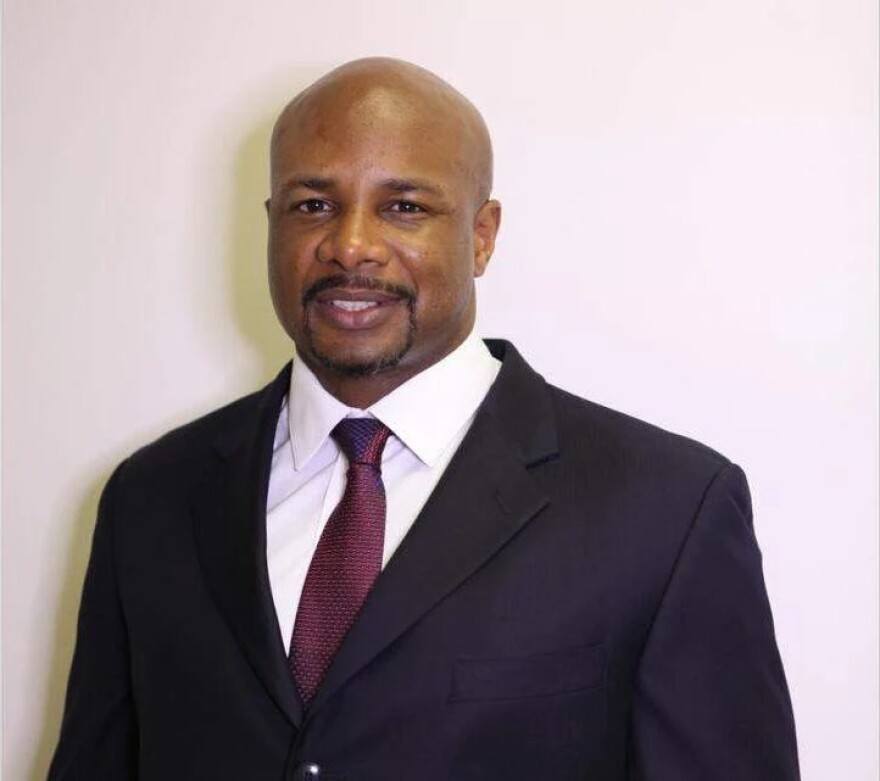
Before taking the helm in North Miami Beach, Williams held senior administrative roles in Opa-locka, Florida, serving first as Assistant City Manager and later as City Manager for more than two years. He describes himself as someone often called upon to help stabilize challenged institutions, a capacity shaped not only by municipal government, but also by his background as a former healthcare executive and military intelligence officer.
Yet Williams says his career has never been driven by title or income alone. For him, public service is fundamentally a matter of purpose.
“I could make a lot more money in the private sector… but I feel called to serve,” he said.
That conviction, he noted, once led him to accept a pay cut in order to remain in public service, a decision he says he does not regret. In his telling, leadership is not merely managerial; it is moral in orientation, grounded in the belief that public institutions function best when they are animated by service rather than status.
Understanding the Role: The ‘CEO’ of the City
Williams is also quick to clarify a role that many residents do not fully understand. The city manager, he explains, functions much like a chief executive officer, overseeing the daily operations of government across departments ranging from policing and information technology to economic development, while remaining accountable to elected officials.
That centralized responsibility, he suggests, is essential to executing a coherent civic vision, particularly as North Miami Beach approaches a historic milestone. To Williams, effective administration is not simply about maintaining systems, but about aligning those systems in ways that improve the daily lives of residents.
A Deep Connection to Haiti and Its Legacy
What distinguishes Williams in a city with a large Haitian population is that his connection to Haiti is rooted not in symbolism, but in years of direct engagement and personal conviction.
In 2008, he founded a nonprofit focused on healthcare missions. After the devastating 2010 earthquake, he traveled to Haiti, helping coordinate aid efforts and ensuring that critical medical supplies reached local hospitals.
“I’ve always had a connection to Haiti… As a Black man, there’s a pride in Haiti, the first Black republic,” he said.
But his connection, he explained, goes beyond admiration. It is informed by lived experience, reflection, and an evolving understanding of the historical and cultural bonds linking African Americans and Haitians.
“I didn’t see the difference between Black and Haitian before I moved here,” he said. “The only difference between me as an African American and a Haitian American is where the boat landed.”
Williams emphasized the shared experiences and parallel struggles that, in his view, should foster solidarity rather than distance.
“We’ve had some of the same experiences. Our people have faced many of the same challenges. We share the same historical and cultural fights… and when we’re divided, we’re not as strong as we are together.”
For Williams, unity is not a slogan crafted for convenience. It is a principle shaped by history and reinforced through experience.
A Commitment to Language and Cultural Inclusion
In a city as diverse as North Miami Beach, Williams sees language as more than a tool of communication; he sees it as a bridge.
He said he has long believed that a city manager should do more than oversee departments and balance budgets. A municipal leader, in his view, should also be able to connect meaningfully with residents across cultural and linguistic lines. That conviction helps explain why he sought to learn Haitian Creole after taking the job.
Williams, who said he is fluent in conversational Spanish, explained that he even sought support to study Creole so that he could better engage one of the city’s most important communities.
“It’s important to speak to residents in their native tongue,” he said. “That’s how you build community.”
For Williams, multilingual ability is not merely a personal asset; it is a form of public service in a city shaped by multiple cultures, immigrant histories, and linguistic identities. When public officials make the effort to speak to people in the language of their daily lives, he argues, they communicate respect, openness, and a willingness to meet residents where they are.
That belief is rooted in his own background. Drawing on his experience as a former military intelligence linguist, Williams said he understands firsthand the power of language to build trust, open doors, and strengthen the relationship between institutions and the people they are meant to serve.
“One City, One Team”: A Governing Philosophy of Unity
At the center of Williams’ early vision for North Miami Beach is a simple but intentional message: “One City, One Team.”
More than a slogan, the phrase captures the leadership style he says he wants to bring to City Hall as the city marks its centennial year. In his first 90 days, Williams has already begun reviewing how services are delivered across departments, with a focus on improving coordination, efficiency, and overall impact. For him, the objective is clear: align the work of government so that residents can see and feel the results.
“When you look at it, everybody wants the same thing, to provide the best service to the residents,” he said.
Williams believes that same philosophy can also help reduce tensions and strengthen collaboration among elected officials. Rather than dwelling on disagreements, he said his priority is to keep everyone focused on the work itself.
“How do you bring unity? It’s doing the work,” he said. “If we deliver results, unity will follow.”
In that sense, Williams frames unity not as a political talking point, but as something earned through performance, trust, and a shared commitment to public service.
Strengthening Regional and Institutional Relationships
Williams also emphasized the importance of maintaining strong ties with neighboring municipalities, particularly the City of North Miami.
“I have a great relationship with the City Manager, Theresa Therilus, and several elected officials,” he said, describing the two municipalities as “sister cities” that must work together to confront shared challenges and pursue common goals.
He also pointed to initiatives being developed in partnership with elected City Clerk Vanessa Joseph, reflecting what he described as a broader commitment to regional collaboration and stronger institutional relationships.
A Historic Opening to the Haitian Media
The conversation marked more than an interview; it signaled a notable opening between City Hall and North Miami Beach’s Haitian community. For the first time, a Haitian media outlet was invited to sit down with the city’s top administrator, a gesture that carried both symbolic and practical significance in a city where Haitians represent an important share of the population.
The meeting was supported and facilitated by Bernice Fidelia, legislative assistant, who took part in the discussion and helped bring forward several initiatives tied to the Haitian community and its growing visibility in the city’s public life.
Fidelia pointed to the administration’s efforts to make Haitian Heritage Month more visible and more substantive, with plans that include the participation of internationally recognized Haitian culinary talent, the anticipated presence of Haitian star striker Dukens Nazon, Haiti’s all-time leading scorer and one of the most recognizable figures of Les Grenadiers, as well as outreach involving representatives of the Haitian government.
Beyond the symbolism of special events, Williams indicated that his broader goal is to improve how City Hall communicates with all of North Miami Beach’s ethnic communities. As head of the city’s administration, he said he is actively exploring the most effective ways to reach the city’s diverse populations, including by engaging media outlets within the Haitian community so that residents are better informed about the decisions, initiatives, and services affecting their daily lives.
Fidelia also hinted at a major announcement tied to May 18, Haitian Flag Day, though details remain under wraps. In her telling, these efforts reflect an administration intent on building stronger, more direct ties with the Haitian community.
Looking Ahead: A Centennial Celebration with Purpose
As North Miami Beach marks its centennial in 2026, Williams envisions far more than a ceremonial observance.
Under his leadership, plans are taking shape for a year-long commemoration designed not only to honor the city’s history, but also to help define its future. He sees the milestone as an opportunity to bring together the many communities that make up North Miami Beach, celebrate the city’s cultural richness, including its deeply rooted Haitian heritage, and inspire a stronger sense of civic pride and shared belonging.
For Williams, the centennial is not simply about looking back. It is about using a historic moment to build a more connected, inclusive, and forward-looking city.
A Leader Focused on Legacy
When asked how he hopes to be remembered, Williams pointed not to titles or tenure, but to the breadth of the impact he leaves behind.
“I want to expand services so that it’s not just the same group of people benefiting, but that every member of the community has equal access,” he said.
In that sense, Williams measures leadership not by authority alone, but by how widely opportunity, service, and inclusion are extended across the community.
Accessibility and a New Tone at City Hall
Williams also underscored a commitment to accessibility, signaling a leadership style grounded in responsiveness, openness, and direct engagement with residents and community voices. For a community that has at times felt distant from local power structures, that approach suggests a meaningful shift in tone at City Hall, one that places greater emphasis on communication, trust, and public connection.
As North Miami Beach enters its second century, Williams is positioning himself not simply as an administrator, but as a unifier seeking to bridge gaps between government and residents, and among the city’s diverse communities.
His message remains simple, but defining:
“It’s about unifying people… and moving the city forward.”
RELATED ARTICLES
Michael Joseph Sworn In as North Miami Beach’s First Haitian-American Mayor, Marking a Historic Milestone