
Overview
Haitian police, backed by Salvadoran forces, targeted a property linked to 400 Mawozo leader Wilson Joseph in Croix-des-Bouquets. The death toll remains unconfirmed.
Haitian police, backed by Salvadoran troops and helicopters, targeted a property linked to 400 Mawozo leader Wilson Joseph, known as “Lanmò San Jou.” The gang chief reportedly escaped the attack.
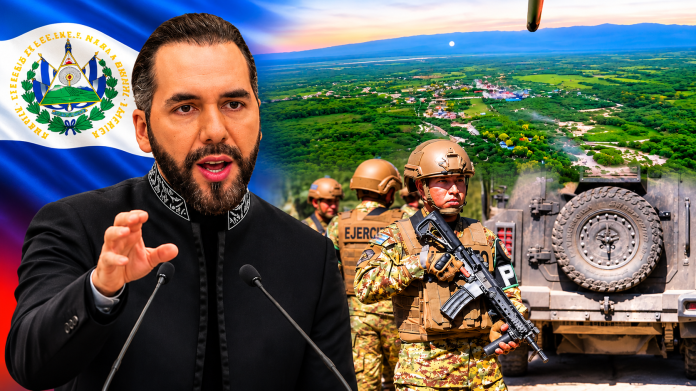
El Salvador’s President Nayib Bukele announced Tuesday (November 10) that security forces operating in Haiti had destroyed the residence of notorious gang leader Wilson Joseph, widely known as “Lanmò San Jou,” along with what authorities identified as the headquarters of the powerful 400 Mawozo criminal organization.
The operation, carried out early Sunday morning in Croix-des-Bouquets, northeast of Port-au-Prince, involved specialized units of the Haitian National Police (PNH), supported by Salvadoran military personnel, armed helicopters and explosive drones.
In a message published in Haitian Creole on his official X account, Bukele declared that his forces had fulfilled their promise to dismantle the gang’s facilities.
“Nou kenbe pwomès nou,” the Salvadoran president wrote, meaning “We kept our promise.”
He further claimed that most gang members fled the scene without attempting to confront the security forces, describing their retreat as an act of cowardice.
The announcement was accompanied by dramatic video footage showing helicopters firing at buildings, followed by explosions and heavy smoke rising from the targeted compound.
A Coordinated Attack on a Gang Stronghold
According to reporting by the Miami Herald, cited by Salvadoran newspaper El Diario de Hoy, the operation began around 2:30 a.m. on Sunday, November 8.
Specialized Haitian police units reportedly advanced on the ground while four helicopters provided aerial support. Two aircraft were operated by Haitian forces, while the other two were reportedly operated by Salvadoran military personnel.
The targeted property, believed to have been constructed within the past year, reportedly featured indoor and outdoor swimming pools, highlighting the luxurious conditions associated with some gang leaders amid Haiti’s worsening humanitarian and economic crisis.
Several armed individuals were reportedly killed during the assault. Some accounts suggested that as many as 20 gang members may have been inside the compound, although authorities have not released a verified casualty count.
Importantly, Wilson Joseph was reportedly absent when the attack occurred and remains at large.
It has also not been independently established whether Joseph owned the property or merely used it as a residence or operational base.
Bukele Had Publicly Promised to Destroy the Property
The military operation followed a public exchange on social media in which Bukele responded to information about a residence allegedly belonging to the 400 Mawozo leader.
On November 5, the Salvadoran president asked for the property’s precise location and publicly promised to demolish it once its address was confirmed.
Just days later, he announced that the building had been destroyed.
The incident reflects Bukele’s increasingly visible involvement in Haiti’s struggle against heavily armed criminal organizations, extending his aggressive anti-gang approach beyond El Salvador’s borders.
Why Are Salvadoran Troops Operating in Haiti?
The operation comes amid an extraordinary Salvadoran military deployment following the disappearance of four Salvadoran aviation technicians on October 18.
The personnel reportedly went missing after an ambush in the Croix-des-Bouquets area, where criminal organizations maintain a significant presence.
According to reports, approximately 2,500 Salvadoran troops were subsequently deployed to Haiti as part of an effort to locate the missing personnel and confront armed groups believed to be responsible for the attack.
Bukele previously indicated that the mission’s primary objective was to recover the missing Salvadorans before withdrawing the additional forces.
However, their whereabouts remain uncertain, and no independently verified information has established whether they are alive.
The United States has acknowledged the Salvadoran deployment as a separate operation from the internationally backed Gang Suppression Force.
Secretary of State Marco Rubio has emphasized the importance of coordination among the various security contingents operating in Haiti to prevent accidental confrontations.
What Does This Operation Mean for Haiti?
For Haitians who have endured years of kidnappings, killings, displacement and territorial control by armed gangs, the destruction of a prominent gang leader’s property represents a potentially significant symbolic victory.
The 400 Mawozo organization has long been associated with kidnappings and violent criminal activity, particularly in communities surrounding Croix-des-Bouquets.
However, the destruction of a building does not necessarily translate into the dismantling of an entire criminal network.
Joseph’s reported absence from the compound raises important questions about the operation’s long-term effectiveness and whether security forces can prevent gang members from regrouping elsewhere.
The involvement of Salvadoran troops also introduces a new dimension to Haiti’s security crisis, as foreign military personnel participate more visibly in operations alongside Haitian authorities.
For the Haitian population, the central concern remains whether these operations will produce lasting improvements in everyday security, allowing displaced families to return home, businesses to reopen and communities to regain control of their neighborhoods.
The larger test will not be measured solely by destroyed gang facilities, but by whether Haitian authorities and their international partners can translate military operations into sustained territorial control and greater protection for civilians.