By Dessalines Ferdinand
Chief Editor, Le Floridien
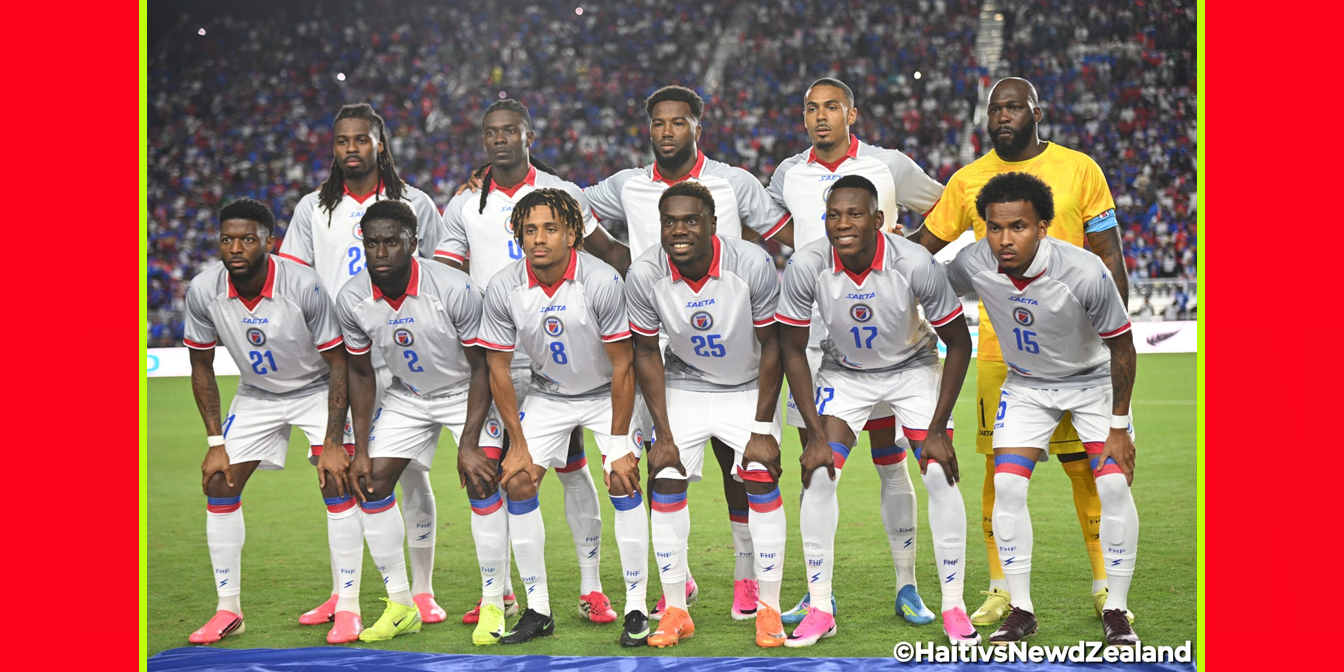
FORT-LAUDERDALE, Fla. — Fifty-two years after its only appearance at the FIFA World Cup, Haiti is no longer content with simply participating. On Tuesday night in Fort Lauderdale, the Grenadiers delivered a powerful statement to the football world, dismantling New Zealand 4-0 in a World Cup warm-up match that showcased confidence, discipline, and ambition.
The victory was far more significant than a simple friendly win.
For a nation that waited more than half a century to return to football’s biggest stage, the result was further proof that Haiti belongs among the 48 nations qualified for the 2026 FIFA World Cup. Widely considered an underdog in a difficult CONCACAF qualifying Group D that featured regional powers Costa Rica, Honduras, and Guatemala, Haiti defied expectations by finishing atop the group and securing only the country’s second World Cup appearance after its historic debut in 1974.
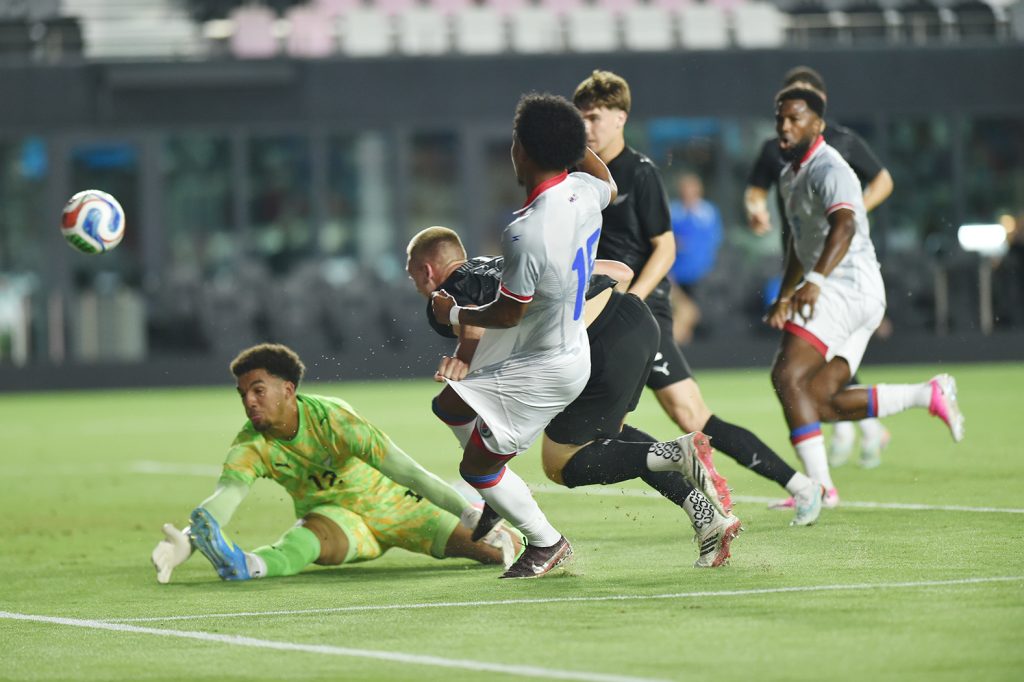
Photo by Ricardo Saint-Cyr / Le Floridien.
The achievement stands as one of the greatest accomplishments in the history of Haitian football. Few analysts predicted the Grenadiers would emerge ahead of three traditionally stronger programs, yet Haiti combined resilience, tactical discipline, and attacking flair throughout a qualifying campaign played entirely away from home — a rare and remarkable challenge in international football — to earn its place on football’s biggest stage.
A Win That Reinforces Belief
Coming into the match, Haiti was ranked No. 83 in the FIFA rankings, while New Zealand stood only two places behind at No. 85. On paper, the teams appeared evenly matched. On the field, however, there was only one side in control.
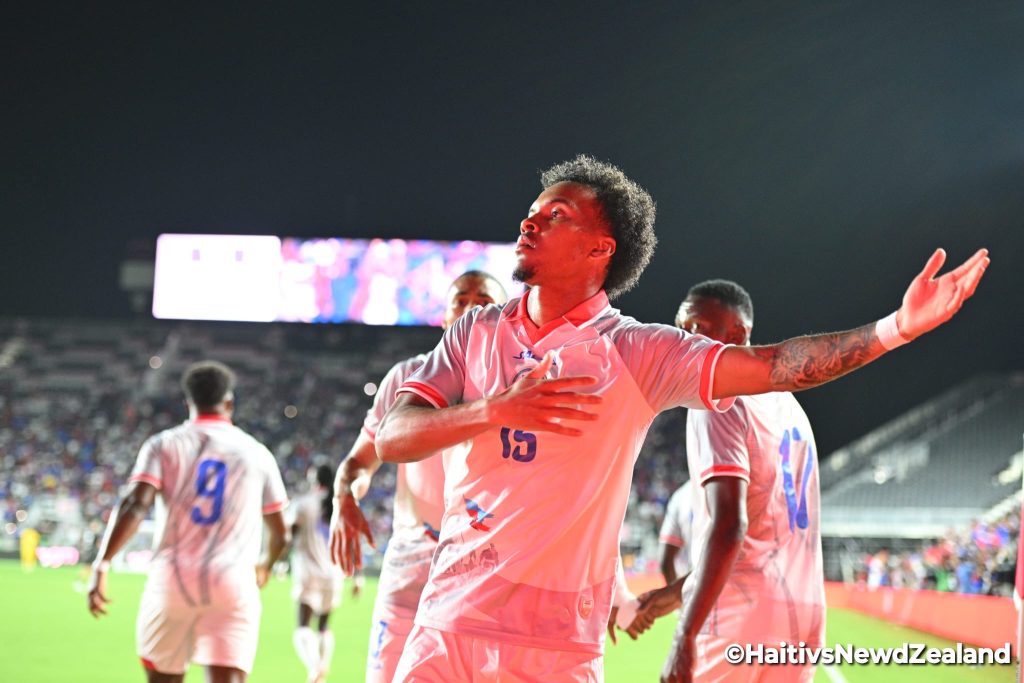
Photo by Ricardo Saint-Cyr / Le Floridien.
Although New Zealand entered the match ranked two places below Haiti, the All Whites are far from an unknown team in international soccer. Their greatest moment came at the 2010 FIFA World Cup in South Africa, when they held defending world champion Italy to a 1-1 draw after taking an early lead through Shane Smeltz before Italy equalized from the penalty spot.
Remarkably, New Zealand finished that World Cup undefeated, drawing against Slovakia, Italy, and Paraguay. Although the All Whites did not advance from the group stage, they left South Africa as the only team in the tournament that did not lose a match — a distinction even eventual champion Spain could not claim after its opening defeat to Switzerland.
Goals from Ruben Providence, Lenny Joseph, Frantzdy Pierrot, and Markhus Lacroix highlighted a dominant performance that left New Zealand’s coaching staff describing the match as a “harsh lesson.”
What impressed most was not merely the scoreline but the manner in which Haiti achieved it.

The Grenadiers displayed pace on the counterattack, efficiency in front of goal, and a level of organization that has often been missing from previous Haitian national teams. For long stretches, Haiti looked like the more experienced World Cup participant.
South Florida Felt Like Port-au-Prince
The choice of Fort Lauderdale as the venue was no accident.
South Florida is home to one of the largest Haitian communities outside Haiti. New Zealand media had already anticipated that the atmosphere would favor Haiti because of the region’s large Haitian population.
The crowd transformed the match into what felt like a home game for the Grenadiers. The support was loud, emotional, and symbolic of the role the Haitian diaspora continues to play in sustaining the national team’s identity.
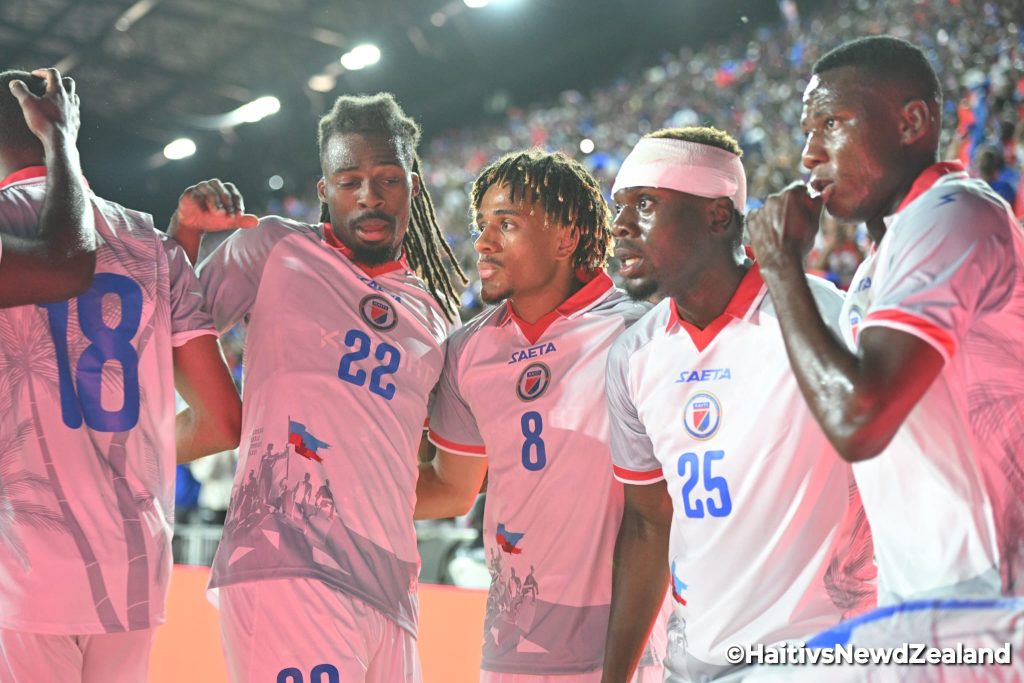
Photo by Ricardo Saint-Cyr / Le Floridien
For many Haitian Americans in attendance, the victory was more than football. It was a moment of national pride during a period when Haiti continues to face profound political, economic, and security challenges.
A New Generation of Grenadiers
Unlike the 1974 squad, which entered the World Cup as a complete unknown, today’s Haitian team features players developed in professional systems across France, Belgium, Portugal, and North America.
The current squad combines European tactical discipline with the athleticism and creativity traditionally associated with Haitian football. Tuesday’s performance suggested that Haiti may be entering the World Cup with more depth and international experience than any previous generation.
The victory also demonstrated that coach Sébastien Migné’s group is developing a clear identity: compact defensively, dangerous in transition, and capable of punishing mistakes quickly.
The Bigger Challenge: Peru Awaits
If New Zealand offered a useful measuring stick, Friday’s friendly against Peru will provide a much tougher examination.
Peru, ranked No. 43 in the world, sits forty places above Haiti and possesses considerably more World Cup pedigree and international experience. The South Americans are accustomed to facing elite opposition from Brazil, Argentina, Uruguay, and Colombia during CONMEBOL competition.
For Haiti, the Peru match is less about the result and more about evaluating whether the team can compete against opponents closer to World Cup knockout-stage quality.
Several questions remain:
Can Haiti maintain defensive concentration against more technically gifted attackers?
Can the midfield control possession when facing a stronger football nation?
Can the team create scoring opportunities when it is not dominating transition play?
The answers will provide a clearer indication of Haiti’s readiness for a World Cup group that includes football powerhouse Brazil, as well as Scotland and Morocco.
A Chance to Change Perceptions
For decades, Haiti has been viewed internationally as one of CONCACAF’s underdogs. That perception is beginning to change.
The 4-0 victory over New Zealand may not guarantee success at the World Cup, but it sends an unmistakable message: Haiti is no longer traveling to the tournament simply to participate.
The Grenadiers are arriving with confidence, momentum, and growing belief.
On Friday in Miami, against a stronger Peruvian side, Haiti will have another opportunity to prove that its return to the World Cup after 52 years is not merely a historic achievement—it could be the beginning of a new era for Haitian football.