By Dessalines Ferdinand
Chief Editor, Le Floridien
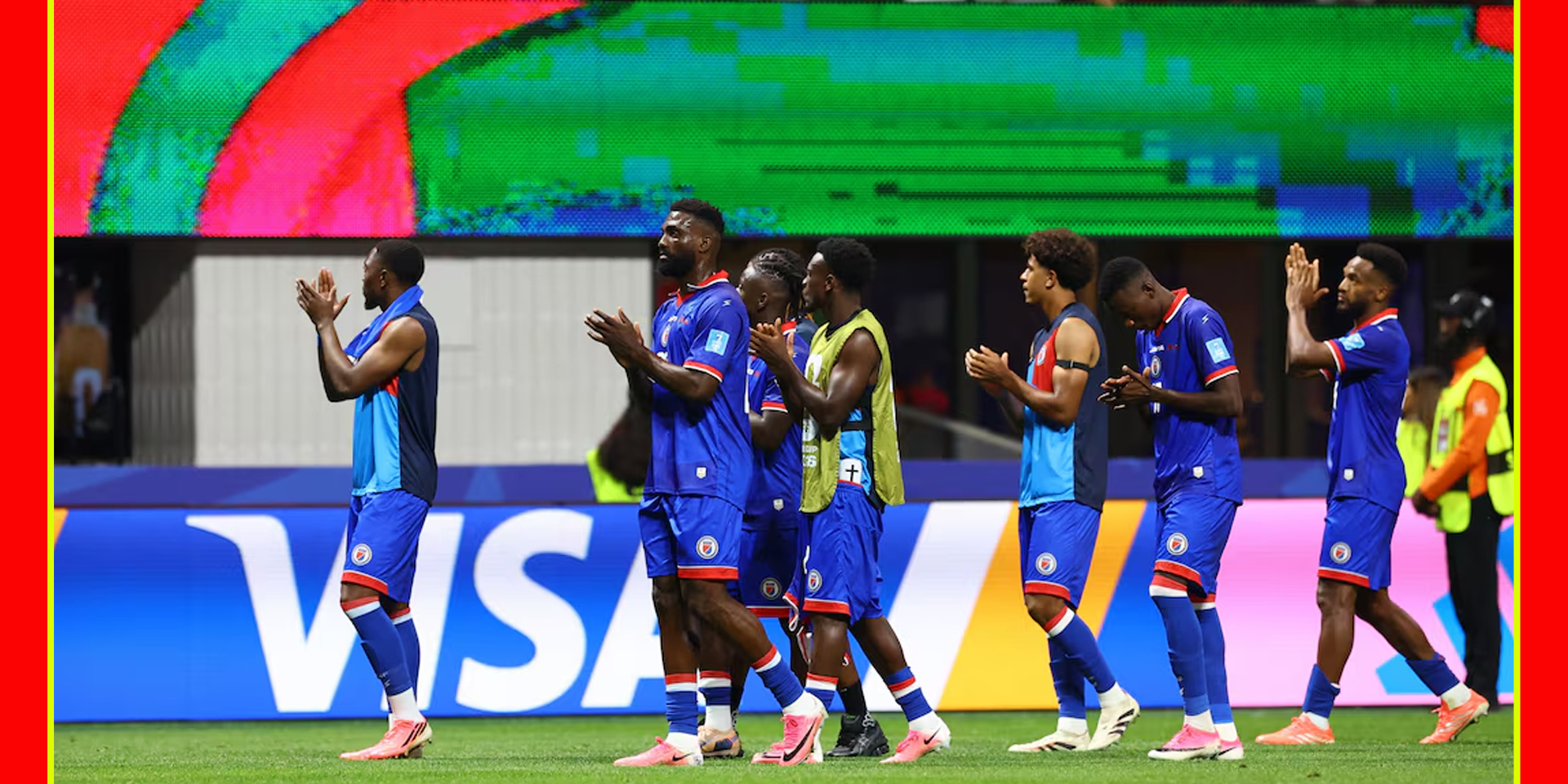
MIAMI — Haiti’s 2026 FIFA World Cup journey has officially come to an end. Three matches, three defeats, zero points, two goals scored, and elimination from Group C. On paper, the statistics paint a disappointing picture. Yet a World Cup campaign cannot be measured solely by the standings. For Haiti, this tournament represented something far greater: national pride, unity, resilience, and a long-awaited return to football’s grandest stage after more than half a century.
Haiti entered the tournament as one of the lowest-ranked teams in the competition and one of its clearest underdogs. Ranked around No. 85 in the FIFA World Rankings, Les Grenadiers found themselves in one of the tournament’s toughest groups, alongside Brazil, Morocco, and Scotland.
Brazil arrived as one of world football’s traditional powers and a five-time World Cup champion. Morocco entered as Africa’s leading force and a recent World Cup semifinalist. Scotland, ranked No. 43, also possessed significantly greater experience and a much higher FIFA ranking. Few expected Haiti to challenge such formidable opposition. What was expected, however, was that the team would compete with courage and dignity, and it did.
Against Scotland, Haiti displayed discipline, organization, and determination in a narrow 1-0 defeat that was far more competitive than many had anticipated. Against Brazil, despite a difficult first half that ended with a 3-0 deficit, Les Grenadiers regrouped impressively after the break, holding one of the world’s strongest teams scoreless throughout the second half. In their final match against Morocco (No. 7), with elimination already confirmed, Haiti refused to surrender, scoring twice and fighting until the final whistle.
The 4-2 defeat to Morocco will not alter the standings, but it carries symbolic significance. Haiti did not leave the World Cup quietly. Instead, the team demonstrated that even a nation with limited football resources can compete with pride, challenge elite opponents, and earn respect through determination. Those two goals did not rescue the campaign, but they offered something equally valuable: hope that Haiti’s football future remains promising.
More importantly, this World Cup transcended football itself. For Haitians at home and throughout the diaspora, Les Grenadiers became a powerful symbol of national unity. At a time when Haiti continues to confront profound political, economic, and security challenges, the national team provided millions with a rare opportunity to celebrate together, wave the national flag, and momentarily unite around a shared dream. That emotional impact cannot be measured by points or goal difference.
“This is something I’ve been waiting for for many years,” said 63-year-old Haitian supporter Jean Alcen of Miramar, Florida, who attended Haiti’s final group-stage match against Morocco. “I thank God for giving me the opportunity to witness Haiti’s return to football’s biggest stage. The results were not what we had hoped for, but being there to support my country was an unforgettable experience. I’m proud of our players because they never stopped fighting.”
“I could not attend all three games, but I was proud to take my two sons with me to the Brazil match,” said Jude Attys, a Haitian father from New Jersey. “Both of them play soccer, and I wanted them to experience Haiti on the World Cup stage. Maybe one day they, too, can dream of representing the homeland of their parents at this level.”
The same sentiment was echoed by another young supporter, who summarized the feelings of many Haitians following the tournament.
“We lost the games, but we did not lose our pride. Watching Haiti compete against Brazil, Morocco, and Scotland proved that we belong on this stage. Now the work must continue.”
The lesson from this World Cup is unmistakable. Haiti must not treat this qualification as an isolated achievement, but as the foundation for sustained progress. Greater investment in youth development, improved infrastructure, stronger federation leadership, more international competition, and long-term planning will all be essential if the country hopes to build on this experience. Haiti possesses talent. It possesses passion. It benefits from one of the world’s most committed diasporas. What remains essential is the structure capable of transforming potential into consistent success.
Although Haiti exits the tournament in the group stage, this team should not be remembered simply for its record. It should be remembered for restoring hope, inspiring a new generation, and reminding the football world that Haiti belongs among the global game’s biggest competitors. The scoreboard tells only part of the story.
Haiti leaves the 2026 FIFA World Cup with zero points, but not without pride. Les Grenadiers may have lost every match, yet they gave a nation enduring moments of unity, belief, and inspiration. And in a country searching for reasons to hope, that may prove to be one of this World Cup’s most meaningful victories.