By Le Floridien ________
LITTLE HAITI, Miami — For many members of Haiti’s national soccer team, qualification for the 2026 FIFA World Cup represents far more than a sporting achievement. It also offers an opportunity to reconnect with their heritage and, perhaps, fulfill a lifelong dream: visiting the homeland of their parents and grandparents.
For many, however, that dream remains unrealized.
Owing to Haiti’s prolonged security crisis and the logistical challenges surrounding the national team’s preparations, a significant number of Grenadiers born and raised abroad have never had the opportunity to set foot in the country they proudly represent. Although they wear Haiti’s colors with pride and compete under its flag on the international stage, their connection to the nation has largely been shaped by family narratives, cultural traditions, and values passed down through generations.
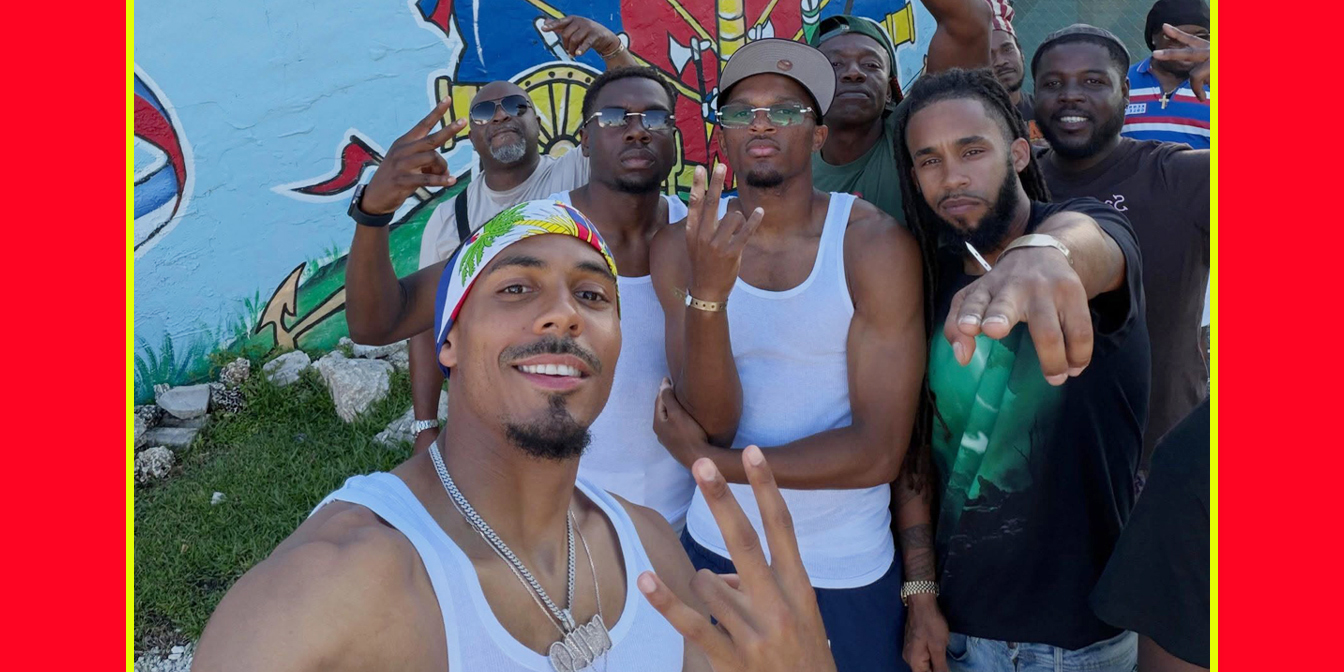
Following Haiti’s final World Cup warm-up match against Peru in Miami, several players took advantage of a rare moment of free time on Saturday to visit Miami’s Little Haiti neighborhood, one of the largest and most vibrant Haitian communities outside the Caribbean nation.
Among them were Wilson Isidor, Lenny Joseph, Dominique Simon, and several teammates, who spent time exploring the neighborhood, interacting with members of the community, and posing for photographs in front of murals celebrating Haiti’s history, culture, and resilience.
For these young athletes, the visit offered something no statistic, ranking, or training session could provide: a deeper emotional connection to the people they represent every time they step onto the field.
Standing before colorful murals adorned with Haiti’s national symbols and patriotic imagery, the players experienced a glimpse of the culture that has shaped their families and identities. While Little Haiti is not Port-au-Prince, Cap-Haïtien, Les Cayes, or Jacmel, it remains a powerful extension of the Haitian spirit, preserving the nation’s language, traditions, music, cuisine, and collective pride thousands of miles from its shores.
The timing of the visit was particularly meaningful. In a matter of days, Haiti will return to the FIFA World Cup for the first time in 52 years. This generation of Grenadiers has already inspired millions of Haitians across the globe by accomplishing what many once considered improbable: qualifying for football’s most prestigious tournament despite years of instability, limited resources, and the inability to play home matches on Haitian soil.
For players born in France, Canada, the United States, and elsewhere, representing Haiti is often more than a sporting commitment; it is an affirmation of heritage and identity. Many learned to love the country through the stories, sacrifices, and traditions of their parents long before they ever wore the national team’s jersey.
Their visit to Little Haiti served as a poignant reminder that although they may not yet have walked the streets of their ancestral homeland, they have already been embraced by the Haitian people as their own.
As Haiti prepares to face Brazil, Morocco, and Scotland on football’s grandest stage, these players will carry far more than the ambitions of a national team. They will carry the hopes of a global Haitian community—one that extends well beyond Haiti’s borders yet remains bound together by a shared history, culture, and sense of belonging.
For a few hours in Little Haiti, the Grenadiers were able to experience that connection firsthand. And for those still waiting for the opportunity to visit the land of their ancestors, it may have been the closest feeling yet to coming home.