The vibrant streets of Little Haiti are no longer as crowded as they once were. Since the end of Haitian Temporary Protected Status (TPS), fear and uncertainty have altered daily life, with many residents avoiding public places and local businesses reporting a noticeable decline in customer traffic. The changes are raising concerns about the economic future of one of South Florida’s most important Haitian communities.
By Le Floridien Staff
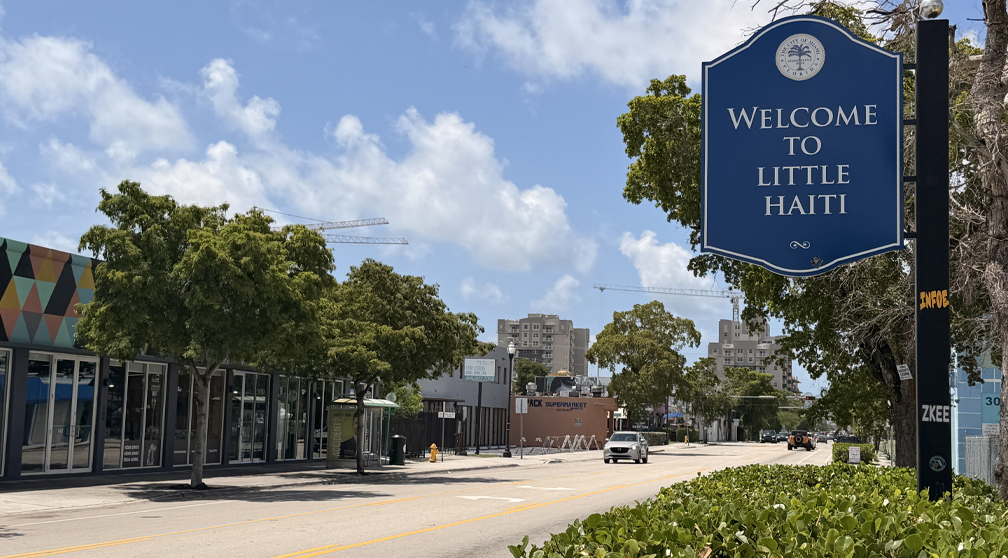
MIAMI (Le Floridien) — The streets of Miami’s Little Haiti, once filled with customers shopping at neighborhood markets, eating at Haitian restaurants and gathering outside local businesses, are becoming noticeably quieter as the end of Temporary Protected Status (TPS) reshapes daily life for thousands of Haitian families.
Business owners and residents say customer traffic has declined significantly in recent weeks. Restaurants, grocery stores, money transfer offices, barber shops and other small businesses that depend heavily on the Haitian community are reporting fewer visitors as many immigrants choose to stay home, avoid unnecessary travel or limit public activities because of concerns about immigration enforcement.
While many businesses remain open, the atmosphere throughout parts of Little Haiti has changed. Streets that were once busy throughout the day now appear less crowded, reflecting growing uncertainty among residents who no longer enjoy the legal protections they once had under TPS.
Fear Is Affecting More Than Immigration Status
The impact extends well beyond those who directly lost TPS protections.
Some Haitian families say they have reduced trips to restaurants, shopping centers and community events, fearing that immigration enforcement could occur in public places. Others have stopped visiting friends and relatives as often or are avoiding gathering spots that were once central to community life.
Although immigration authorities continue to carry out enforcement operations in South Florida, there is no evidence that businesses throughout Little Haiti are being systematically targeted. Nevertheless, even isolated enforcement actions and widespread rumors have created an atmosphere of anxiety that is changing everyday behavior.
For many residents, perception has become almost as powerful as reality.
Businesses Feel the Economic Impact
The slowdown is beginning to affect local commerce. Owners of Haitian-owned businesses say fewer customers mean lower daily sales at a time when many are already struggling with higher operating costs.
Some employers are also facing labor shortages after the end of TPS affected members of their workforce. Replacing experienced employees has become increasingly difficult, while rising labor expenses may eventually force some businesses to increase prices or reduce operating hours.
For neighborhood merchants, the concern is no longer only immigration policy. It is whether the community’s reduced spending will create a prolonged economic slowdown.
Rumors Add to Community Anxiety
Since the end of TPS, social media has become flooded with reports of alleged immigration raids throughout South Florida.
Some claims have later proved to be inaccurate or exaggerated, illustrating how quickly rumors can spread during periods of uncertainty.
Community leaders encourage residents to verify information before sharing it and to rely on confirmed reporting rather than social media speculation.
Misinformation not only creates unnecessary fear but can also damage local businesses and increase anxiety among families already facing difficult circumstances.
A Community Facing an Uncertain Future
For decades, Little Haiti has served as the cultural and economic heart of South Florida’s Haitian community. The neighborhood has survived political crises in Haiti, natural disasters and economic challenges while remaining a center of Haitian culture, entrepreneurship and resilience.
Today, however, many residents say they are experiencing a different kind of uncertainty.
The end of TPS has created questions about employment, family stability, housing and the future of thousands of longtime South Florida residents who have built their lives in the United States.
Whether current conditions become temporary or evolve into a longer-term economic challenge will depend on future immigration policies, court decisions and how the community adapts in the months ahead.
Le Floridien Analysis
The quieter streets of Little Haiti tell a story that goes beyond immigration policy.
They reflect a community adjusting to uncertainty, businesses trying to survive declining customer traffic, and families making difficult decisions about everyday activities that once seemed routine.
Not every empty sidewalk represents someone who has left South Florida, nor does every slow business day indicate immigration enforcement nearby. But together, these changes illustrate how immigration policy can affect an entire neighborhood—not only those directly impacted by the law, but also local businesses, workers, churches, customers and community organizations.
For Little Haiti, the challenge ahead will be preserving the neighborhood’s economic vitality while helping residents navigate one of the most uncertain periods in the community’s recent history.