By Dessalines Ferdinand, Chief Editor
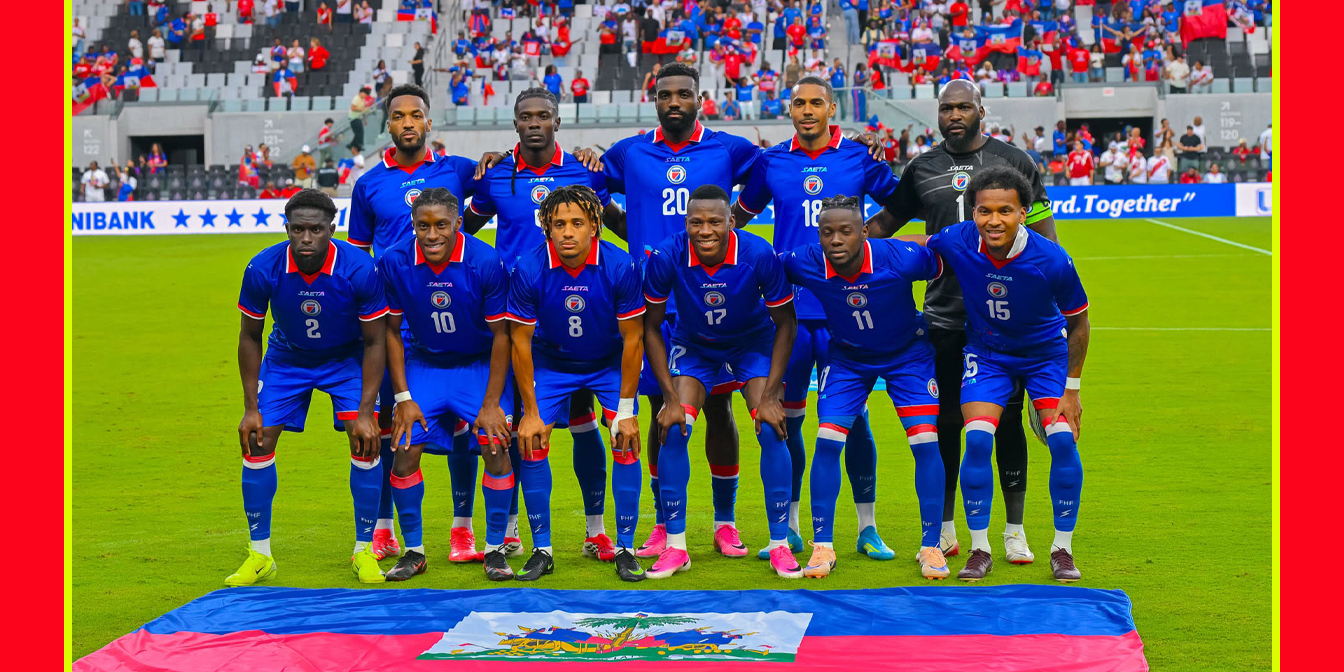
After crushing New Zealand 4-0 earlier in the week, Haiti entered Friday night’s friendly against Peru with momentum, confidence, and growing belief. But as expected, the match against Peru, ranked 43 much higher than New Zealand 85 and more experienced at the South American level, proved to be the real test Les Grenadiers needed before heading into the 2026 FIFA World Cup.
Thousands of Haitian fans made the trip to Miami, filling much of the 26,700-seat venue with red-and-blue colors and creating an atmosphere that felt more like a home match for the Grenadiers.
Haiti lost 2-1 at Nu Stadium in Miami, but the result should not be seen only as a disappointment. It should be viewed as a valuable lesson. Against a more disciplined and technically mature opponent, Haiti showed that it can compete. But the Grenadiers also learned that at World Cup level, a good 80 minutes are not enough.
Haiti started the match with energy, courage, and tactical discipline. Wilson Isidor gave Les Grenadiers the lead in the first half after a strong pressing sequence and a good attacking transition. For long stretches, Haiti looked organized defensively and dangerous on the counterattack. The team was not intimidated by Peru’s reputation or ranking.
That is the positive side of the night.
The negative side came late in the second half. Haiti led 1-0 deep into the match, but Peru punished the Grenadiers with two goals in a short three-minute span. Renzo Garcés equalized in the 81st minute, and Jairo Vélez scored the winner in the 84th minute. Both goals came from situations created around corner kicks and set-piece pressure.
This is the biggest lesson Haiti must take from the match.
At the World Cup, Brazil, Morocco, and Scotland will study every weakness. If Haiti struggles to defend corners, second balls, rebounds, and late pressure, those opponents will exploit it. Scotland, in particular, is a team that can be very dangerous on physical play and set pieces. Brazil and Morocco, meanwhile, have enough technical quality to punish even the smallest defensive mistake.
The Peru match also showed that Haiti must learn how to manage the final 15 minutes of a game. At World Cup level, fatigue, substitutions, concentration, and emotional control become just as important as talent. Haiti cannot afford to defend too deep after taking the lead. The team must remain compact, but also brave enough to keep the ball, slow the rhythm, and avoid unnecessary pressure near its own goal.
Another lesson is game management. Haiti had chances to protect the lead, but Peru’s substitutions brought fresh energy and changed the rhythm of the match. Les Grenadiers must be ready for that kind of tactical adjustment. In the World Cup, opponents will change formations, increase pressure, and attack weaknesses late in the game. Haiti must respond with calm, organization, and better control.
Still, this defeat should not erase the progress shown by the team. Haiti beat New Zealand 4-0 and then pushed Peru until the final minutes. That proves the Grenadiers are not going to the World Cup simply to participate. They have speed, attacking quality, defensive commitment, and a new generation of players competing at the international level.
Even after the loss, coach Sébastien Migné has reasons to remain optimistic. Haiti was not dominated. Haiti was not embarrassed. Haiti competed. But Haiti was reminded that the difference between a good performance and a good result can be decided by two or three moments of concentration.
For Les Grenadiers, the message is clear: improve set-piece defending, stay mentally strong until the final whistle, manage substitutions better, and avoid dropping too deep when leading.
The 4-0 win over New Zealand gave Haiti confidence. The 2-1 loss to Peru gave Haiti reality.
Both are useful.
Before facing Brazil, Morocco, and Scotland, Haiti needed this kind of warning. The World Cup will not forgive small mistakes. But if Les Grenadiers learn quickly from this defeat, the loss to Peru may become one of the most important lessons in their preparation for football’s biggest stage.