From South Florida’s Haitian hospitality scene to the heart of Mattapan Square, Paulette Firmin is bringing years of restaurant experience to Marabou Café, which she co-owns with her sister Guylene Innocent. With a major investment in full-service dining and a newly awarded all-alcohol license from the Boston Licensing Board, the restaurant represents a growing effort to expand Haitian cuisine beyond the traditional takeout model and introduce Haitian food, culture and hospitality to a broader American audience.
By Le Floridien Staff
MATTAPAN, Mass. — For Paulette Firmin, Marabou Café in Mattapan Square represents more than another Haitian restaurant. It is the continuation of years spent in the hospitality business and an effort to help redefine how Haitian cuisine and culture are presented to a broader American audience.
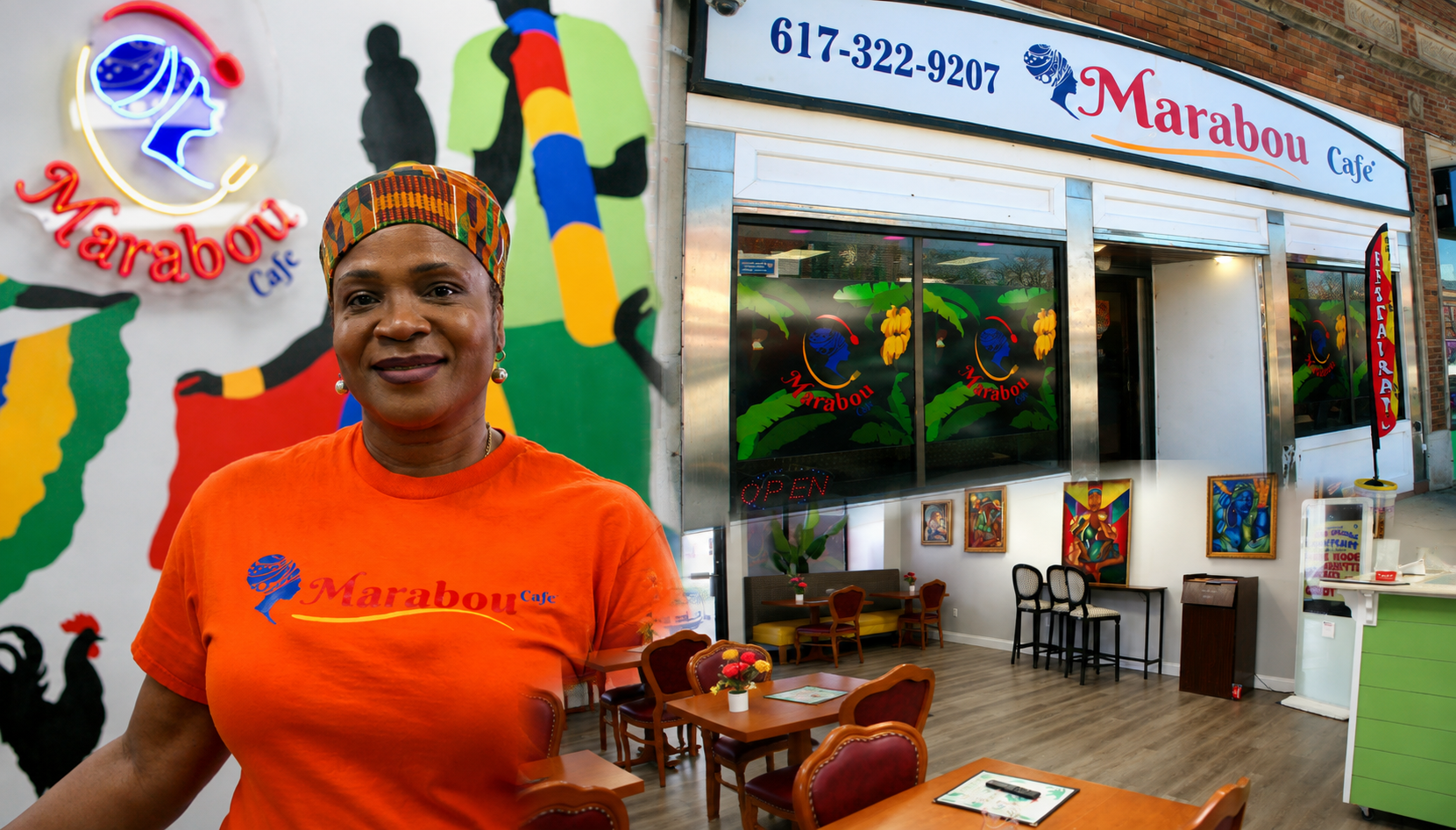
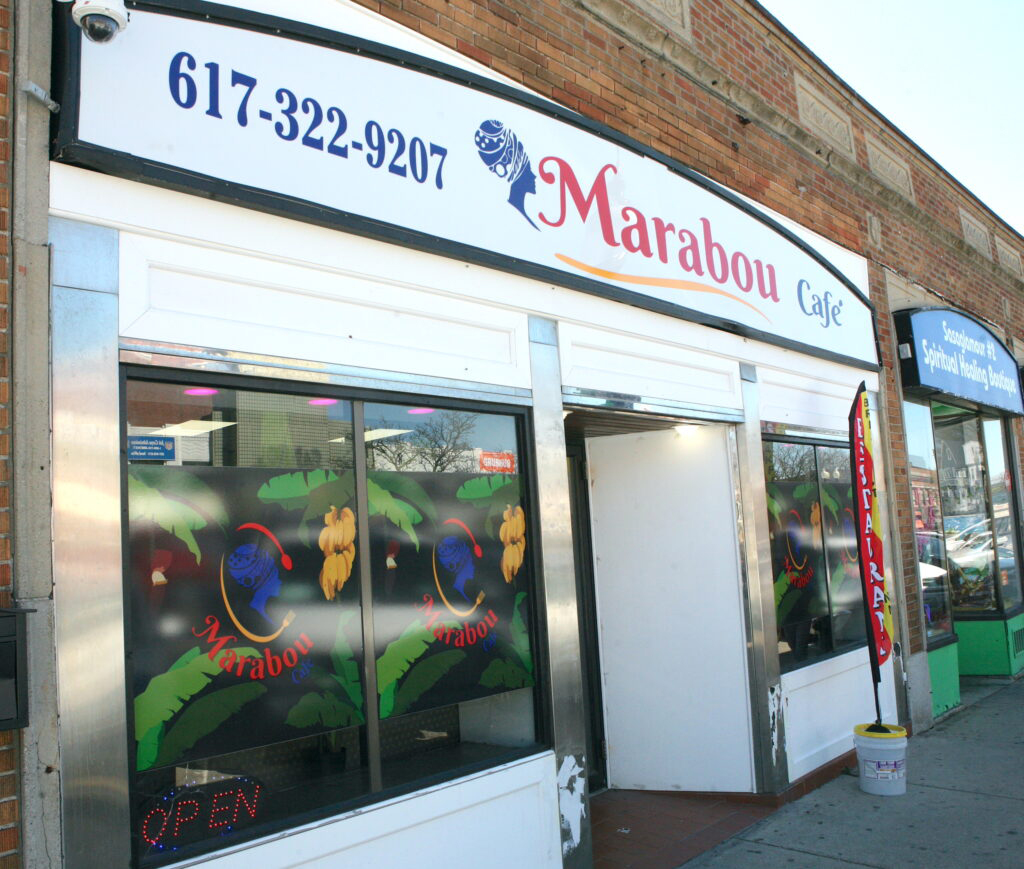
Co-owned by Firmin and her sister, Guylene Innocent, Marabou Café has established itself in the heart of Mattapan Square as a sit-down restaurant serving traditional Haitian dishes in an environment designed to encourage customers to stay, dine and socialize rather than simply pick up a meal and leave.
The restaurant recently reached an important milestone after the Boston Licensing Board awarded Marabou Café an all-alcohol license, opening the door for the establishment to add cocktails, wine and beer to its dining experience.
The approval carries additional significance for Mattapan. Marabou was awarded one of the neighborhood-specific liquor licenses made available for businesses in the 02126 ZIP code, part of Boston’s effort to expand opportunities for restaurants in neighborhoods outside the city’s traditional downtown hospitality districts.
For Firmin, however, the hospitality business is hardly new.
Experience Rooted in South Florida’s Haitian Hospitality Scene
Long before opening Marabou Café in Massachusetts, Paulette Firmin accumulated extensive hands-on experience in South Florida’s Haitian restaurant and entertainment industry.
She was the driving force in the kitchen of the former Marabou Café in South Florida, working alongside her husband, Gerald Firmin, widely known as “Kaliko.” A longtime promoter with deep roots in South Florida’s Haitian entertainment scene, Gerald Firmin remains active in the hospitality and nightlife industry and today serves as general manager of the popular HOLLYWOOD Live in Hollywood, Florida.
That experience is an important part of Paulette Firmin’s story. Her venture in Mattapan is not simply the result of someone deciding to open a restaurant. It builds on years of firsthand knowledge of Haitian food, customer service, restaurant operations and the connection between dining, entertainment and community.
Firmin, who is also a registered nurse, eventually found herself in the Boston area through her work as a traveling nurse. Reuniting with her sister (Guylene Innocent) there led to an observation that would eventually become a business opportunity.
Compared with South Florida, Firmin believed the Boston-area Haitian restaurant scene lacked some of the variety and full sit-down dining experiences she had known in Florida.
“I told my sister we needed to bring something here,” Firmin said.
The sisters eventually found a location in the middle of Mattapan Square, an area with a significant Haitian and Caribbean presence and a mixture of cultures.
They committed approximately $160,000 to a major renovation of the space, creating a new kitchen and bathrooms, new serving areas and a spacious, well-lit dining room. Haitian culture is incorporated into the décor through traditional paintings and a colorful mural depicting dancers and a Rara band.
The result was deliberately different from the quick-service model commonly associated with many neighborhood Caribbean restaurants.
Firmin recalled that some people initially questioned whether customers would embrace the concept.
“Many people told me they didn’t believe it would work,” she said. “They would say that people only come here for quick dishes at $7 and move along. They didn’t believe people would come in and sit.”
She decided to challenge that assumption.
Marabou Café built its menu around familiar Haitian favorites, including griot, red snapper, lalo, traditional soups and lambi in white sauce, while incorporating influences from Firmin’s previous restaurant experience in Florida.
The sisters have also envisioned expanding the concept with Caribbean and Southern fusion-style Sunday brunches.
But Firmin’s ambition extends beyond the food itself.
She wants Marabou Café to become a place where Haitian families, other Caribbean communities and customers unfamiliar with Haitian cuisine can sit together and experience Haitian food and hospitality.
“It’s not just a place for Haitians to eat, but every ethnicity and age group,” she said. “We need other communities to learn about it.”
Liquor License Opens a New Chapter
The newly awarded all-alcohol license could become an important part of that vision.
The idea had previously received encouragement from Boston Mayor Michelle Wu, who visited Marabou Café and, according to Firmin, spent about 45 minutes at the restaurant.
“When the mayor came, she stayed 45 minutes and she was very inspired by the place,” Firmin recalled. “She said I needed to try to get [the license], and she would come back when I had it.”
That goal has now moved forward with the Boston Licensing Board’s approval.
The ability to offer cocktails, wine and beer alongside Haitian cuisine could allow Marabou Café to strengthen its evening business, encourage customers to spend more time at the restaurant and compete more directly with full-service establishments elsewhere in Boston.
The restaurant also plans expanded hours with the new license, further positioning Marabou as an evening dining and social destination in Mattapan.
For Firmin, encouraging people to sit down and enjoy a meal in their own community has been part of the concept from the beginning.
“For it to work, it’s a matter of education,” she said. “I have to let people know they deserve to come sit down and relax with their meal, perhaps have a drink with friends.”
“This is something we all need to do,” she added. “It’s not a luxury to come sit down and eat at a restaurant in the community.”
That philosophy is also tied to Firmin’s determination to challenge perceptions about Mattapan itself.
She recalled being warned against investing so heavily in the neighborhood and being told that customers with greater spending power or people from other communities might not travel there to dine.
Firmin rejected that thinking.
“I would tell them there’s nothing wrong with Mattapan Square and we need people to come to the Square and change the image,” she said.
“I don’t think everything good needs to be downtown,” she added. “They have told me the rich people and people from other communities won’t come here. I say, ‘One day they will.’”
A Bigger Vision for Haitian Hospitality
Marabou Café’s development also reflects a broader opportunity for Haitian entrepreneurs in the American hospitality industry.
For decades, Haitian restaurants in many U.S. communities have built loyal customer bases by serving traditional dishes, frequently through relatively small establishments emphasizing takeout. Those businesses have played an essential role in preserving Haitian culinary traditions and providing familiar food to generations of immigrants.
But Haitian cuisine still has considerable room to expand its visibility beyond the Haitian diaspora.
Restaurants such as Marabou Café are experimenting with a broader model: combining authentic Haitian cuisine with table service, contemporary presentation, brunch, cocktails, atmosphere and the social experience customers increasingly expect from destination restaurants.
The goal is not to abandon the traditional Haitian restaurant model, but to demonstrate that Haitian cuisine can occupy many different spaces within America’s hospitality industry—from the neighborhood takeout counter to the full-service restaurant and entertainment venue.
That is where Firmin’s South Florida experience becomes particularly relevant.
South Florida has one of the largest Haitian communities in the United States and has developed a substantial ecosystem of Haitian restaurants, nightclubs, promoters, caterers and entertainment businesses. Firmin spent years inside that environment before taking what she learned north to Massachusetts.
Her journey therefore connects two major Haitian-American communities through something rarely highlighted when discussing the Haitian diaspora: hospitality entrepreneurship.
With its significant investment in Mattapan Square, growing clientele and newly awarded all-alcohol license, Marabou Café is attempting to demonstrate that Haitian food can attract not only Haitians looking for familiar flavors, but customers of different backgrounds seeking a complete dining experience.
For Paulette Firmin, that possibility appears to be at the heart of the venture.
Years after helping create Haitian dining experiences in South Florida, she is applying those lessons hundreds of miles away—building a new chapter for Marabou Café while making a larger case for what Haitian hospitality can become in the American marketplace.