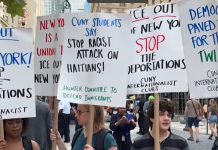

WASHINGTON, D.C. — The U.S. Supreme Court has issued a major procedural decision allowing the Trump administration to move forward with its plan to end Temporary Protected Status (TPS) for hundreds of thousands of Haitians and Syrians living in the United States.
The ruling marks a significant moment in the national debate over immigration policy and has heightened concern among immigrant communities across the country, particularly in South Florida, home to one of the nation’s largest Haitian populations.
One important legal distinction, however, should not be overlooked.
While the Supreme Court has allowed the Trump administration to move forward with ending TPS for Haiti, the process is still unfolding through federal agencies. U.S. Citizenship and Immigration Services has temporarily extended eligible TPS-related work authorization through July 10, 2026, while the decision is being implemented.
This short extension should not be viewed as a long-term renewal of TPS. Instead, it reflects a brief administrative period as the federal government carries out the Supreme Court’s decision.
For Haitian TPS holders, the situation remains uncertain.
The temporary extension does not represent a long-term renewal of TPS. Instead, it provides a brief administrative period as federal agencies carry out the Court’s decision. Haitian TPS holders therefore remain in a period of legal uncertainty as they await further guidance regarding the future of their immigration status.
For many Haitian nationals, the Court’s decision represents far more than a legal development. Since Haiti was designated for TPS following the devastating 2010 earthquake, thousands of beneficiaries have built lives in the United States. They have purchased homes, established businesses, paid taxes, raised American-born children and become active members of their communities.
Many work in healthcare, construction, transportation, hospitality, elder care and other sectors that remain important to local economies.
For these families, the possibility of losing TPS raises profound questions about employment, financial stability, family unity and whether they will be allowed to remain in the country they have called home for more than a decade.
Understanding the Supreme Court’s Decision
Contrary to what some may believe, the Supreme Court did not rule that Temporary Protected Status itself is unlawful.
Instead, the Court granted the administration’s request to move forward with implementing its decision while broader legal issues continue to be debated. In practical terms, the Court addressed whether the administration could proceed at this stage—not whether all questions surrounding TPS have been permanently resolved.
The ruling also comes at a time when Haiti continues to face severe humanitarian and security challenges. Armed gangs control significant areas, political institutions remain fragile, thousands of people have been displaced, and violence continues to disrupt daily life.
Those conditions have prompted many immigration advocates, faith leaders and humanitarian organizations to argue that Haiti’s circumstances continue to justify temporary protections. Others maintain that TPS was always intended to be temporary and that decisions regarding its continuation fall within the executive branch’s authority under federal immigration law.
The decision has also heightened concern within South Florida’s Haitian community.
Over the past several weeks, several community sources have told Le Floridien they have observed a greater presence of U.S. Immigration and Customs Enforcement agents, particularly in Broward County. Residents and community leaders have also reported arrests during recent immigration enforcement operations.
Le Floridien has not independently verified every reported arrest, and federal authorities have not publicly linked any enforcement activity to the Supreme Court’s TPS decision. Nevertheless, the reports have contributed to growing concern among many Haitian families already facing uncertainty about their future.
Congress, DHS and the Road Ahead
Attention now turns to the Department of Homeland Security.
USCIS already issued the July 10 guidance.
DHS is expected to issue formal guidance explaining how and when TPS protections and employment authorization will end, should the administration proceed with implementation.
Adding to the uncertainty, Homeland Security Secretary Markwayne Mullin said on CNN’s State of the Union that TPS holders should seek permanent legal status if they qualify or prepare to return to their home countries if they do not. He also said the administration would offer return assistance, including a plane ticket and roughly $2,100 to help migrants resettle. His remarks appeared to refer to existing legal pathways, such as family-based immigration, employment-based options, asylum or other forms of lawful permanent status. However, not every TPS holder will qualify for those options, making individualized legal advice especially important.
At the same time, Congress continues to play an important role.
In April, the U.S. House of Representatives approved bipartisan legislation by a 224-204 vote that would extend Temporary Protected Status for Haitian nationals through 2029. The legislation received support from Democrats and several Republicans and reflected continuing concern over Haiti’s humanitarian and security situation.
The bill now awaits consideration in the Senate.
Even if the Senate approves the legislation, it would still require President Donald Trump’s signature before becoming law. The White House has indicated that the President would veto the measure. Congress could override such a veto only with a two-thirds majority in both the House and Senate, a constitutional threshold that has historically been difficult to achieve.
For many Haitian TPS holders, the greatest challenge today is uncertainty. They now find themselves between several moving parts: the administration’s implementation of the Supreme Court decision, congressional efforts to extend TPS, and the possibility that some individuals may qualify for other legal immigration options.
What Haitian TPS Holders Should Do Now
Immigration attorneys continue to offer a consistent message: remain informed, avoid rumors and seek qualified legal advice.
TPS holders should check whether their EAD is covered by the temporary extension through July 10, 2026. Every immigration case is unique, and many individuals may still qualify for alternative forms of relief depending on their personal circumstances.
Some may be eligible for family-based immigration benefits, employment-based visas, asylum, adjustment of status or other humanitarian protections. Others may have more limited options, making early consultation with a licensed immigration attorney especially important.
Community organizations, churches, nonprofit legal clinics and Haitian advocacy groups across South Florida are also preparing to assist affected families. Legal service providers report increasing requests for consultations as residents seek to understand their rights and available options.
They are also warning the public to be cautious of immigration scams and unlicensed consultants who often emerge during periods of uncertainty.
For South Florida’s Haitian community, this issue extends well beyond legal proceedings in Washington. Its consequences are already being felt in neighborhoods across Broward, Miami-Dade and Palm Beach counties, where thousands of families are closely following developments that could significantly affect their future.
While the Supreme Court has answered an important procedural question by allowing the administration to move forward, it has not resolved the broader debate surrounding Temporary Protected Status. DHS must still formally implement the policy, Congress continues to consider legislation that could preserve TPS, and many Haitian nationals may still have legal options depending on their individual circumstances.
For hundreds of thousands of Haitian TPS holders, the future remains uncertain. The decisions made in the coming weeks and months by the executive branch, Congress and federal agencies could determine whether families who have spent years building lives in the United States will be able to remain or will be forced to confront a profoundly different future.
This analysis was prepared by the Le Floridien Staff.
Editor’s Note: This analysis reflects the legal and political landscape as of July 1, 2026. Because immigration policies, court proceedings and congressional action can evolve rapidly, readers should follow official announcements from the Department of Homeland Security and consult a qualified immigration attorney regarding their individual circumstances.