Daphne Campbell’s Comeback: Voters Reject the Haitian-American Political Establishment’s Choice

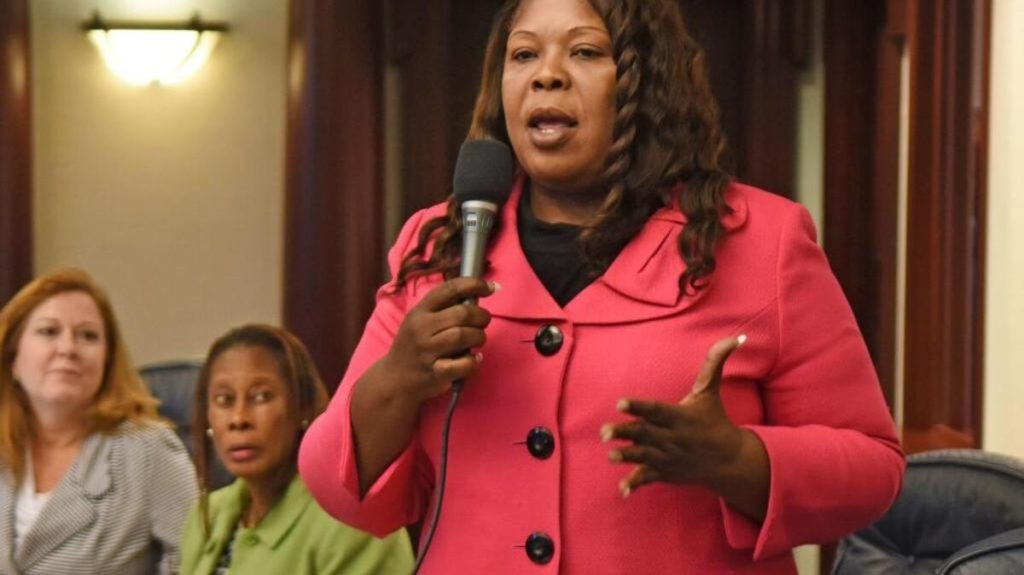
Former Florida State Senator Daphne Campbell, the first Haitian-American elected to the Florida Senate, has staged a political comeback with her victory in the Democratic primary for Florida House District 108. Her return to the political forefront comes despite 'influential voices' within the Haitian-American community backing a new generation of leadership.

Daphne Durand Campbell’s District 108 victory represents more than a political comeback. Despite influential Haitian-American political and media figures supporting her younger rival, voters chose Campbell, raising important questions about political elitism, generational change, respectability politics, and who truly defines leadership within the Haitian-American community.

By Dessalines Ferdinand | Analysis

Former Florida State Senator Daphne Campbell’s victory in the Democratic primary for Florida House District 108 is more than another political comeback. It deserves to be examined as a message from voters — particularly Haitian-American voters — about the limits of political endorsements, organized opposition and the influence of what might be described as South Florida’s Haitian-American political establishment.

Campbell entered the race with a major advantage her opponent could not claim: a proven legislative record in Tallahassee. She represented District 108 in the Florida House from 2010 to 2016, serving three terms before winning election to the Florida Senate in 2016. That victory made Campbell the first Haitian-American elected to the Florida State Senate, a historic achievement that remains an important milestone in the growth of Haitian-American political representation in Florida.

Yet during the 2026 campaign, that history and experience sometimes appeared secondary to a broader desire among some self-described influential political figures within the Haitian-American community to move beyond Campbell and embrace a new generation of leadership.

Her principal opponent, Dinah Escarment, presented herself as “generational change” and “new blood.” She entered the contest with meaningful institutional and political support. Escarment served as vice president of the Miami-Dade Democratic Haitian Caucus, and outgoing District 108 Representative Dotie Joseph endorsed her candidacy. North Miami Mayor Alix Desulme, another prominent Haitian-American elected official, also endorsed Escarment.

According to reliable sources, other well-known figures in South Florida’s political and media circles also supported Escarment, including former Miami-Dade County Commissioner Jean Monestime, former North Miami Mayor Andre Pierre, North Miami Mayor Alix Desulme, radio personality Lesly Prudent, and Naomi Blemur, herself an unsuccessful candidate in two previous elections. Taken together, their support reinforced the perception that a significant segment of the Haitian-American political establishment had coalesced around Escarment and a new generation of leadership rather than Campbell’s return to Tallahassee.

The voters had a different answer.

A Political Record That Could Not Simply Be Erased

Whatever one thinks about Campbell — and her political career has certainly not been free of controversy — her years of service in Tallahassee cannot simply be erased from the discussion. But another, more uncomfortable question deserves to be asked: Has Campbell been judged by some within the so-called Haitian-American political establishment not only for her politics, but also for the way she speaks, looks and presents herself? For years, critics have scrutinized her manner of speaking, appearance and public presentation in ways that, at times, seem to overshadow a more substantive examination of her legislative record and what she actually delivered for the communities she represented.

Campbell had already learned how Tallahassee works. She understood legislative negotiations, committee structures and the realities of trying to secure resources and attention for a South Florida district.

If image, accent, appearance, or conformity to a certain idea of what a political leader should look and sound like played any role in efforts to marginalize Campbell, then the issue goes far beyond one politician. It raises troubling questions about class, social status, elitism and respectability politics within our own community — and about whether some leaders are judged more by how they speak, dress and present themselves than by what they actually accomplish in public office.

Campbell was first elected to House District 108 in 2010. She survived subsequent political challenges, won reelection and eventually moved from the House to the Senate.

In 2016, she won a crowded Democratic Senate primary and then overwhelmingly defeated former state Representative Philip Brutus in the general election, becoming Florida’s first Haitian-American state senator.

That achievement was not merely symbolic

For a Haitian immigrant woman to rise from the Florida House to the Florida Senate represented a significant breakthrough for a community that had spent decades building political influence in South Florida.

During her legislative career, Campbell advocated on issues including healthcare, public education and matters directly affecting Haitian immigrants. As a senator, she was also appointed chair of the Haitian Temporary Relief Task Force, giving her a visible role in advocating for Haitians facing uncertainty over Temporary Protected Status.

Beyond the symbolism of her historic election, Campbell’s record in Tallahassee also deserves to be measured by what she delivered to her district. Available legislative and state budget records indicate that Campbell was particularly active in securing and advocating for state funding for programs and projects benefiting District 108 and surrounding communities. Her supporters have long argued that, among Haitian-American legislators who have represented the area in Tallahassee, Campbell distinguished herself by the amount of state resources she helped bring back to her district. That record deserves serious consideration when evaluating her tenure — and raises another question: Why has so much attention been devoted to Campbell’s personality, articulation and public image while considerably less attention has been paid to what she actually delivered for the people she represented?

Those accomplishments do not require voters to ignore criticisms of Campbell’s record. Political figures should be judged on their entire record, including their mistakes.

But criticism should not become political amnesia.

When Endorsements Meet the Ballot Box

The District 108 primary also provides a lesson about the difference between political endorsements and actual voter loyalty.

Endorsements matter. Organizations matter. Elected officials matter. Political networks can provide money, volunteers, credibility and access.

But none of them owns the electorate.

Campbell’s victory demonstrates that voters may evaluate a candidate differently from political insiders.

While some leaders may have seen Campbell as yesterday’s political figure, enough voters apparently remembered something else: a former representative who had already served their district, a former senator with Tallahassee experience and a Haitian-American politician whose career had broken an important barrier.

That distinction matters.

Political elites frequently speak about representation. But representation cannot mean simply deciding among themselves who should become the community’s next representative.

Ultimately, voters make that decision.

And on August 18, District 108 voters chose Daphne Campbell.

Did Campbell’s Past Service Receive Enough Recognition?

This election should also generate an uncomfortable conversation within South Florida’s Haitian-American political community.

How quickly should a community discard, diminish or even ridicule the very people who helped open political doors for those who came after them? Former El Portal Mayor and North Miami Beach Commissioner Philippe Derose, who made history as the first Haitian-American elected to public office in the United States, also faced stereotypes and ridicule during his political career, some of which appeared to focus on his manner of speaking. His experience raises the same uncomfortable question that Campbell’s political journey raises today: Are some Haitian-American pioneers being judged more harshly for how they speak, look and present themselves than for the barriers they broke and what they actually accomplished in public office?

A similar debate surrounded Marleine Bastien when she ran for Miami-Dade County Commission District 2 in 2022. Some questioned whether a longtime community activist — known particularly for decades of advocacy on behalf of immigrants and Haitian families — fit the traditional profile of an elected official. Her activist background, traditional posture and public style were viewed by some as political liabilities rather than strengths. Yet Bastien won the seat, demonstrating once again that the qualities political insiders may perceive as weaknesses do not necessarily reflect how voters judge a candidate. Her experience, like those of Derose and Campbell, raises a larger question about who gets to decide what a Haitian-American political leader is supposed to look and sound like.

Campbell became the first Haitian-American elected to the Florida State Senate. That historic achievement belongs not only to Campbell, but to the broader Haitian-American political story. Whatever criticisms may be directed at her style, articulation or presentation, they should not erase the barriers she broke or the significance of what she accomplished for a community still establishing its political presence in Florida.

Yet instead of her previous service being central to the conversation surrounding her comeback, much of the campaign focused on whether voters should embrace a new generation.

There is nothing wrong with generational change. Every community needs new leaders. No elected official is entitled to a position because of past accomplishments.

But generational change should be achieved by convincing voters that a new candidate offers something better — not by suggesting that experience itself has become a liability.

Campbell had already learned how Tallahassee works. She understood legislative negotiations, committee structures and the realities of trying to secure resources and attention for a South Florida district.

For voters deciding who could represent them effectively from the first day of a new legislative term, that experience evidently still carried value.

The Limits of a Political Establishment

Every immigrant community eventually develops a political establishment.

Leaders emerge. Organizations are created. Relationships with elected officials deepen. Endorsement networks develop. Certain individuals become influential in deciding which candidates receive institutional support.

That evolution is normal.

The danger comes when an establishment begins confusing influence with ownership.

Haitian-American elected officials and political organizations have every right to endorse candidates. They also have every right to oppose Campbell.

But voters have precisely the same right to reject their recommendation.

That is what makes the District 108 result particularly interesting.

Campbell did not need unanimous approval from Haitian-American political leadership. She needed voters.

And she got them.

Campbell Also Had to Overcome Her Own Political Baggage

Any serious analysis must acknowledge another part of the story.

Campbell has faced controversies throughout her political career, and critics have questioned some of her actions and political positions. She also suffered electoral defeats after leaving the Senate and made unsuccessful attempts to return to elected office.

For that reason, her 2026 victory is arguably more significant.

This was not an undefeated politician simply protecting an incumbent seat.

This was a former officeholder attempting a comeback after years outside the Legislature, facing opponents who could argue that the community needed something different.

Voters knew Campbell.

They had seen her strengths, her controversies, her victories and her defeats.

And enough of them still chose her.

That makes it difficult to dismiss Tuesday’s result as merely nostalgia.

A Message Beyond Daphne Campbell

The larger lesson from District 108 may have little to do with Campbell herself.

It is about the relationship between political leadership and the people leaders claim to represent.

Haitian-American political influence in South Florida has grown enormously over the past several decades. That progress should be celebrated.

But political maturity also requires accepting that the community is not a monolithic voting bloc.

Haitian-American voters do not have to follow the endorsement of a Haitian-American mayor, former commissioner, caucus or organization simply because those leaders share their heritage.

They can listen — and then disagree.

Campbell’s victory demonstrates exactly that independence.

Respect the Past While Building the Future

There is room in Haitian-American politics for both generations.

There should be room for young candidates bringing new ideas and for experienced politicians whose institutional knowledge can still benefit their communities.

The mistake is believing one generation must destroy the legitimacy of another in order to advance.

Daphne Campbell’s career helped establish an important precedent. When she entered the Florida Senate in 2016, a Haitian-American had reached a chamber of the Florida Legislature that no Haitian-American had previously entered as an elected senator.

Ten years later, voters have given Campbell another political opportunity.

The Haitian-American political establishment may have preferred a different direction in District 108.

The voters did not.

And that may be the most important lesson of this election.

Political organizations can endorse. Elected officials can organize. Activists can mobilize. Radio power brokers can use their microphones and influence to shape public opinion — particularly among elderly and more vulnerable voters. Influential community figures can decide among themselves who they believe represents the future and attempt to steer the electorate in that direction.

But on Election Day, none of them has the final word. The voters do.

And this time, they chose Daphne Campbell.


Dessalines Ferdinand is the Publisher and Chief Editor of Le Floridien. A media professional with more than 35 years of experience, he has closely observed and covered Haitian-American politics in South Florida for nearly three decades.

(Visited 1 times, 11 visits today)

LEAVE A REPLY

Please enter your comment!
Please enter your name here