
PORT-AU-PRINCE — Haitians hoping for a rapid end to the country’s gang crisis may have to temper their expectations. A newly released roadmap presented to the United Nations Security Council indicates that meaningful progress toward restoring security is not expected before September 2028.
The report, submitted by Jack Christofides, Special Representative of the Gang Repression Force (FRG), outlines a comprehensive strategy designed to reduce the territorial control of armed gangs, strengthen Haiti’s security institutions and establish the minimum conditions necessary for the country’s long-term recovery.
A Long-Term Security Strategy
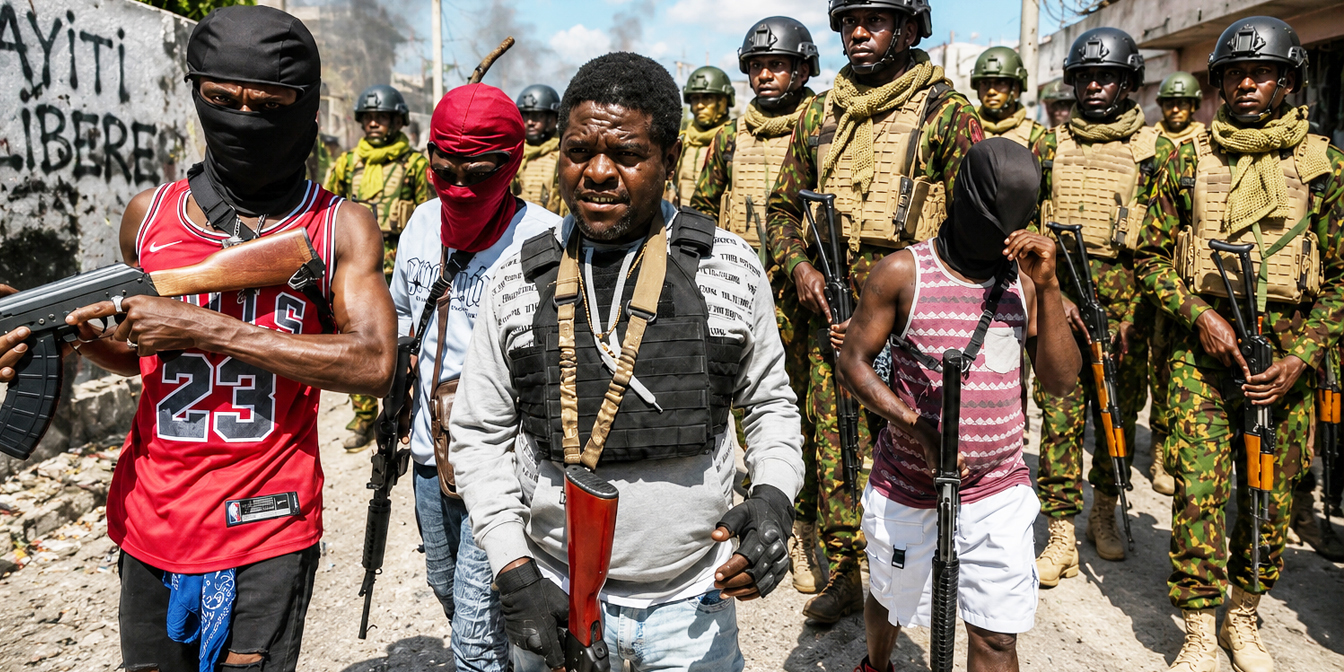
According to the report, the FRG’s mission is not intended to function as a traditional peacekeeping operation. Instead, it is designed to progressively dismantle the territorial control exercised by gangs through intelligence-driven operations conducted independently or jointly with the Haitian National Police (PNH) and the Armed Forces of Haiti (FAd’H).
The roadmap establishes September 30, 2028, as the target date for achieving the minimum level of security needed to reverse the current crisis. However, mission officials stress that this deadline does not represent the complete elimination of gangs or the full stabilization of Haiti. Rather, it marks the point at which authorities hope to restore sufficient public confidence and create the conditions necessary for rebuilding state institutions.
Christofides also notes that the mission must reach its planned strength of 5,550 personnel before it can conduct the large-scale operations required to significantly weaken the country’s most powerful criminal organizations.
Port-au-Prince and Strategic Infrastructure at the Center of the Mission
The report identifies the West Department as the mission’s highest priority, estimating that armed groups currently control nearly 90 percent of Port-au-Prince. Operations will initially focus on reclaiming territory, reopening major transportation corridors and restoring government authority in the capital.
Beyond direct confrontations with gangs, the roadmap identifies the protection of Haiti’s most critical infrastructure as a key objective. Priority will be given to securing Toussaint Louverture International Airport, the country’s principal seaports, detention facilities and the major national highways linking Port-au-Prince to the rest of the country. Restoring access to these strategic facilities is considered essential for reviving commerce, facilitating humanitarian assistance and allowing security forces to move more effectively throughout the country.
The strategy also prioritizes the Artibonite Department, where gangs continue to disrupt agricultural production and economic activity, as well as the Centre Department, which is viewed as a strategic corridor to prevent armed groups from expanding into additional regions. As the FRG increases its personnel, operations are expected to extend progressively across all ten departments of Haiti.
A Message of Patience for Haitians
Perhaps the report’s clearest message is that Haiti’s security crisis will not be resolved in the near future.
While military and police operations are expected to intensify over the coming months, the roadmap acknowledges that restoring lasting security will require sustained international support and stronger national institutions. The objective is not simply to defeat armed groups but to create the minimum conditions necessary for Haiti to begin rebuilding public confidence, strengthening the rule of law and restarting institutional development.
For millions of Haitians living under the daily threat of gang violence, kidnappings and insecurity, the report suggests that the road to recovery will be measured in years rather than months. Although progress may become visible before then, the United Nations’ own roadmap indicates that 2028 is the earliest point at which Haiti can realistically expect to begin seeing meaningful and sustainable improvements in its security situation.